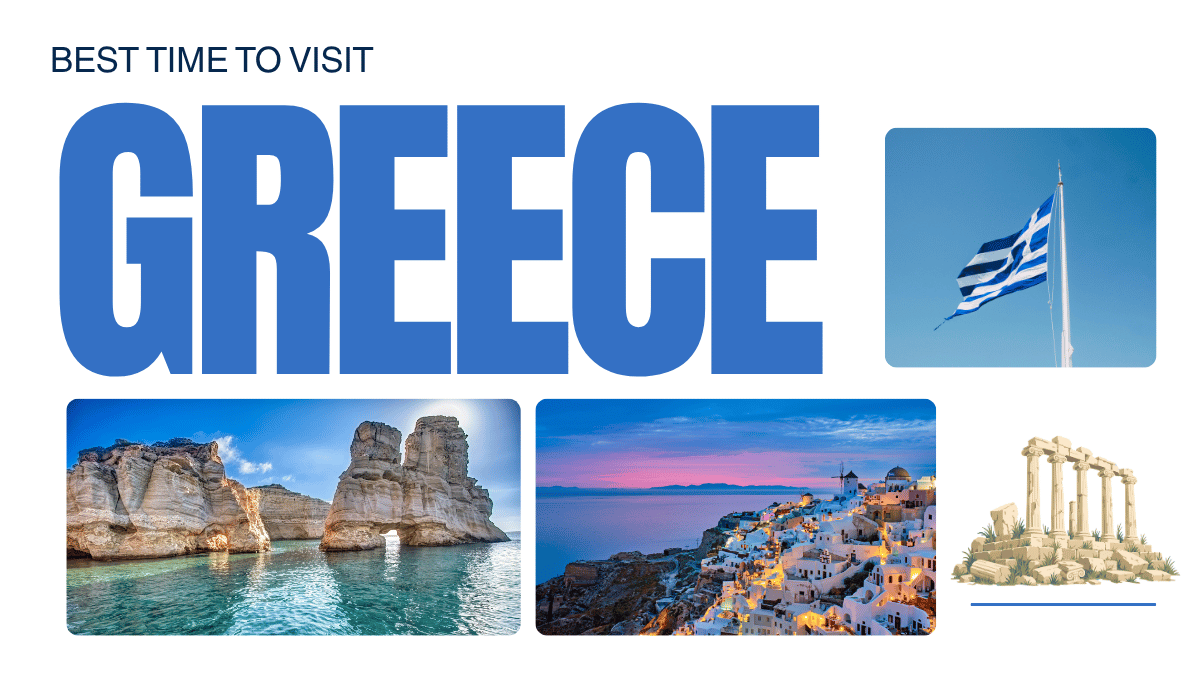
The best time of year to visit Greece comes down to what you plan to do outdoors, and the four seasons matter less for temperature than for what stays open.
Spring: April and May
Spring suits both halves of the country. The islands come back to life after the winter quiet, the ferries are running again after the winter timetable, and the mainland sites sit in green hills before the summer grass goes. If swimming is the point of your trip, aim for the later weeks of May rather than the first days of April.
The mainland has its own claim on spring, because Delphi and the monasteries at Meteora want a dry road and a clear morning, and April and May give you both before the coach traffic builds.
Spring is also when the quiet islands pay off. Naxos, Sifnos and Amorgos hold wide beaches, mountain villages and a slower pace without the July volume, and they reward a trip taken a month early.

Summer: June Through Early September
Summer is the season the islands are built for: warm water, long days, nightlife on Mykonos, and the highest room rates of the year on both Mykonos and Santorini. The main ferry routes run multiple departures a day, which is the real advantage of traveling in July.
Early September still behaves like summer while the ports start to empty, so it buys you peak weather after the peak. Late June has the same appeal from the other side, with the season fully open and the islands not yet at their busiest.
Island choice matters most in summer. Crete spreads people out because it is large enough to hold them, with Knossos and the Samaria Gorge on the same map as the coast, while Rhodes keeps its medieval old town and Corfu its Venetian streets and green hills.
Fall: Late September and October
Fall is the window the island-hopping advice points to: warm enough for the beach, fewer people, lower prices. The catch is the tail of it. As October runs on, crossings thin out and seasonal businesses on the smaller islands begin to close, so late September is the safer bet than the last week of October.
Walking suits fall. The Samaria Gorge on Crete and the paths around Meteora are both long days out, and a cooler month makes them easier than a July attempt.
Winter: November Through March
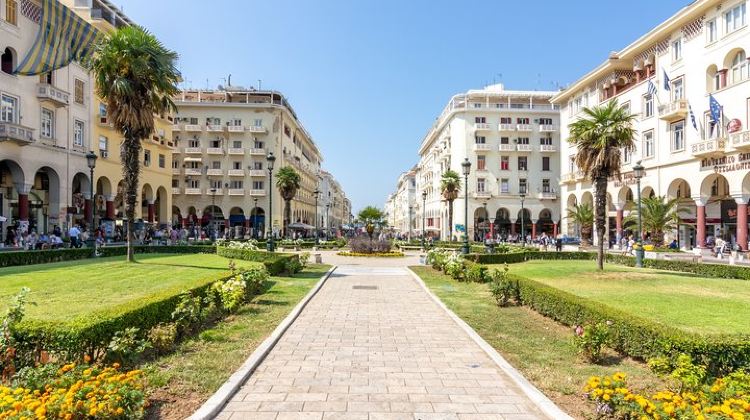
Winter is quiet, and quiet is the point. Many islands go into hibernation: seasonal hotels shut and boats drop to a skeleton schedule. Athens and Thessaloniki stay lively all year, which makes winter a city and mainland season rather than an island one.
Use it for the Acropolis without a queue, the Acropolis Museum without a crowd, and the sites at Delphi and Olympia. Skip the ferry map and take the road.