Best Time to Visit Grand Canyon by Rim and Season

cover

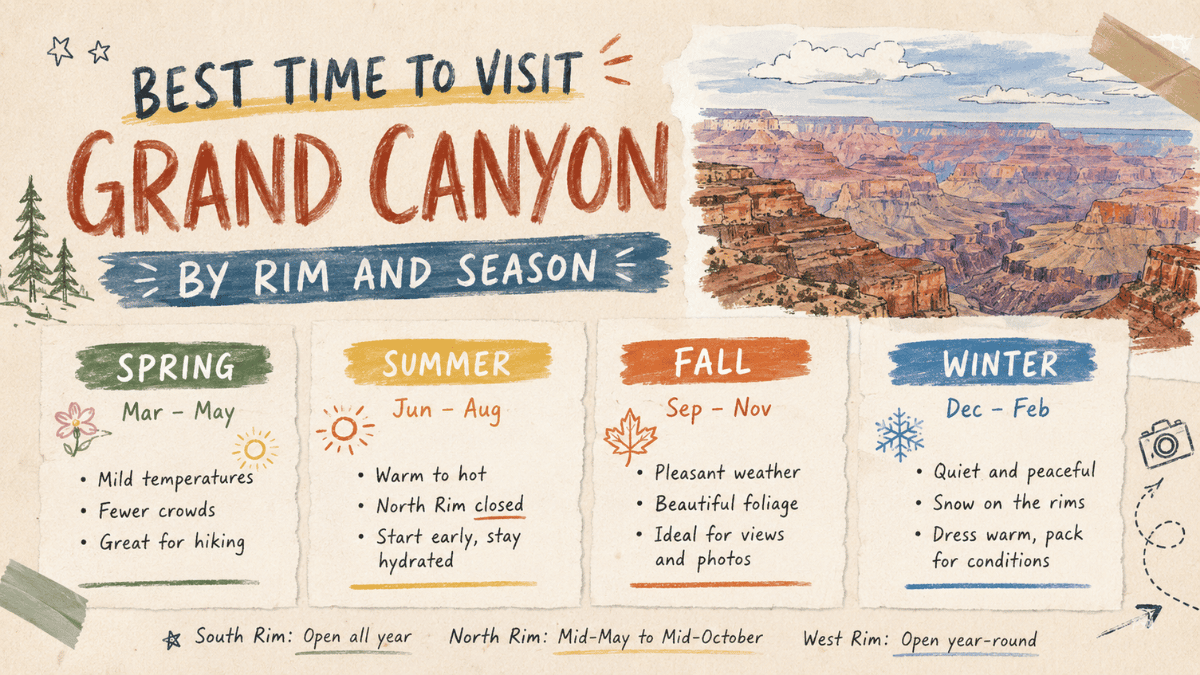
The best time to visit Grand Canyon is spring or fall for many first-time South Rim travelers. These seasons can balance comfortable rim sightseeing with more manageable hiking conditions, although snow, wind, heat, and rapid weather changes remain possible. Summer works well for overlooks and early or late outdoor activity, but heat becomes increasingly dangerous as trails descend into the canyon. Winter can deliver striking South Rim scenery for flexible visitors prepared for snow, ice, and disrupted plans. The North Rim is a seasonal destination with conditions and services that require current verification. Choose the rim and activity before choosing a month, then check official road, trail, water, shuttle, and weather information immediately before departure. The same discipline matters when the canyon is part of a wider United States road trip.

 
Season Best Fit Main Challenge Planning Priority
Spring South Rim walks and hikes Rapid weather changes Pack adaptable layers
Summer Rim views and long daylight Extreme inner-canyon heat Start early and carry water
Fall Balanced sightseeing Shortening daylight Protect the return window
Winter Flexible South Rim trips Snow, ice, closures Monitor roads and trails


Choose the Rim and Activity First

South Rim for a First Visit

The South Rim is the most practical starting point for a first visit because it is open year-round and brings major viewpoints, Grand Canyon Village, and Desert View into one side of the park. Year-round access does not mean every road, trail, building, or service is always operating. Winter storms, maintenance, and other hazards can change the day. When comparing options around Grand Canyon National Park, treat current alerts as part of the itinerary rather than an afterthought.
 

North Rim for a Seasonal, More Remote Trip

The North Rim appeals to repeat visitors and travelers who value a more remote setting. It sits higher than the South Rim, which contributes to cooler conditions and a shorter vehicle-access season. Roads, water, lodging, food, trails, and visitor services can have different operating windows or temporary limits. Never assume that a general seasonal pattern confirms access for a specific date. Check the latest park status before committing to the drive, and carry the supplies officials currently recommend.
 

Rim Views and Inner-Canyon Hiking Are Different Plans

A pleasant rim forecast does not describe conditions thousands of feet below. Temperatures rise as hikers descend, and every downhill mile creates an uphill return. Viewpoint sightseeing and substantial hiking therefore require different weather, water, fitness, and turnaround plans. Choose the activity before using a season to define what is safe or realistic. The three-day national parks winter route from Las Vegas fits travelers comparing a winter-focused regional circuit. Its benefit is framing transport and lodging decisions across three total days. Its limitation is compressed timing: changing conditions can disrupt the route, and the page label does not confirm named park stops or how many usable hours it allocates to Grand Canyon.
 

Recommend Tour

3-Day National Parks Lodging Winter Tour from Vegas: Grand Canyon, Zion, Horseshoe Bend, Lake Powell & Monument Valley | Max 13 Small Group
Shared Room Available
Select Meals Included
4.9 ( 545 reviews )
Tour Code: 720186
Start / End City
Las Vegas
Duration
3.0 Days
City & Attractions
Las Vegas, Grand Canyon, Grand Canyon National Park +5 more
Languages
English Live, French Audio, German Audio +5 more
Group Size
Max. 13 travelers
Tour Audience
Mixed International Travelers
Operator
Bindlestiff Tours
Save 20%
From $1,046.50
$837.20

Spring and Fall: The Best Overall Balance

Spring Requires Flexible Layers

Spring is attractive for travelers who want to walk the rim and explore below it before the strongest summer heat. Conditions remain changeable: wind, cold mornings, sun, rain, and even rim snow may appear within the season. Pack layers, sun protection, and traction when official trail information indicates it is appropriate. If the canyon anchors a broader Arizona itinerary, compare elevations at every stop rather than packing for a single desert forecast.
 

Fall Rewards Early Starts and Backup Plans

Fall provides a similar balance with cooling conditions and shorter days. Early starts create room for shuttle waits, overlook stops, and a cautious hiking turnaround. As the season advances, colder nights and possible snow become more relevant at the rims. North Rim access and services may narrow or end before winter, so verify the specific date rather than relying on last year’s schedule. Keep a South Rim alternative if the North Rim is essential but conditions remain uncertain.
 

Summer: Best for Rim Views, Not Deep Midday Hiking

Elevation Changes the Temperature

Summer can feel comfortable on the rims while the inner canyon experiences extreme heat. That contrast is the central planning fact. Casual sightseers can enjoy viewpoints, ranger activities, and scenic drives with sun protection and sensible breaks. Hikers must assess the lower trail environment, not only the temperature beside their hotel or vehicle. Avoid treating a clear sky as proof of safe hiking conditions, and never use another traveler’s pace as the basis for water, distance, or turnaround decisions.

Regional routes add another layer of heat exposure. A visit to Antelope Canyon or a lower-elevation desert stop may require different timing from a South Rim day. Do not combine demanding activities simply because they fit on a map. Count driving, check access requirements separately, and give every location its own weather and safety plan. A successful summer circuit often does less at midday and protects more time around morning and evening. The four-day small-group national parks route fits travelers who prefer a guided multi-day structure. Its benefit is a fourth total day compared with a three-day circuit. Its limitation is that the page label does not identify the park sequence, season, transfer load, or Grand Canyon sightseeing allocation, so confirm those details before matching it to summer conditions.


Start Early and Protect Water Supplies

Begin active summer days early, but do not use an early start to justify an unrealistic distance. Carry the water and food required for the plan, and verify whether water sources are currently available before depending on them. Heat illness can develop before a visitor feels dramatically unwell. Rest, shade, pacing, and a firm turnaround time matter. If the forecast, trail status, or water information undermines the plan, replace the hike with rim viewpoints rather than trying to salvage it through speed.
 

Recommend Tour

4-Day Small Group National Parks Tour from Las Vegas·Zion, Bryce, Antelope Canyon & Grand Canyon
Guaranteed Departure
Instant Confirmation
5.0
Tour Code: 745680
Start / End City
Las Vegas
Duration
4.0 Days
City & Attractions
Page, Clark County, Coconino County +19 more
Languages
Chinese Live, English Live
Group Size
Max. 13 travelers
Tour Audience
Primarily Mandarin-Speaking Travelers
From
$948.57

Winter: Best for Flexible South Rim Travelers

Prepare for Snow, Ice, and Closures

The South Rim remains open year-round, making winter travel possible, but access can be affected by snow, ice, wind, and temporary road or trail closures. Views may disappear during a storm and then return dramatically. Pack insulated layers, waterproof footwear, and any traction equipment currently advised. Drivers should examine road conditions along the entire approach, not just inside the park. A nonrefundable reservation does not make unsafe travel conditions acceptable.
 

Alternate Short Outdoor Stops with Indoor Breaks

A productive winter day alternates overlooks and short walks with warm indoor pauses. Choose fewer stops and keep them geographically coherent. Icy surfaces may slow walking, and cold batteries can affect phones or cameras. Winter is rewarding when flexibility is a feature of the trip: if one location is unsuitable, a safely accessible viewpoint or indoor stop can still provide a meaningful park day.
 

Build a Realistic Grand Canyon Itinerary

Count Usable Park Hours

A two-day trip rarely provides two full sightseeing days after arrival, departure, meals, parking, and transfers. Review any Grand Canyon vacation package by its usable park hours, not only its total duration. The South and North Rims are not adjacent stops; moving between them requires a substantial road journey. For a short visit, choose one rim and protect time for changing conditions. The three-day national parks route from Las Vegas fits travelers comparing a lodging-oriented regional circuit. Its benefit is organizing a three-day framework from one gateway. Its limitation is that transfers and possible hotel changes reduce usable sightseeing time, while the page label does not confirm specific park stops or the depth of its Grand Canyon visit.
 

Check Conditions Before Every Major Decision

Use sample routes from Tours4fun to compare the sequence of regional stops, then verify each park decision through current official information. Recheck weather, roads, trails, water, shuttles, and facility status shortly before travel and again each morning. Separate fixed reservations from flexible activities. This approach makes spring and fall strong defaults without pretending that any season removes the canyon’s elevation, remoteness, or natural hazards.
 

Recommend Tour

3-Day Zion, Grand Canyon and Monument Valley Lodging Tour from Las Vegas | Max 13 Small Group
Daily breakfast
Select Meals Included
4.9 ( 124 reviews )
Tour Code: 719061
Start / End City
Las Vegas
Duration
3.0 Days
City & Attractions
Las Vegas, Grand Canyon, Zion National Park +5 more
Languages
English Live, French Audio, German Audio +5 more
Group Size
Max. 13 travelers
Tour Audience
Mixed International Travelers
Operator
Bindlestiff Tours
Save 20%
From $914.25
$731.40

FAQ

What Is the Best Month to Visit the Grand Canyon?

No single month is best for everyone. Spring and fall often provide the most balanced South Rim conditions, but weather is variable. Choose dates by rim and activity, then verify current access and forecasts before departure.

Is Summer Too Hot for the Grand Canyon?

Summer can work well for rim sightseeing, but inner-canyon heat may be extreme. Start early, protect water supplies, and plan for the temperature at the lowest point of the route—not merely at the rim.

Can You Visit the Grand Canyon in Winter?

Yes, the South Rim is open year-round. Snow, ice, limited facilities, and temporary closures are possible, so bring proper equipment and maintain flexible plans. The North Rim has separate seasonal access constraints.

Should You Visit the South Rim or North Rim?

Choose the South Rim for a first visit and the broadest year-round access. Consider the North Rim for a seasonal, more remote experience when roads and essential services are confirmed. A short trip should not attempt both.