What Stands on the Plateau
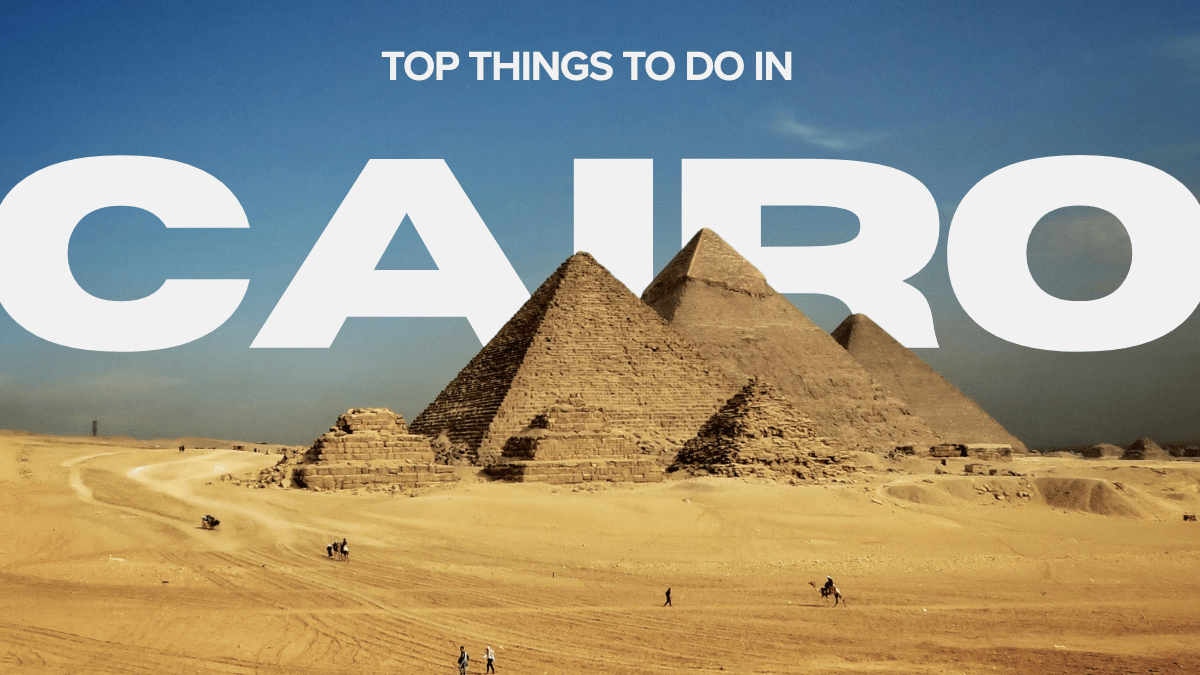
The ticket window and the coach parks sit at the foot of the site, and you see the pyramids from the road before you reach either of them. The first view is flatter than you expect: three grey triangles on a shelf of rock.
Khufu, Khafre and Menkaure
Khufu's pyramid, also written Cheops, is the oldest and largest of the Seven Wonders of the Ancient World, and the one that is still standing. Khafre, or Chephren, is the second largest at Giza and keeps the remains of its funerary temple. Menkaure, or Mykerinos, comes third, with the subsidiary pyramids gathered around it.
Walk to the base of Khufu and look up the face. The blocks near the bottom are taller than you are, and the courses step back as they climb, so the thing reads as a mountain from a distance and a wall from close up. Give this one twenty minutes of standing still.

The Sphinx and the Valley Temple
The Sphinx is cut from limestone, with the body of a lion and the head of a pharaoh, and it is dated to the reign of Khafre. It sits below the edge of the plateau, close to the valley temple, and reads smaller than the photographs until you are standing beside a paw.
Behind it is the Valley Temple of Khafre, where the purification and mummification rituals were performed before burial. It is easy to walk past on the way to the coach. Go in, stand in the middle of the stone hall, and look at how the blocks are fitted.

The Panoramic Stop
On the far side there is a viewpoint where all three pyramids line up with open desert behind them. This is the shot you have seen a thousand times, and it is worth the ten minutes. Late afternoon is when the stone goes from grey to gold, and the coaches leave.
The Order to Walk It In
Which end do you start at? The usual route runs backwards: Sphinx first because it is nearest the gate, pyramids after, museum last when you are already tired. Reverse that and the site gets easier.
Start With Khufu
Get to the largest pyramid first, while the air is cool and the site is quiet. The base is where the scale lands hardest, and it is where you will spend the most time standing in the open. Do the circuit of the outside before you go near an entrance.
Then Khafre, Menkaure and the Sphinx
Work west along the ridge to Khafre and Menkaure, then come down to the Sphinx and the valley temple. This direction puts the Sphinx at the end, when you have adjusted to the size of everything and can look at a lion with a pharaoh's head without comparing it to a pyramid.
Going Inside, and Whether To
You can enter the burial chamber of the Great Pyramid for $27 per guest, and the second or third pyramid for $11 per guest. The interior is a narrow passage, a low ceiling and not much air, and what waits at the end is an empty stone room. Whether that is worth the money depends on how much you like empty stone rooms.
My advice: go inside one, not three. The Great Pyramid is the famous climb, but the two smaller ones cost less and take less out of you, and the difference in what you see is small. If you are with someone who gets uncomfortable in tight spaces, skip the interior and put the money into the museum.
Getting There and Moving Around
The plateau sits west of the city, across the Nile, and the drive out is where the day either starts well or starts late. Cairo's traffic is notorious, so the hour you leave matters more than the route you take.

From the City
Taxis and ride-hailing apps work in Cairo, and for a run to the plateau they are the simplest option when you are alone. Confirm the meter before you move and keep small notes. A tour removes the problem with a private air-conditioned vehicle and a driver who does the run daily.
On the Plateau
The site is bigger than it looks from the road, and the gaps between the pyramids, the Sphinx and the viewpoint are longer on foot than the photographs suggest. On a guided day you drive between the stops. Alone, plan to walk in direct sun or negotiate a ride for the far side.
Anyone offering transport, a scarf or a photograph will want to talk about money first. Agree the price, say no once, and keep walking.
Best Time to Visit Cairo
So when should you come? Giza has two hard seasons and two soft ones, and the month you pick changes the day more than any single sight.
October to April
Autumn is the ramp: daytime temperatures drop from 32°C (90°F) in September to 22°C (72°F) by November, which makes a site with no shade walkable for a long morning. Winter is the peak, around 19°C (66°F) by day and 9°C (48°F) at night, with clear skies, a Sphinx that is often less hazy, and the biggest crowds of the year, so book the room before you book the flight. Spring runs 24-30°C (75-86°F) with cooler evenings, though April can bring the Khamsin, a hot, dusty wind off the Sahara that lasts a few days.
The Summer Trade-Off
Summer averages 35°C (95°F), and low humidity makes it more bearable than that sounds, but the stone throws heat back at you and midday is punishing. What you get in exchange is space: fewer coaches, lower prices, pyramids without a row of heads along the bottom. Go at sunrise and put the museum in the hot hours.

The Hour That Matters
Whatever the month, the first hour and the last hour are the good ones. Low sun rakes across the faces and shows the steps in the stone; flat midday light turns three pyramids into three silhouettes. With one clear morning, spend it here.
Guided Day or Your Own Two Feet
Do you hand the day to a guide, or keep it? The budget and the pace both turn on that, and there is a real argument each way.
What a Guided Day Covers
A guide turns the plateau from a set of large objects into a sequence with reasons behind it: why Khafre built beside Khufu instead of somewhere else, what the valley temple was for, how the limestone crossed the river. On a guided day the entry fees are included and the vehicle is private and air-conditioned. On the five- and six-day departures the group is capped at 12 travelers, lunch is at a local restaurant, and departures run daily in English, French, German, Italian and Spanish. The guide also handles the ticket window and the sellers, which is worth more than it sounds on your first morning.
If you want the plateau and the museum handled in one day, Tours4fun runs this route at five, six and seven days out of Cairo. A shorter Cairo Tour built around the same day is the other way in.
Doing It Yourself
Independent travel is possible and cheaper. You buy your ticket, find your transport, set your pace, which is a pleasure at the viewpoint when a coach pulls in behind you. The cost is context: without a guide you are looking at masonry, and the story stays in the books. Ride-hailing in Cairo is now good enough that logistics are not the obstacle they once were.
Beyond the Plateau
The rest of the day sits within easy reach on the same side of the city.
The Grand Egyptian Museum
The Grand Egyptian Museum is the largest archaeological museum in the world dedicated to a single civilization, and it holds colossal statues, royal artifacts, and the treasure room of the child king Tutankhamun. After a morning in the sun, a hall of cold stone and controlled light is a relief as much as a pleasure.

Saqqara, Dahshur and Memphis
Saqqara and Memphis fill the half-day trip that pairs with Giza, and Dahshur adds the Bent and Red Pyramids, where the autumn light does more for the stone than any filter. Between the three of them, you see the pyramid being worked out, which is the part the plateau cannot tell you by itself. These days are usually folded into a longer Egypt Tour rather than run as a single outing from Cairo.
Tips for Visiting Cairo
Three practical things decide whether the day runs smoothly, and none of them are about the pyramids.
Most nationalities need a visa. A 30-day single-entry visa is available on arrival at Cairo International Airport for $25, or online in advance through the official e-visa portal, and your passport needs six months of validity past your arrival date.
Do not drink the tap water. Bottled water is cheap and everywhere, so check the seal and use it for brushing your teeth. Carry small notes for tips, since baksheesh is a normal part of small transactions, and dress for a Muslim country: shoulders and knees covered, a scarf for mosques, a hat for the plateau.
The Last Hour on the Plateau
Stay later than the coaches do. In the last hour the site empties, the wind drops, and the three pyramids stop being a monument and become a place, with a few people walking at the edge of the sand.
That is the hour I remember from every visit, more than any interior or photograph. The stone is the same at four in the afternoon as at seven in the morning. What changes is how much room you have to look at it, and how little noise sits between you and the stone.
If you have one clear evening here, keep it. If the day is already long, the museum will not wait for you.
FAQ
How long do you need at the pyramids?
Half a day for the plateau at an unhurried pace, including the Sphinx, the valley temple and the viewpoint. Add the Grand Egyptian Museum and it becomes a full day.Can you go inside the pyramids?
Yes. The chamber ticket is separate from your entry to the site, so budget for one interior rather than three, and take a smaller pyramid if you want the cheaper version.Is a guide worth the money at Giza?
On a first visit, yes. The entry fees come with the tour, the vehicle is private, and a guide is what turns three large objects into a story about Khufu, Khafre and Menkaure.When should you avoid the plateau?
Midday in summer, when the site has no shade and the stone holds the heat. October through April is the comfortable stretch, before the summer heat arrives.