South America Places to Go Travel Tips

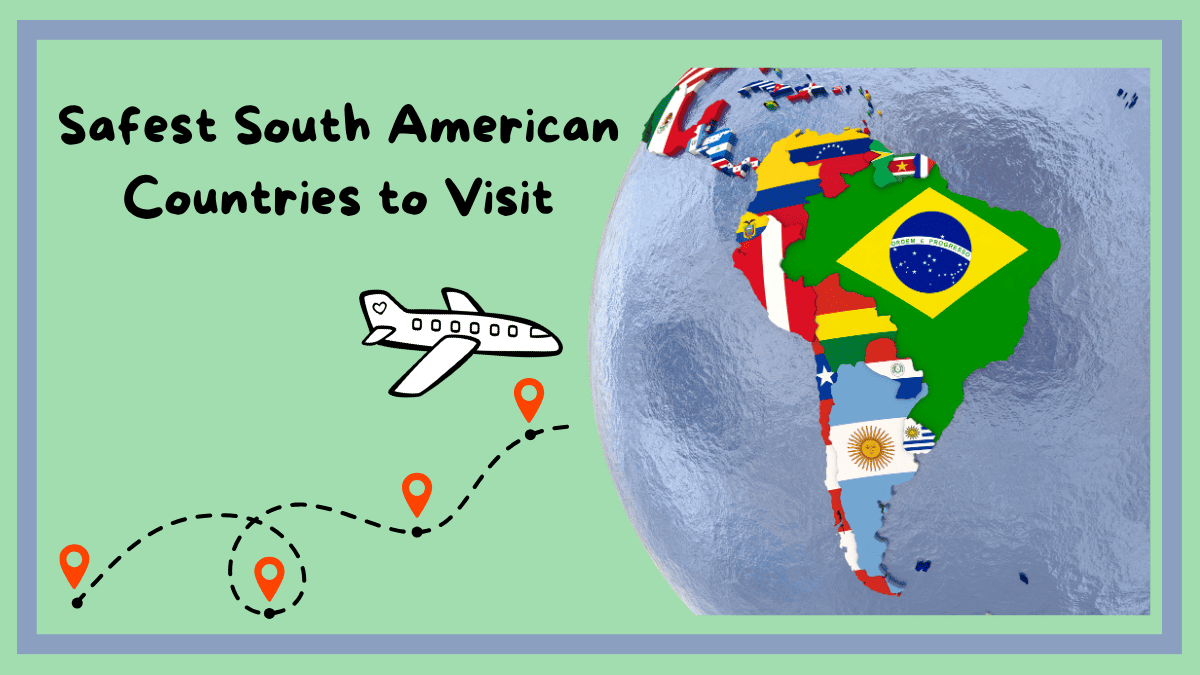
Top 5 Safest South American Countries to Visit in 2026

cover

I’ve always been drawn to South America’s vibrant culture and breathtaking natural scenery, but I’ve also had safety concerns. Because of frequent reports of violent incidents, people often lump the entire continent into the “dangerous” category, but that’s not the reality.

Many countries in South America have stable societies and safe environments. If you’re planning a trip to South America, you can choose from these safest South American countries to visit. You might be surprised to find that these destinations are actually very laid-back and welcoming.

Best Time to Go to South America

For the best weather, October through November and March through April are the most suitable months. These periods allow you to avoid the sweltering heat of the northern tropics and the biting cold of southern Patagonia.

However, if you are heading to the safest places to travel in South America, like Chile or Argentina, from December to February is ideal for hiking and outdoor activities. Conversely, if your heart is set on the Peruvian Andes, the dry season from May to September offers clear blue skies, even if the nights get a bit chilly.

Safest Countries in South America

When evaluating the safest countries in South America, factors such as the Global Peace Index, local crime statistics, and the overall political climate will be taken into account. Among these indicators, several countries stand out.

Uruguay

Travel Advisory Level for Uruguay: Currently, most Western governments, including the U.S. State Department, maintain a Level 1 or Level 2 advisory for Uruguay. This means you should "exercise normal precautions." It is roughly the same rating given to many European nations.

Uruguay is often overshadowed by its neighbors, Brazil and Argentina, but it is actually one of the most stable democracies in South America, with good social order and low rates of violent crime. Combined with well-developed urban infrastructure and a relaxed atmosphere, it is a top destination for travel in South America.


Montevideo

Safest Cities for Travel

Montevideo: Although Montevideo is the capital, it feels more like a quiet seaside town than a big city. Taking a stroll along the Rambla at sunset is incredibly relaxing and pleasant; while you should keep an eye on your phone in the crowded markets, the overall atmosphere is laid-back and safe. The Ciudad Vieja is beautiful by day, though it’s wise to take a cab back to your hotel if you stay out very late.

Punta del Este: Punta del Este is a renowned resort destination in South America and is extremely safe. Since it primarily caters to high-end tourism and international celebrities, security is robust, and the crime rate is extremely low. There are many beautiful beaches where you can relax, and you can also take a boat trip to see sea lions and seabirds. Don’t forget to stop by La Mano for a photo.

Chile

Travel Advisory Level for Chile: Chile usually sits at a Level 2 advisory. This is primarily due to occasional street protests in the capital and petty theft in tourist-heavy areas. However, compared to the global average, Chile is very secure.

Chile is not only one of the most economically developed countries in the region, but it is also home to the world’s driest desert and massive glaciers. While pickpocketing is a problem in major cities, the rate of violent crime remains lower than in some other South American countries.

CHILE


Safest Cities for Travel

Santiago: As the capital, Santiago is a modern city, and neighborhoods like Providencia, Vitacura, and Las Condes are exceptionally safe and clean. You can ride the cable car up to Cerro San Cristóbal for a view of the Andes or visit the tallest building in South America, the Sky Costanera. It's a city where you can easily find your way around on the clean and efficient metro system.

Punta Arenas: Way down south in Patagonia, Punta Arenas is a quiet, windy port city where people know their neighbors. It is easily one of the safest cities in South America. Most people use it as a base for trekking. You can take a boat tour to Isla Magdalena to see thousands of penguins or walk along the Strait of Magellan.

San Pedro de Atacama: Located in northern Chile, San Pedro de Atacama is the gateway town to the Atacama Desert. Since everyone there is either a local guide or a fellow traveler, the atmosphere is very relaxed. Must go stargazing in some of the clearest skies on Earth, visit the Moon Valley to see salt-crusted landscapes, or watch the sunrise at the El Tatio geysers.

Argentina

Travel Advisory Level for Argentina: Argentina typically holds a Level 1 or Level 2 status. The main concern for visitors isn't safety in terms of physical harm, but rather being mindful of the exchange rate and avoiding scams related to currency. In terms of physical safety, Argentina is very welcoming to foreigners.

Thanks to years of hosting international visitors, Argentina’s cities are well-equipped with tourist infrastructure. Furthermore, major tourist destinations feature a significant police presence and robust visitor safety measures. It is one of the safest South American countries to visit.

Buenos Aires


Safest Cities for Travel

Buenos Aires: Buenos Aires combines Latin American culture with a European atmosphere, featuring passionate tango, historic neighborhoods, and numerous elegant buildings. Spend your days looking at the elaborate tombs in the Recoleta Cemetery or shopping in the trendy boutiques of Palermo Soho. At night, catch a tango show in San Telmo. The city is alive until the early morning hours, which keeps the atmosphere vibrant and generally safe.

Bariloche: Located in the Lake District, Bariloche feels more like Switzerland than South America. It is a hub for skiing and hiking. The crime rate here is negligible. You can drive the "Circuito Chico" for stunning lake views, sample handmade chocolates at various shops on the main street, or take a chairlift up Cerro Campanario. It is a great place to leave your worries behind and focus on the mountains.

Peru

Travel Advisory Level for Peru: The advisory for Peru often fluctuates between Level 2 and Level 3, mostly due to civil unrest in specific regions like the border areas or remote zones. However, the main tourist route, the "Gringo Trail", is heavily protected and monitored by the Tourist Police.

Peru was the heart of the ancient Inca Empire and is a top destination for history buffs. Although there are thieves and pickpockets, since tourism is a major pillar of Peru’s economy, all major tourist cities have a police presence. Furthermore, significant resources have been allocated to managing Machu Picchu, a world-class attraction; as long as you stay within the designated tourist areas, your safety is assured.

LIMA


Safest Cities for Travel

Cusco: As the gateway to Machu Picchu, Cusco is highly dependent on tourism. This means the local government goes to great lengths to ensure visitors are safe. You will see police officers on almost every corner in the historic center. Walk the ancient Inca stone streets, visit the bustling San Pedro Market, or see the massive stones of Saqsaywaman. It’s a city where you’ll feel comfortable wandering into small artisan shops or sitting in the Plaza de Armas to people-watch.

Lima: Lima is a large city, so it’s best to stay in the Miraflores or Barranco neighborhoods, where there are dedicated security patrols. Miraflores is famous for its "Malecón," a clifftop boardwalk where you can go paragliding or just walk while looking out over the Pacific. Barranco is the artsy district, full of colorful murals and hidden cafes.

Paraguay 

Travel Advisory Level for Paraguay: Paraguay generally maintains a Level 1 or Level 2 rating. The main risks are in remote border regions, but the areas where tourists actually go are very peaceful.

Paraguay is not particularly prominent among South American countries and is often overlooked. It lacks the massive crowds or organized tourist traps found at other famous destinations. Though low-key, it offers a stable way of life and is rich in natural resources.

Asunción


Safest Cities for Travel

Asunción: The capital is one of the oldest cities in South America. It has a slow pace of life and a high level of safety in its central and residential districts. You can visit the Palacio de los López, walk through the historic center, or see the Panteón Nacional de los Héroes.

Encarnación: Often called the "Pearl of the South," this city is famous for its riverfront beach. It is clean, modern, and widely considered the safest city in the country. You can walk along the Costanera, relax on the sand, or use the city as a base to visit the nearby Jesuit Ruins of Trinidad.

Safety Guidelines for Traveling to South America

Even if you’re visiting the safest country in South America, stay alert. A little preparation will help ensure your trip remains enjoyable.

Metrics for Destination

When choosing a travel destination, there are a few factors you should consider:
 
  • Political Stability: Does the country have regular elections and a functioning government?
  • Health Infrastructure: Can you get good medical care if you get sick?
  • Nature Risks: Are there active volcanoes or earthquake risks?
  • Social Respect: How are foreigners, women, and solo travelers treated?

Financial

  • Don't use street ATMs: Always try to use an ATM that is inside a bank or a secure shopping mall. ATMs on the street can sometimes have "skimmers" that steal your card info.
  • Keep a backup: Never keep all your cash and cards in one place. Leave a backup credit card and some emergency cash in your hotel safe.
  • Watch your card: When you pay at a restaurant, it is common in South America for the waiter to bring the machine to your table. If they try to take your card away to a back room, go with them.

Cusco

Personal

  • Leave your jewelry at home: You may love your expensive watch or diamond earrings, but they’re sure to draw attention. Stick to simple jewelry, or go without it altogether.
  • Phones are high-value: In big cities, don't walk around with your phone out while looking at a map. Step into a cafe or a shop to check your directions. "Snatch and grab" thefts are the most common type of petty crime.
  • Avoid high-risk areas: Do not enter slums, avoid walking alone at night, and do not enter secluded streets.

Transportation

  • Use Apps: Instead of waving down a taxi on the street, use Uber or Cabify (which is very popular in Chile and Spain). These apps track your ride, tell you the price upfront, and give you the driver’s name and plate number. It’s much safer than a random car.
  • Bus travel: South America has some of the best long-distance buses in the world. They often have seats that turn into beds! If you take a night bus, keep your small bag with your passport and electronics on your lap or under your feet, not in the overhead bin.
  • Official Airport Taxis: When you land, don't just walk out the door and take a ride from the first person who asks. Go to the official taxi desk inside the airport terminal, pay there, and give the receipt to the driver.

FAQ

What is the safest South American country for tourists?

Uruguay is widely regarded as one of the safest countries for tourists. It boasts the lowest crime rate, the most stable government, and an extremely high standard of living. It is a place where you can comfortably explore both the cities and the countryside.

What is the nicest country in South America?

Generally speaking, it’s Argentina or Colombia, because the people there are friendly. However, if “friendliest” refers to quality of life and ease of travel, then Chile and Uruguay would take the top spots.

Is Argentina or Brazil safer?

Statistically speaking, Argentina is much safer than Brazil, especially for tourists. While Brazil boasts stunning scenery, rates of violent crime and street robberies in its major cities are far higher than in Buenos Aires or smaller Argentine cities.