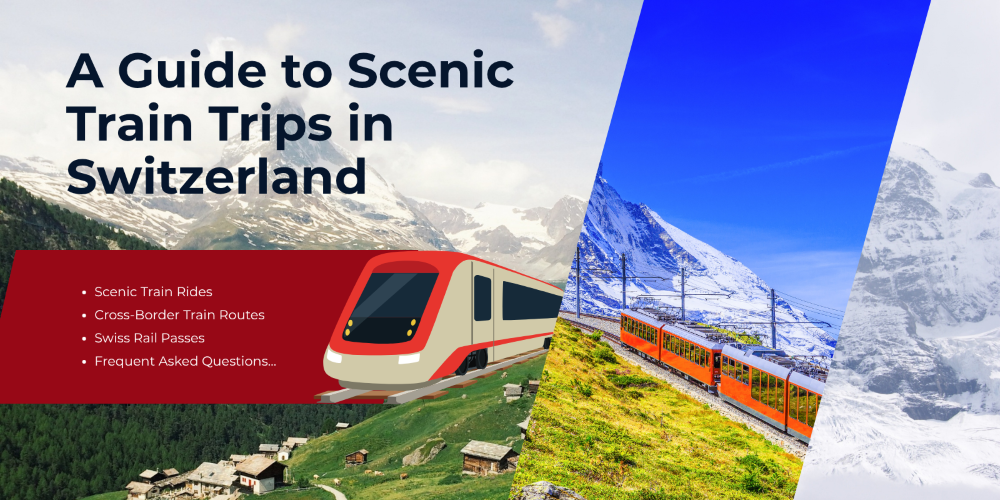
When to Go: The Seasonal Charm of the Alps
Summer (June–August) is a favorite for hikers, bikers, and scenic-train fans. Wildflowers carpet alpine meadows, cable cars run in full swing, and nearly every lake is swimmable. It's also the perfect time for a Swiss Alps train tour, with long daylight hours and crystal-clear views from panoramic cars.
Winter (December–March) is ski season. Resorts like Zermatt, St. Moritz, and Grindelwald transform into snowy playgrounds with world-class slopes, Christmas markets, and high-altitude train rides like the Glacier Express still running smoothly. If Swiss Alps skiing is your thing, this is the time to go.
Getting There & Around
Most international travelers land in Zurich or Geneva. From the airport, efficient Swiss Rail (SBB) trains connect you to major towns like Lucerne, Interlaken, Zermatt, and St. Moritz—often in under three hours.
Transport options include:
• Regular trains: Switzerland’s public transport is punctual and scenic.
• Panoramic trains: Like the Glacier Express or Bernina Express, more on these below.
• Cable cars & cogwheel railways: Great for mountain villages and viewpoints (Jungfraujoch, Gornergrat).
• Buses & boats: Included in the Swiss Travel Pass, great for routes around Lucerne or Lake Geneva.
• Car rentals: Possible, but less needed unless you’re heading to isolated areas.
Train Tours You Can't Miss
Trains in Switzerland aren’t just transportation—they’re part of the experience. Here are the top routes for your Swiss Alps train tour bucket list:
Glacier Express: Zermatt to St. Moritz in 8 hours. Think glass-domed carriages, bridges over deep valleys, and spiraling tunnels through snowy peaks.
Bernina Express: Chur or St. Moritz to Tirano (Italy), a UNESCO-protected route crossing the stunning Bernina Pass, glaciers, and high alpine lakes.
GoldenPass Line: Connects Montreux, Gstaad, and Interlaken with jaw-dropping views. The newest GoldenPass Express now offers a direct train without transfers.
Gotthard Panorama Express: A mix of boat and train—from Lucerne over Lake Lucerne to Flüelen, then train through the historic Gotthard tunnel to Ticino.
Attractions & Things to Do in Swiss Alps
Jungfraujoch: Dubbed “Top of Europe,” this is the highest railway station in Europe. You’ll get views of the Aletsch Glacier and surrounding peaks.
Gornergrat: From Zermatt, take the cogwheel train to one of the best Matterhorn viewpoints—great in both summer and winter.
Lake Lucerne: Scenic boat cruises, old-town charm, and the iconic Chapel Bridge make it a must on any route.
Château de Chillon (near Montreux): A lakeside medieval castle with a mountain backdrop. Classic Swiss postcard stuff.
Car-free villages: Mürren, Wengen, and Bettmeralp offer peaceful stays with stellar mountain views and alpine charm.
Hiking & biking: In summer, trails around Interlaken, Lauterbrunnen Valley, and the Aletsch Arena are stunning and well-marked.
Sample Itineraries (3–7 Days) in Swiss Alps
3-day Swiss Alps itinerary:
Day 1: Arrive in Zurich → Lucerne → Interlaken via GoldenPass
Day 2: Jungfrau Region (Lauterbrunnen, Wengen, or Jungfraujoch)
Day 3: Optional hike or lake cruise, return to Zurich or head to Zermatt
5-day Swiss Alps itinerary:
Day 1: Zurich → Lucerne → Boat to Vitznau
Day 2: GoldenPass to Interlaken → explore Lauterbrunnen Valley
Day 3: Train to Zermatt → Gornergrat Railway
Day 4: Glacier Express (partial route) → Chur or St. Moritz
Day 5: Bernina Express day trip or return to Zurich
7-Day winter itinerary (Dec–March):
Day 1–2: Base in Grindelwald → skiing or snowshoeing
Day 3: Jungfraujoch excursion
Day 4: Transfer to Zermatt → stroll the old town
Day 5: Gornergrat ski or scenic ride
Day 6: Glacier Express to St. Moritz
Day 7: Bernina Express to Tirano or fly out via Zurich
Insider Advice & Local Flavor
Eat like a local: Try alpine cheese fondue, rosti, and “Ghackets mit Hörnli” (a Swiss pasta dish with minced meat). Stop by family-run “Beizli” huts along the trails—they serve fresh mountain fare with unbeatable views.
Save with passes: The Swiss Travel Pass gives you access to nearly all trains, boats, and buses—plus museums and mountain excursions. Ideal for itinerary-based travel.
Go off-peak: June and September have great weather with fewer crowds. For winter, early December and late March are less crowded than peak ski season.
Bring layers: Even in summer, mountain weather can shift quickly. A light rain jacket, warm fleece, and sun protection are all essential.
Stay longer in fewer places: Instead of trying to hit every city, choose 2–3 bases (e.g., Lucerne, Interlaken, Zermatt) and explore more deeply.



 40 Resultados