ChinaAsiaPlaces to GoTravel Tips
Show All

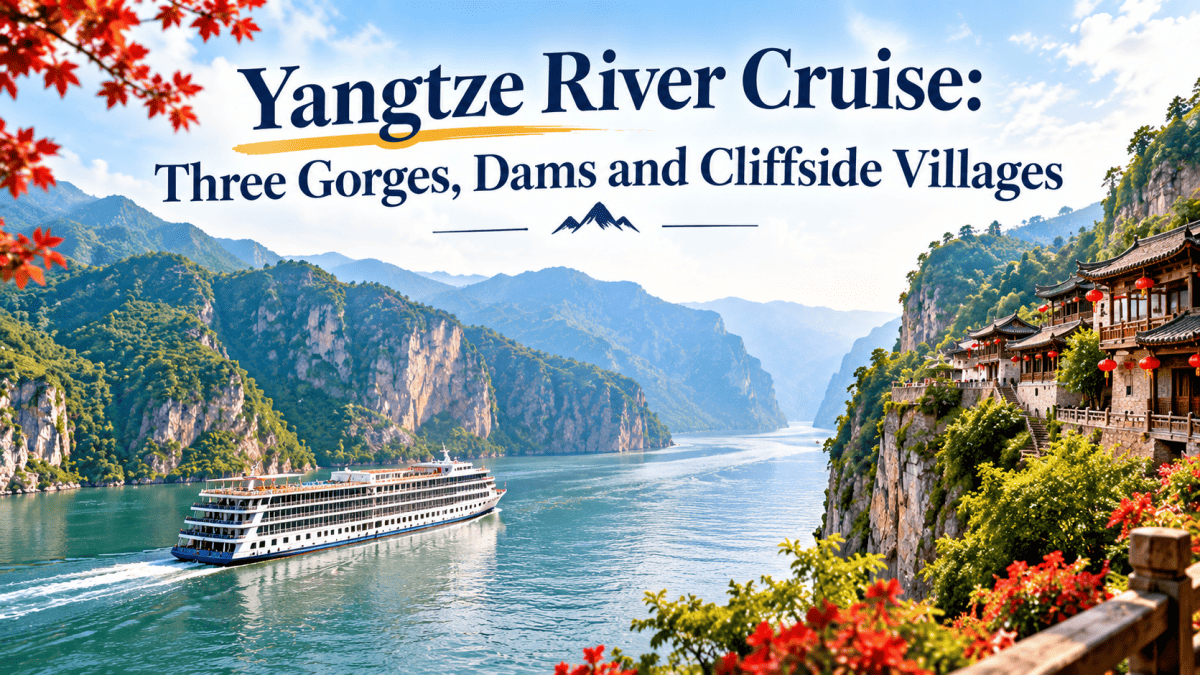
Yangtze River Cruise: Three Gorges, Dams and Cliffside Villages

cover

A Yangtze River cruise offers one of China's clearest combinations of natural scenery, major engineering, and riverside culture. The classic route runs between Chongqing and Yichang, passing through Qutang, Wu, and Xiling gorges before reaching the Three Gorges Dam area. Along the way, itineraries may add smaller tributaries, hilltop temples, historic towns, and communities built high above the modern reservoir.

For most first-time travelers, the main decisions are whether to sail downstream or upstream, which cabin to book, and which shore excursions are included. Exact docks, dam transits, and daily stops can change with water levels, navigation controls, weather, and local operations, so the cruise line's final itinerary should take priority over any general guide.


Where the Yangtze River Is Located

The Yangtze, called the Chang Jiang in Chinese, rises on the Tibetan Plateau and flows east across China before entering the East China Sea near Shanghai. It is China's longest river and the central waterway of a vast basin that includes major cities, agricultural regions, mountain valleys, and industrial centers.

Travelers asking where the Yangtze River is located are usually interested in one of two areas: the famous Three Gorges cruise corridor in Chongqing and Hubei, or the lower river around cities such as Nanjing and Shanghai. Most leisure cruises marketed internationally focus on the inland Chongqing–Yichang section because it contains the Three Gorges and the dam complex.

Yangtze

Classic Chongqing-to-Yichang Route

Route element What travelers experience Important planning note
Chongqing Embarkation city and upper-river gateway The assigned pier may change; confirm the final terminal
Upper-river excursions Historic or cultural stops such as Fengdu, Shibaozhai, or nearby sites Stops differ by ship and sailing date
Qutang Gorge Short, narrow gorge with dramatic cliffs Often viewed from the ship's open deck
Wu Gorge Long mountain views and the Twelve Peaks area Fog and weather can change visibility
Tributary excursion Lesser Three Gorges, Shennong Stream, or another small-waterway outing Boat type and accessibility vary
Xiling Gorge Broad and varied eastern gorge section Includes the wider Three Gorges Dam region
Three Gorges Dam Dam viewpoint, locks, transfer, or related excursion Lock or ship-lift passage is never guaranteed by a general itinerary
Yichang Eastern gateway and common transfer point Some sailings use a port outside central Yichang

The downstream journey from Chongqing to Yichang is commonly chosen for a first cruise. The reverse upstream sailing generally follows the same scenic corridor but may use a different pace and shore-excursion schedule. Compare the actual number of cruising days, included visits, embarkation procedures, and arrival arrangements rather than choosing by direction alone.

The Three Gorges from West to East

Qutang Gorge: A Dramatic Entrance

Qutang Gorge is the westernmost of the Three Gorges. Its cliffs close around the river, creating one of the route's most recognizable scenes. Because the passage can feel brief, it is worth checking the daily announcement and reaching an outdoor deck before the ship enters.

White Emperor City, near Fengjie, is associated with the western entrance to the gorge and appears on some cruise itineraries. Reaching its historic buildings can involve many stairs. Travelers with limited mobility should ask whether the visit offers an alternative viewpoint or a less strenuous option.

qutang

Wu Gorge: Peaks, Mist, and Tributaries

Wu Gorge is known for its long mountain walls, changing clouds, and views toward the celebrated Twelve Peaks. The landscape is often atmospheric rather than clear; mist may hide some summits while emphasizing the layered cliffs.

The Wushan area is also the gateway to the Lesser Three Gorges on the Daning River. When included, passengers transfer to a smaller vessel suited to the narrower tributary. The outing may reveal steep side valleys, hanging-coffin sites or other cultural relics, and villages positioned above the water. What is visible depends on the route and current river conditions.

wu gorge

Xiling Gorge: Scenery and Engineering

Xiling Gorge is the easternmost and longest of the three. Its appearance varies from narrower cliff sections to wider waters shaped by the reservoir and dam infrastructure. This is where the trip's natural and engineering stories meet most directly.

The Three Gorges Dam stands near Yichang in Hubei Province. Cruise itineraries may include a shore-based dam viewpoint, a passage through the multi-stage ship locks, a transfer around the dam, or a separate ship-lift experience. These are different activities. Navigation priorities and operating schedules can change, so travelers should not assume that booking a cruise automatically guarantees a specific dam passage.

xiling

What the Three Gorges Dam Adds to the Cruise

The dam is not simply a photo stop. It helps explain why the modern river looks different from historical images and why cities, ports, and settlements now sit at particular elevations. Its major functions include hydroelectric generation, flood management, and improved inland navigation, while the reservoir also transformed landscapes and required large-scale relocation.

A useful dam excursion should explain the project at a scale that is hard to understand from the ship alone. Look for clear information about whether the itinerary visits a viewing area, crosses the locks onboard, changes vessels, or transfers passengers by road. If lock transit is important to you, request written clarification but remain prepared for an operational change.


Cliffside Villages, Temples, and Riverside Communities

The phrase “cliffside villages” describes part of the visual appeal, but the river corridor is more varied. Travelers may see modern relocated towns, cultivated slopes, apartment districts, old temples above the water, working docks, and smaller settlements at tributary entrances. A China Yangtze River cruise is therefore as much a view of contemporary river life as a journey past historic scenery.

Shibaozhai

Shibaozhai is known for a red wooden pavilion built against a steep rocky hill. It appears on some upper-river itineraries and provides a close look at traditional architecture in a striking riverside setting. The visit may involve walking, stairs, and gangways whose angle changes with the water level.

Fengdu and Other Cultural Stops

Some cruises call near Fengdu for a cultural or historic excursion. The exact site may vary, and some attractions include steep paths or numerous steps. Read the excursion description carefully rather than assuming every “easy” shore visit is flat.

Shennong Stream and Smaller Tributaries

Shennong Stream and similar tributary outings use smaller boats to enter narrower valleys that large cruise ships cannot access. These excursions can bring passengers closer to rock walls, forest, and waterside communities. Cultural performances or demonstrations may be part of the program; travelers should view them as organized presentations rather than unfiltered access to private village life.

Choosing a Chongqing Yangtze River Cruise

A Chongqing Yangtze River cruise should be judged on more than the ship's star rating or cabin photograph. Ask these questions before booking:
  1. What are the exact embarkation and disembarkation points? Chongqing and Yichang each use multiple port areas, and transfers may not end in the city center.
  2. Which excursions are included? Some advertised stops cost extra or require a minimum number of participants.
  3. Will English-language guidance be available? Announcements, lectures, and shore tours vary by sailing.
  4. What cabin features are guaranteed? Confirm bed type, balcony, deck, window access, and whether the view can be obstructed.
  5. How are meals arranged? Check seating, included drinks, dietary requests, and whether Western options are offered.
  6. What happens if an excursion or local transit changes? Understand the operator's substitution and transfer policy.
When comparing Yangtze River cruise packages, focus on the complete land-and-river itinerary. A slightly longer trip may simply add hotel nights or city sightseeing rather than more time sailing through the gorges.
 

Downstream or Upstream: Which Direction Is Better?

Neither direction is universally better.

Downstream from Chongqing to Yichang is popular with travelers who want to begin in a major inland city and finish closer to central or eastern China. The current may allow a faster overall schedule, although the practical duration depends on the ship and itinerary.

Upstream from Yichang to Chongqing may use a more leisurely schedule and give the journey a major-city finish. It can work well when Chongqing is the starting point for onward travel in western China.

Choose according to flight or rail connections, included excursions, cabin availability, and the final transfer—not a promise that one direction always has better views. The Three Gorges can be seen in either direction.


Best Time for a Yangtze River Cruise

Spring and fall are often favored for milder temperatures, but there is no guaranteed season for clear views. Summer can be hot, humid, and rainy, while winter is cooler and may have fewer sailing options. Fog is part of the river's atmosphere and can occur in different seasons.
Consider the following trade-offs:
  • Spring: Comfortable sightseeing temperatures are possible, with changing rain and mist.
  • Summer: Lush scenery and longer daylight, but more heat, humidity, and potential weather disruption.
  • Fall: Often pleasant for deck viewing, with strong demand around public holidays.
  • Winter: Cooler, quieter conditions on some dates, but reduced schedules and cold outdoor decks.
Check the sailing calendar and regional forecast shortly before departure. A forecast for Chongqing alone will not describe conditions throughout the full gorge corridor.

What to Pack

Bring layers that work in air-conditioned interiors and on windy decks. Useful items include:
  • Comfortable shoes with reliable grip for stairs and sloped gangways
  • A light rain jacket and compact umbrella
  • Sun protection, water bottle, and personal medication
  • Passport and copies of booking and transfer details
  • A charged phone, backup battery, and offline translation tools
  • A small day bag for shore excursions
  • Motion medication if advised by your healthcare professional, although the river is generally calmer than an ocean crossing
Do not leave essential medication in checked or separately transferred luggage. Pack valuables and documents in the bag that remains with you during embarkation and shore visits.
 

Accessibility and Safety

Cruise ships may have elevators, but shore access can still involve floating docks, steps, uneven surfaces, and steep gangways. Water level changes can alter the difficulty of boarding. Travelers with mobility limitations should request route-specific information, not only general ship accessibility details.

Follow crew instructions during lock passages and excursions, remain inside marked areas, and return to the meeting point early. Do not assume the ship will wait for independent travelers who miss the announced departure time. Travel insurance should cover the cruise, associated land travel, and relevant medical needs.

Planning a Wider China Itinerary

Chongqing and Yichang can be connected with other parts of China by rail or air, but leave enough time between the cruise and separate tickets. Operational delays or a changed disembarkation point can make a tight same-day connection risky.

Travelers building a longer route can review China tours for destination ideas or compare China vacation packages when organized transport and multiple cities are useful.


The best cruise is not only a sequence of famous views. Qutang, Wu, and Xiling gorges reveal the river's geology; tributary excursions bring the cliffs closer; the dam explains the scale of modern change; and riverside communities show that the Yangtze remains a working landscape. Choose a sailing with clear inclusions, realistic transfers, and enough deck time to watch that story unfold.
 

FAQ

How many days does a Yangtze River cruise take?

Most classic Chongqing–Yichang itineraries last several days, but the advertised package may include hotel stays or city tours before and after sailing. Compare embarkation time, disembarkation time, and actual nights onboard rather than relying only on the package-day count.

Is the Three Gorges Dam included on every cruise?

Most classic Three Gorges itineraries feature the dam area, but the experience varies. A shore viewpoint, ship-lock transit, road transfer, and ship-lift excursion are not the same. Confirm what is scheduled and understand that navigation controls may require changes.

Can I see villages from the cruise ship?

Yes, passengers can see towns, farms, docks, temples, and settlements on the slopes. Closer village or tributary experiences usually require a shore excursion or transfer to a smaller boat. Access and cultural programs differ by itinerary.

Are Yangtze cruises suitable for children?

They can suit families who enjoy scenery and structured excursions, but children's facilities vary by ship. Check cabin capacity, meal options, railings, supervision requirements, excursion difficulty, and whether long periods of quiet scenic cruising match the child's interests.

Do I need to speak Chinese on board?

Not necessarily. Many cruises marketed to international travelers provide some English-language service, but the level varies. Confirm whether English guidance applies to onboard announcements, lectures, menus, emergency instructions, and every included shore excursion.

Summary

Where the Yangtze River Is Located

Classic Chongqing-to-Yichang Route

The Three Gorges from West to East

What the Three Gorges Dam Adds to the Cruise

Cliffside Villages, Temples, and Riverside Communities

Choosing a Chongqing Yangtze River Cruise

Downstream or Upstream: Which Direction Is Better?

Best Time for a Yangtze River Cruise

What to Pack

Accessibility and Safety

Planning a Wider China Itinerary

FAQ

America's 250th Anniversary Mega Sale

image