ValenciaSpainEuropePlaces to GoThings to DoFood & DrinkTravel TipsVacations
Show All

Valencia Travel Guide: Paella, Fallas and Calatrava

cover

Valencia is Spain's third-largest city, and it does not behave like one. More than 2 million people live here, the port moves more containers than any other on the Mediterranean, and the old town still follows lanes set when the place was a Roman colony founded in 138 B.C.


Two cores hold the city together. The old city keeps the cathedral, the market and the silk exchange; the City of Arts and Sciences puts a cinema, a science museum and an aquarium at the other end of a nine-kilometer park that runs in the old riverbed. Walking or cycling between them takes an afternoon, and it is the one route almost everyone ends up taking.


So where does a first visit start? A Valencia travel guide that opens with the cathedral misses the shape of the place: two cores with a park between them, and the rice fields south of both. Everything that decides the trip sits inside that shape: what to eat and when, how the festival calendar changes the city, and how to move around without a car.

8-Day Spain and Portugal Tour Package from Valencia

8-Day Spain and Portugal Tour Package from Lisbon/Barcelona/Valencia: Seville, Lisbon and Madrid
Guaranteed Departure
Shared Room Available
Affordable
Free eSIM
5.0
Tour Code: 664125
Start / End City
Lisbon, Barcelona, Valencia
Duration
8 Days
City & Attractions
Lisbon, Madrid, Toledo, Spain+22 more
Languages
Chinese Live, English Live
Group Size
Max. 50 travelers
Tour Audience
Chinese speakers
Save 10%
From$1,146.98
$1,032.28

The Old City and Its Two Cores

Ciutat Vella is the old city, and it has two working centers rather than one. The cathedral square sits at one end, the Central Market at the other, and the lanes between them hold the old gates, the silk exchange, and the streets of Barrio del Carmen. You can walk both halves in a day, and the market is the better place to start.


The Cathedral and El Miguelete


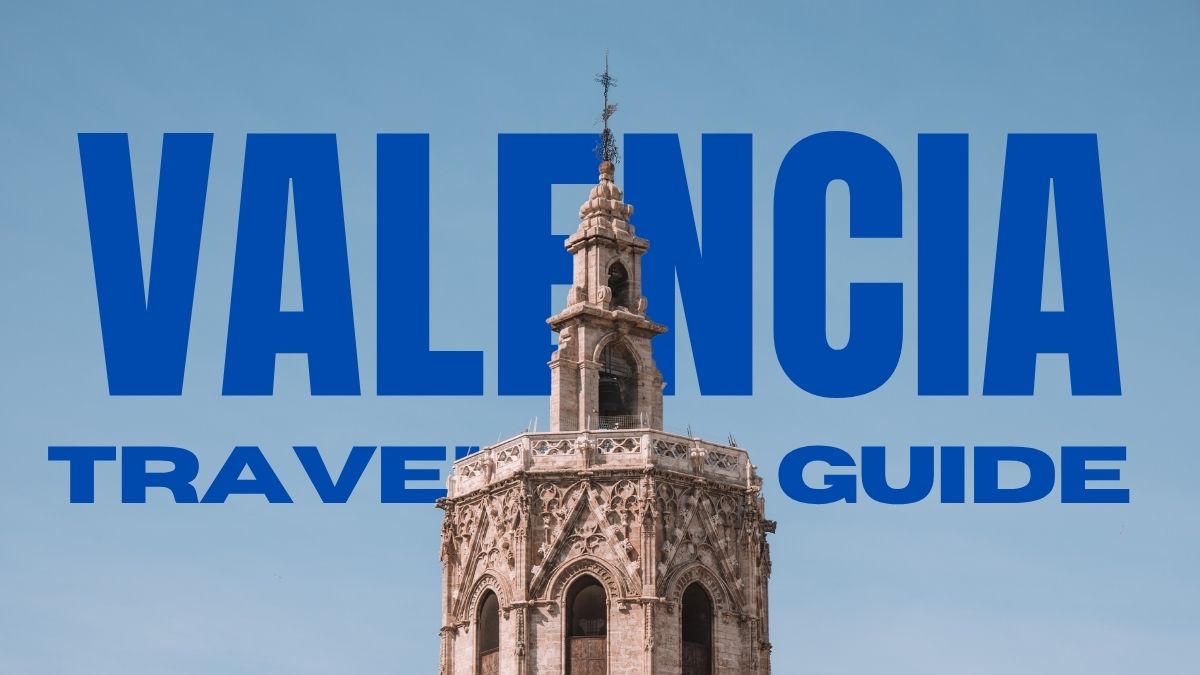
Valencia Cathedral is where most visits begin, and the building is not the whole reason. It is the legendary repository of the Holy Grail, and the object itself is kept inside. Give the church an hour, then climb El Miguelete, the tower beside it, for the view over the rooftops. From up there the city reads as a shape: the old core on one side, the science complex away in the park on the other.

Valencia Cathedral


Mercado Central and La Lonja de la Seda


Mercado Central is one of Europe's largest and oldest food markets, and the building justifies the stop before the stalls do: a glass dome carried on a wrought-iron frame, with the trade going on underneath it. Come in the morning, when the city is doing its real shopping rather than posing for photographs, and eat something standing up.


La Lonja de la Seda was the center of the silk trade, a 15th-century Gothic hall built for merchants settling contracts. It takes twenty minutes, and the pleasure is architectural rather than historical: the room is the exhibit.


Barrio del Carmen and the Old Gates


Barrio del Carmen is the quarter of narrow streets inside the old gates, and it is where the afternoon goes once the market winds down. Torres de Serranos is the gate you will end up photographing, and the lanes behind it are the ones worth getting slightly lost in.


If you want the quarter explained while you walk it, a Valencia tour covers the cathedral, the gates, and the market in a morning and takes the ordering off your hands. If you would rather keep your own pace, walk it yourself and finish in Ruzafa for dinner.

The City of Arts and Sciences

The City of Arts and Sciences is the second core, and it is the one part of Valencia that looks built for another century. Santiago Calatrava designed the complex, and it sits at the far end of the Turia Gardens from the old city. Half a day, or a whole one? Half is the minimum here, and families should give it a full one.


What the Complex Holds


Three buildings carry the visit: a cinema, a science museum and the Oceanogràfic. The Oceanogràfic is the largest aquarium in Europe, which is the number that explains why it is the part people plan around and why families give it a morning of their own.


Oceanogràfic With Children


If you are traveling with kids, put the aquarium at the front of the day. Adults on a short trip can see the complex from outside, take the photograph and move on, because the buildings themselves are half of what there is to see.

Oceanogràfic


The Turia Gardens Between the Two Cores


The Turia Gardens were a riverbed before the river was diverted, and the city turned the empty channel into a nine-kilometer park. It runs from the old city to the science complex, which makes it the walking and cycling route between the two cores. Rent a bike, and you cover the same ground in a fraction of the time.

Paella and Where It Is Actually Eaten

Valencia claims paella as its own, and the claim is geographic rather than sentimental: the rice grows in the paddies south of the city, and the dish comes out of the lives of the people who worked them. It matters when you order, because it tells you which version of the dish you are being sold.


The Rice Fields South of the City


Albufera Natural Park starts about 10 kilometers south of Valencia: a freshwater lagoon ringed by rice paddies, and the place named as the birthplace of paella. Take a traditional boat out on the lagoon, walk a field edge, and stay for the sunset. It is the half day most itineraries skip and the one that fits best at the end of a trip.


Where to Order It in Town


In the city, paella is mostly a timing question. Locals eat after 8:30, so a table at seven is a table of visitors; book for nine and you eat with the city. Ruzafa is where the evening eating happens, and the restaurants along Malvarrosa do the version that arrives with the sea in front of you.

Fallas and the Festival Calendar

Most of Valencia waits for you all year. The third week of March does not, and it is the one date a Valencia, Spain, travel guide has to get right: the city gives itself over to Fallas, and every other week of the year is quieter.


What Happens in the Third Week of March


The city builds enormous effigies for the festival and sets off fireworks on a schedule of its own; the center fills every evening of that week. Book accommodation well in advance if you want to be here for it, because the rooms are the constraint. Travelers who would rather not chase one can price the Valencia vacation packages that include the stay.


If crowds are what you came to avoid, treat those dates as a reason to move the trip rather than a detail to work around.


The Rest of the Year, Season by Season


Outside the festival, the year splits cleanly into four seasons, and the numbers below are what each one actually delivers.


Season What the weather does What it means for the trip
Spring, March to May 18°C (64°F) in March, 25°C (77°F) by May, low humidity Fallas in the third week of March, then the best walking weeks of the year
Summer, June to August Around 30°C (86°F), sea breezes, almost no rain Warmest sea, busiest sand at Malvarrosa, dinners that run late
Autumn, September to October 28°C (82°F) in September, 20°C (68°F) by November, sea warm into mid-October Swimming without the August crowd, though October is the wettest month
Winter, December to February January highs near 16°C (61°F), nights rarely below 6°C (43°F) Citrus harvest, short queues at the Silk Exchange, lower room rates


The short answer is April, May, September and October: warm enough to walk all day and far quieter than July and August, which is why those are the weeks to book first.

The Beach and the Port

Valencia has a working port and a city beach on the same waterfront, which is unusual enough to plan around. The beach is where people go after work, and the port is the working half of that same waterfront. Give the two an afternoon and you get a day with no museum in it.


Malvarrosa and Las Arenas


Playa de la Malvarrosa is the urban beach, used by people who live here rather than by hotels, and lined with restaurants doing seafood. Playa de las Arenas is the promenade stretch, where the evening walk happens. Come late in the afternoon, swim if the water is warm, and eat with your feet still sandy.


The Port


The Port of Valencia is the fifth busiest container port in Europe and the busiest container port on the Mediterranean. It is working ground rather than a sight, so the view from the sand is the visit: cranes along the quay and ships waiting offshore, at a scale that explains the money behind the old city.

Valencia Travel Itinerary

Two or three days is the right amount of time for Valencia, and four is relaxed if you want the lagoon or the Roman ruins as well. A travel guide Valencia visitors trust would put it this way: keep the two cores on separate days, put the evenings where the food is, and the trip organizes itself.


Day 1: Market, Cathedral, Carmen


Breakfast at Mercado Central, then the cathedral and the climb up El Miguelete, then the afternoon in Barrio del Carmen and the old gates. Dinner in Ruzafa. No transport needed all day.

Valencia food


Day 2: The Science Complex and the Beach


Walk or cycle the Turia Gardens to the City of Arts and Sciences in the morning, and start with the aquarium if you have children. Afternoon on the sand at Malvarrosa or the promenade at Las Arenas, then paella near the water. If it rains, the science museum absorbs the afternoon and the day still works.


Day 3: The Lagoon or the Ruins


A third day is a choice between two directions. South is Albufera, 10 kilometers out, with the boat, the rice fields and the sunset. North is Sagunto, with the Roman theater and the hilltop castle ruins above the coast. Wine drinkers can head inland to Requena in the Utiel-Requena region, where a bodega visit usually ends with Cava.


Getting Around Without a Car


The airport sits on the metro. As of November 2026, Line 3 runs from Terminal 1 to Xàtiva or Colón in 15 to 20 minutes, every 12 minutes, for €2.25 or €1.80 off-peak, and the gates take contactless cards. A taxi into the center is €20 to €25, and the bus is €4 and slower. Inside the city, Metrovalencia covers the outer neighborhoods and the EMT buses fill the gaps, but most of what you came for is walkable.


The Valencia Tourist Card bundles unlimited public transport with discounts at more than 30 sites, the City of Arts and Sciences included at up to 20 percent off, in 24, 48 and 72-hour versions for €17 to €32. Do the arithmetic against your own list before buying. On a two-day trip spent mostly on foot, it rarely pays.


Two habits are worth knowing before the first bill. Tipping is not mandatory, and rounding up or leaving 5 to 10 percent is what good service gets. Tap water is safe to drink, so ask for it rather than buying bottles all week.


If Valencia is one stop on a longer Spain tour, two nights here fit between Barcelona and Madrid without much strain, and the old city is small enough to see on the way in.

What a Travel Guide to Valencia Spain Leaves Out

Valencia rewards a short stay more than most cities of its size. The two cores sit close enough to walk between, the food is the main event rather than a side note, and the beach is one metro ride from the cathedral. What it does not reward is a full schedule. The good hours are the unbooked ones: a second coffee in the market, the walk along the Turia in the late afternoon, a dinner that starts at nine and ends when it ends.


So here is the trade. If something has to go, it is the beach afternoon, not the lagoon: the rice fields and the boat are the part of Valencia you cannot get on another coast, and the sand is the part you can. And if your dates land in the third week of March, decide now whether you want Fallas or quiet streets, because the city will not give you both.

FAQ

How many days do you need in Valencia?

Two covers the old city and the City of Arts and Sciences. Three adds the beach properly, and four makes room for Albufera or Sagunto without rushing.

When should you go?

April, May, September and October are the easy months for walking. The third week of March is Fallas, which is either the reason for the trip or the week to avoid.

Do you need a car?

No. Line 3 reaches the center from the airport in 15 to 20 minutes, and the old city is a walking city.

Where not to go in Valencia?

For most tourists, staying in Eixample, Ruzafa or the central historic district and using normal city precautions is perfectly reasonable.

Summary

The Old City and Its Two Cores

The City of Arts and Sciences

Paella and Where It Is Actually Eaten

Fallas and the Festival Calendar

The Beach and the Port

Valencia Travel Itinerary

What a Travel Guide to Valencia Spain Leaves Out

FAQ

America's 250th Anniversary Mega Sale

image