Aix-en-ProvenceAvignonFranceEuropeBest TimePlaces to GoThings to DoFood & DrinkVacations
Show All

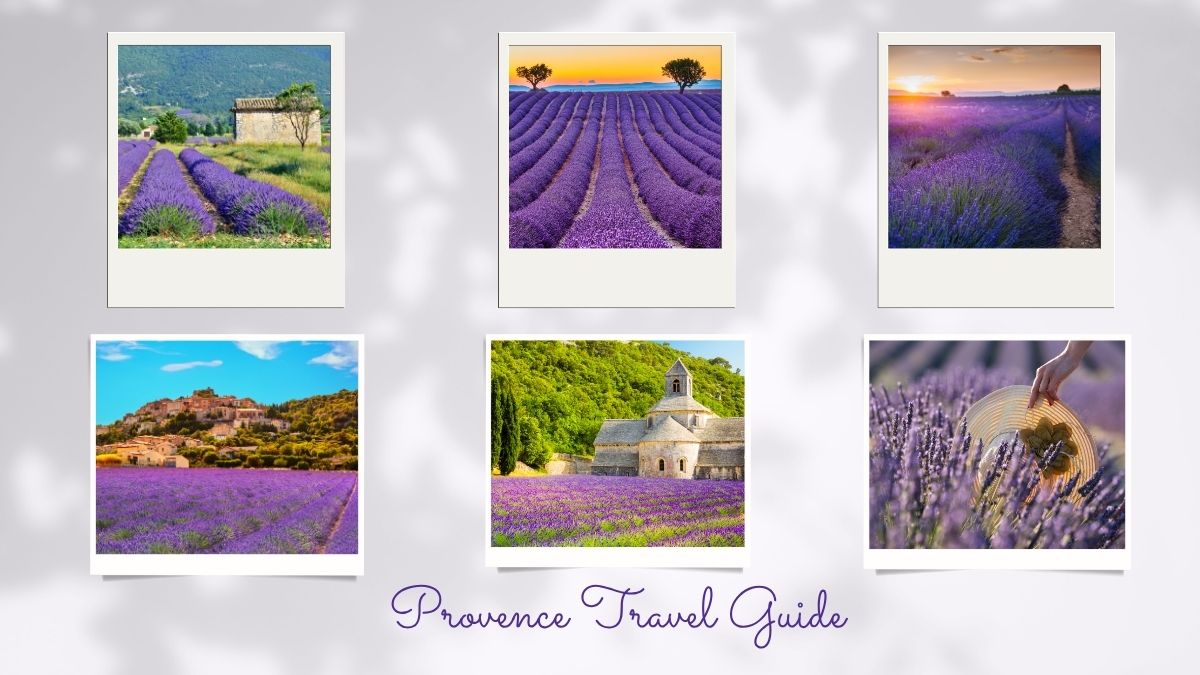
Provence Travel Guide: Lavender Fields and the Riviera

cover

Provence is larger than the postcards suggest. It runs across southeastern France from the Rhône Valley to the Mediterranean, and the lavender fields that fill travel photos sit in a small corner of it, on the Valensole plateau and in the hills above Gordes. Plan two bases instead of one, and you spend your days looking at villages rather than at the road.


This Provence travel guide is built around that split, because the towns, the fields and the sea ask for different shoes and different mornings. Avignon puts you inside the papal palace and the market streets. The hills put you in stone villages. The coast puts you on cliff paths above cold blue water. Which of those three sounds like your trip?


Any good Provence, France travel guide or travel plan starts with the same warning: you cannot cover the whole region in a week without spending half of it in a car. So read the chapters below as a way to choose, not a list to finish. Five days is enough for lavender and sea, and I'd suggest both.

7-Day France & Spain Loop Tour

7-Day France & Spain Loop Tour: Paris,  Avignon, Loire Valley, and Bordeaux | Free Barcelona City Walk
Guaranteed Departure
Instant Confirmation
Free eSIM
4.8( 45 reviews )
Tour Code: 737574
Start / End City
Paris, Barcelona
Duration
7 Days
City & Attractions
Paris, Avignon, Provence+14 more
Languages
Chinese Live, English Live
Group Size
Max. 55 travelers
Save $188.15
From$776.12
$587.97


The Three Provences, and Which One You're Booking

Provence is sold as one thing and behaves like three. Each band has its own base town, its own weather and its own reason to be there, and the one you pick decides how much of your day goes to driving.


The Rhône Corridor: Avignon and Orange


Avignon is the City of Popes. The Vatican moved here in 1309 and seven popes ruled from the town until 1377, which is why the Palais des Papes was built here. Half a day in that building, then a long lunch, is a fair way to start. Orange still has its Roman theatre, one of the sites the ProvencePass covers. The valley around both towns is wine country that sits alongside Bordeaux and Burgundy in any conversation about French wine, and Châteauneuf-du-Pape is the name to look for on a tasting list.

avignon


The Hills: Gordes, Roussillon and the Luberon


Gordes is the village people picture when they say Provence: medieval houses stacked in limestone, which is how it earned the floating village nickname. Gordes features in A Year in Provence, and the Abbaye de Sénanque sits close enough to pair with it in one morning. Roussillon's cliffs are ochre. The Luberon villages around them run truffle markets and olive presses depending on the month, and the Alpilles are hiking country.


The Coast: Marseille, Cassis and the Calanques


This is the band to book when the sea matters more than the villages. Marseille is the base if you want a city, and Cassis is the base if you want a small town. Pick one, and give the coast a full day rather than an afternoon tacked onto a hills itinerary.

Lavender Season: What the Dates Actually Mean

Blooms are the reason half of you are reading this, so here is the calendar without the romance. The window is short; it moves a little every year, and the fields are farmland rather than scenery.


Mid-June to Late July


Lavender in Provence typically opens in mid-June and finishes around the end of July. That gives you roughly six weeks, and the last week of June plus the first two of July are the safest bet. Outside them, the rows are just rows of a crop.

provence


Early July, and Early Mornings


Color peaks in early July. The Valensole plateau is where the fields run to the horizon, and the Abbaye de Sénanque near Gordes gives you the stone building and the rows in one frame. Go at sunrise if you can; crowds build through the morning, and the light flattens.


What the Fields Can't Promise


Climate, the growth cycle, and harvest dates all move the season, so no field is guaranteed on your dates. Growers cut when the oil is right, not when your trip is booked. Build the lavender day early and keep a town day in reserve, so a bad field costs you an afternoon rather than the trip.

Avignon, Aix, Arles and the Towns Worth a Morning

Avignon, Aix, and Arles hold most of the region's history between them, and the smaller stops fit around those three. Give each one a morning or an afternoon rather than an hour.


Avignon


The Palais des Papes is the reason most people stop here. The lanes behind it are where you eat, and the riverside is where you walk off lunch. Give the palace a morning and the town the rest of the day.


Aix-en-Provence


Aix is the genteel one. Tree-lined avenues, and markets piled with olives, herbs and local wine. This is the town for a slow morning and a long coffee, and it wears its seasons well: wine festivals in autumn, Christmas fairs in winter. If you have one rainy day on the trip, spend it here.


Arles


Arles has two layers. Underneath is Roman Provence, with ruins still sitting in the streetscape. On top is Van Gogh, who spent about a year here and painted more than 200 oils in that stretch, among them Cafe Terrace at Night, Vincent's Bedroom in Arles and The Langlois Bridge at Arles with Women Washing. Walk to the sites, and the paintings stop looking like inventions.

aries


Orange, Roussillon and the Small Stops


Orange holds a Roman theatre you can still stand inside. Roussillon is all ochre cliffs and rust-colored houses, and an hour covers it. Apt fills with cherry blossoms in spring, and Richerenches runs truffle markets in winter. None of them needs a full day.

The Riviera Stretch Is a Different Trip

The coast is not a suburb of the hills. It has its own weather, its own traffic and its own pace, and people who loved Gordes sometimes dislike Marseille on the same trip.


Marseille and the Calanques


Marseille is a working city with a dramatic edge: the Calanques cut into the limestone along the edge of the city, and the Corniche roads follow the water. Come for a morning, take the corniche slowly, and eat lunch somewhere unglamorous a street back from the water.


Cassis and the Coastal Trails


Cassis is the small version of the same coast. Coves you can swim from, sea breezes that keep August bearable, and trails into Calanques National Park that reward you with water an unlikely shade of blue. It suits a half day, or a full one if you walk.


Nice, Monaco and Cannes


Further east, the coastline turns into the Riviera proper, with Nice, Monaco and Cannes on the itineraries that finish at the sea. That is a beach-and-city trip rather than a lavender one, and it is worth deciding which of the two you actually want before you book. If you want all three names on the same trip, look at a France tour that finishes on the coast instead of looping back to Paris.

nice

5-Day Provence Itinerary

Five days is the honest minimum. It buys you the papal town, one field morning, one Roman town, and one day at the water, with a base change in the middle. Here is the order I'd suggest.


Day 1: Land in Avignon


Start in Avignon, because everything else radiates from it. If you are coming from Paris by road, the drive is about 690 km, which is most of a day, so plan on arriving in the evening and eating close to the hotel.


Day 2: Gordes and the Abbaye de Sénanque


The hills day, and the one to protect. Gordes is 39 km from Avignon, close enough to reach before the light gets hard. See the abbey and its lavender rows, stop at the Lavender Museum on the way, then loop back through the Luberon villages for lunch. This is the day that needs a car or a driver, since the villages sit apart from each other. If Valensole is the field you have in mind, add a night on that side of the region instead of driving back to Avignon.


Day 3: Arles


Arles is also 39 km from Avignon, an easy run. Follow the Van Gogh sites while the streets are still cool, and spend the afternoon on the Roman ruins. If rain sets in, the old town is compact and the cafes sit close together, so you lose an hour rather than a day.


Day 4: Aix-en-Provence


Move the base or drive east; either works. Aix rewards a market morning and a long lunch more than a checklist, and the town is small enough to cover on foot in an afternoon. Summer brings the heat, so start early and sit still at noon.


Day 5: Marseille, then Cassis


Finish at the water. Marseille in the morning for the corniche and the Calanques, then Cassis for a swim and a late lunch before the drive back. If you are flying home from Marseille, this is the day to be closest to the airport.


If it rains on the hills day, swap it with the Aix day and hope for better light tomorrow. If you have three days rather than five, cut the coast and keep Avignon, Gordes and Arles, because the lavender and the Roman towns are the part you came for.

What It Costs and When to Book

Four things eat the budget: a room in July, a car, the tickets, and the meals you did not plan for. None of them is hard to control if you decide early.


As of November 2026, the ProvencePass covers more than 30 sites, including the Palais des Papes in Avignon and the Roman theatre in Orange, and it comes in 3-, 5-, and 7-day versions. Does it pay off? If you plan to enter three or more sites, yes, but price it against single tickets first. Guided add-ons are separate: a Pont du Gard visit with transfer runs about €25 a person.


Getting in from Marseille Provence Airport is the one place where the cheap option is also the fast one. The shuttle to Aix runs every 15 to 30 minutes, takes about 25 minutes, and costs €8 one way. A taxi for the same trip is €40 to €50. After that, the car is what buys you the hills, and it is worth paying for if lavender is the point.


Timing decides both price and crowds. Late June and early July are the weeks everyone wants, so rooms near the fields go first and cost the most. September and October give you 18°C afternoons and shorter queues; winter drops to 5°C to 12°C but brings the truffle markets, and spring 13°C to 20°C with cherry blossom. If you are weighing a Provence tour against doing it yourself, the trade is simple: a coach removes the driving and the parking; a car removes the schedule. Comparing Provence vacation packages side by side is the quickest way to see how differently operators split five days.

Choosing Your Version of Provence

If you remember one thing from this Provence travel guide, make it the split: the towns, the hills and the sea are three trips wearing one name, and squeezing all three into five days turns a holiday into a transfer schedule.


Pick Avignon as your base if you want the fields and the Roman towns without changing hotels. Pick late June or early July if lavender matters more than crowds, and take September or October if it does not. Add the coast when you have a sixth day, rather than by trimming the hills day.


If your dates land in a heat wave, keep the mornings for villages and the afternoons for water. If they land in the harvest, keep the towns and drop the fields.

FAQ

How many days do you need in Provence?

Five is the useful minimum: two nights in Avignon, a day in the hills, a day in Arles or Aix, and a last day at the coast. Three days works if you stay west and skip the sea.

When is the lavender in bloom?

Mid-June to late July. Go at sunrise; by midday the heat and the crowds arrive together and the light goes flat for photos.

Do you need a car?

Yes for the villages, or a driver; the Luberon stops are spread out. For Avignon, Arles and Aix, a car is convenient rather than essential.

Do you need a guide to Provence France, or can you plan it yourself?

You can plan it yourself with a car and two bases. A guided day makes sense for the hills if nobody wants to drive.

Should you add the Riviera?

Add it if you want swimming and a city with rough edges. Marseille and Cassis deliver both, and the cost is less time in the villages.

Summary

The Three Provences, and Which One You're Booking

Lavender Season: What the Dates Actually Mean

Avignon, Aix, Arles and the Towns Worth a Morning

The Riviera Stretch Is a Different Trip

5-Day Provence Itinerary

What It Costs and When to Book

Choosing Your Version of Provence

FAQ

America's 250th Anniversary Mega Sale

image