The Algarve: Cliffs, Caves and Where to Base
The Algarve is two coastlines in one region. It covers 4,997 square kilometers and splits into a western half called the Barlavento and an eastern half called the Sotavento.
What the Coast Actually Looks Like
Rock stacks stand in the water off Ponta da Piedade, and the cliffs run in gold and ochre bands above coves you reach by stairs cut into the stone. Praia da Marinha and Praia do Camilo are the two beaches to plan around.
The Caves, and the Walk Between Them
Benagil Cave is the one everybody asks about, and you reach it by boat rather than on foot. The Seven Hanging Valleys Trail covers the same cliff on foot, linking the beaches above the caves. Do one or the other, since the boat runs to a schedule and the walk deserves its own day.
Lagos, Albufeira or Tavira
Lagos anchors the western end, closest to Ponta da Piedade and the cave boats, with the most going on after dark. Albufeira is further east and more resort than town, with the beach at the bottom of the old center. Tavira, out in the Sotavento, is the quieter option, and it makes the better base if you want a town rather than a strip.
Two nights cover the coast if you pick one base and stay in it. A third lets you add the cliff walk and a boat morning without stealing a day from Lisbon.

The Douro Valley: Port, Terraces and the River
The Douro carries more water than any other river on the Iberian Peninsula. It runs 897 km from its source at Pico de Urbión in Spain to the Atlantic at Porto, and the last stretch runs through hills so steep that the vineyards have to be terraced to hold on.
How the Wine Got to Porto
Port wine used to be floated. Growers loaded barrels onto flat-bottomed boats called rabelos and ran them downriver to the lodges at Vila Nova de Gaia, across the water from Porto. Tanker trucks do that job now and the rabelos carry passengers instead. The terraces have been worked for around 2,000 years, and the Alto Douro Wine Region is a UNESCO World Heritage site because of them.

A Day Trip or a Night in the Valley
Pinhão and São João da Pesqueira sit at the center of port production, and the quintas, the wine estates, run along the slopes around them. You can see the valley on a day trip from Porto, and plenty of people do exactly that.
Staying one night changes the arithmetic. The light is better late in the day, the tasting rooms are quiet in the morning, and nobody has to drive back in the dark. A day tour usually fits two estates with three wines poured at each, plus a 45-minute river cruise at Pinhão. Budget a full day for it.
The Train and the Locks
The Douro railway line was finished in 1887 and runs from Porto to Pocinho, holding close to the river most of the way, so the train works as a scenic ride, not plain transport. On the water, fifteen dams control the flow and five of them have locks, which is why river boats can reach the upper valley at all.
The Azores: Which Island for Which Trip
Nine volcanic islands spread across more than 600 km of the North Atlantic. The Azores are not a stop you bolt onto a Lisbon week.
The islands come in three groups. Flores and Corvo sit in the west, Graciosa, Terceira, São Jorge, Pico and Faial in the center, and São Miguel, Santa Maria and the Formigas islets in the east. Around 236,440 people live out there, with Ponta Delgada the largest city and the executive capital.
São Miguel, Where Most Trips Start
São Miguel has the widest spread of things to do in a short stay. It is also where the water trips leave from, including a dolphin and snorkel boat that runs about two hours from the marina at Vila Franca do Campo, with two swimmers in the water at a time.
You are swimming with wild animals, so nothing is promised. The guide decides on the morning whether conditions allow the swim, and the second half of the trip moves to a coastal spot for snorkeling. A canceled morning leaves room for another attempt.
Terceira, Pico and Faial
Terceira has Angra do Heroísmo, whose town center is UNESCO-listed. Pico carries Mount Pico at 2,351 m, the highest point in Portugal. Faial has Horta, one of the archipelago's three capitals. Pick one island beyond São Miguel and give it three nights, or pick two and accept that you will spend a morning in transit.
What the Weather Does
The climate is mild, wet and changeable. Daytime temperatures run between 16 and 25°C, and the main towns never see above 30 or below 3. Cloud is part of the scenery, so pack a waterproof layer.
Lisbon and Porto: How Much Time Each Deserves
Lisbon sits on seven hills, and that one fact explains the trams, the viewpoints and why your calves complain on the second day. Belém, downriver from the center, holds the Monument to the Discoveries, Belém Tower and the Jerónimos Monastery, and the monastery alone takes a morning.
Three Days in Lisbon, and What Fills Them
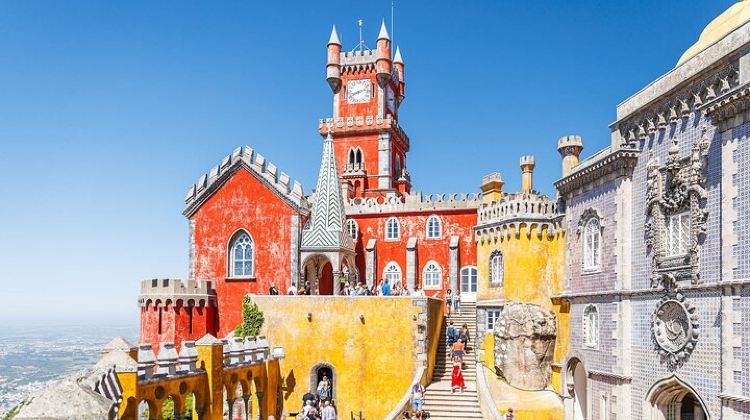
Give the city three days. One for Belém and the riverfront, one for Alfama and the castle hill with fado after dinner, and one for Sintra, where the Pena Palace and the Moorish Castle sit above the village and Cascais waits on the coast road back. Sintra is a day trip, not an afternoon, and the palaces want booking ahead.
Ride the Tram 28 before the queue forms, eat a pastel de nata while it is still warm, and let the tiled sidewalks slow you down. They are uneven and slippery when wet, which is the argument for flat shoes.

Porto: Two Days, Then the Valley
Porto is smaller and steeper. The Ribeira runs along the river under the Dom Luís I bridge, and the historic center around it is UNESCO-listed. São Bento station is worth ten minutes for the tile panels, and Livraria Lello is the city's oldest bookstore. Across the bridge, Vila Nova de Gaia holds the port lodges and their tasting rooms.
Two days cover the city comfortably. The valley needs one more, which is why the sensible order runs Porto, then the Douro, then a train south to Lisbon.
Booking the Two Cities Together
The transfers between the airport, station and hotel are the part that eats a morning. If you want those handled as one arrangement, Portugal vacation packages put the rooms and the train leg on one booking.
Getting Between Regions
Three modes cover the mainland, and the choice depends on where you are going. Comboios de Portugal runs the trains, and the Alfa Pendular is the fast service linking Lisbon, Porto, Coimbra and Faro. Buses fill the gaps the trains leave, and Rede Expressos and FlixBus both run coaches at lower fares.
Train, Bus or Rental Car
A car is a liability in Lisbon and Porto. Parking costs money, and both cities are walkable once you drop the bags. The rental earns its cost in the countryside, meaning the Alentejo and the Algarve beaches no bus reaches. For a cities-and-valley trip you can skip it.
The Faro Leg
Faro holds the region's airport, and the airport shapes the route. Getting from the Algarve to Porto is the longest travel day on the standard route. Flying from Faro to Porto is the efficient answer. The train works too, and it eats most of a day.
Reaching the Islands
The Azores are a flight from the mainland, and the geography decides the rest. São Miguel anchors the eastern group, the central group sits in the middle, and Flores and Corvo lie far out west. Moving between groups is another flight, so the island list has to stay short.
If the Faro leg sounds like the tedious part, a guided Portugal tour that starts and ends in Lisbon hands it to someone else.
Best Time to Visit Portugal
Portugal has one of the milder climates in Europe, so the month decides crowds and prices more than whether you can travel. Two windows sit above the rest.
The Two Comfortable Windows
April and May, then September and October, give you sun without the scorch and noticeably thinner crowds. Those weeks also tend to bring better hotel rates than high summer.

Peak Season on the Coast
June through August brings long warm days built for the Algarve beaches, and with them higher prices and busier viewpoints. The Algarve's population of 467,495 roughly triples in the peak season, and you will feel it in parking, restaurant waits and boat queues. Book the cave boats and the cliff hotels well ahead if summer is your window.
The Quiet Months, and Why the Cities Win
November through February is mild and quiet, and it suits Lisbon and Porto better than the coast. Queues shrink, rates drop, and the cities behave like cities, not attractions. The Azores stay mild through the same months too, though rain makes a boat trip a gamble.
Putting the Trip Together
Portugal comes down to four decisions: how long in each city, where to base in the Algarve, whether to rent a car, and whether the islands are on the trip.
Give Lisbon three nights and Porto two, and put the Douro after Porto so the train south happens at the end rather than the start. Take the Algarve for two nights from one base, and choose Lagos if you want the cliffs and the boats close, Albufeira if you want a resort with a beach at the bottom of the street. Skip the rental car unless the Alentejo is on your list.
Then decide about the islands. If you have ten days, drop the Azores and put the time into the Douro and the Algarve, because a week is the honest minimum out there and a rushed island visit wastes the flight. If you have two weeks and the Azores are the reason you are going, cut the Algarve instead.
Cut the Douro or the Algarve before you cut Lisbon, and leave the islands for a trip of their own.
FAQ
How many days do you need for Portugal beyond Lisbon?
Ten days covers Lisbon, Porto, the Douro Valley and the Algarve without rushing any of them. Seven works if you cut either the valley or the coast. The Azores need a separate week.Do I need a car in the Algarve?
Not if you base in one town and use the cave boats and a taxi for the cliff beaches. A car helps for the beaches between Lagos and Albufeira that no bus reaches, and it is a nuisance in both Lisbon and Porto.Is the Douro Valley worth a night, or is a day trip enough?
A day trip shows you the terraces and gets you two tastings. A night buys quiet mornings, better light and no dark drive back, which is worth it if wine is the point of the trip.When should I visit the Azores?
Any month works, because daytime temperatures hold between 16 and 25°C all year. Rain falls in every season, so pick dates around your flights rather than around a forecast.Should I start in Lisbon or Porto?
Start in Porto and finish in Lisbon. The Alfa Pendular connects the two cities, and the Douro sits east of Porto, so you can see it on the way south.