ItalyEuropePlaces to GoFood & Drink
Show All

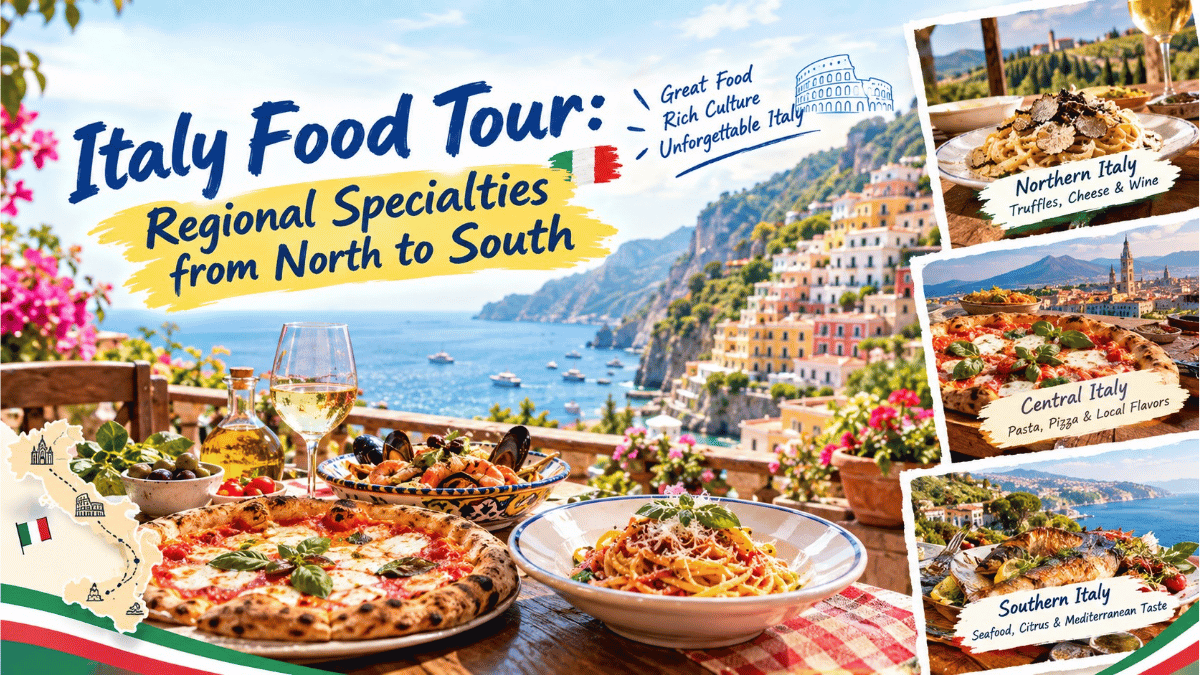
Italy Food Tour: Regional Specialties from North to South

cover

An Italy food tour is best planned as a journey through regional cuisines rather than a search for one national menu. In the north, butter, rice, polenta, filled pasta, and aged cheeses often take center stage. Central Italy is known for handmade pasta, grilled meats, legumes, olive oil, and deeply rooted Roman and Tuscan dishes. Farther south, tomatoes, durum-wheat pasta, seafood, citrus, and vegetables become increasingly prominent.

The most rewarding approach is simple: choose a few regions, learn their signature dishes, and leave room for markets, bakeries, neighborhood trattorias, and family-run producers. The guide below follows Italy from north to south, highlighting what to taste and how to build a practical food-focused itinerary.

Italy's Regional Food at a Glance

Region or city Foods to look for Ideal experience
Piedmont Agnolotti del plin, tajarin, bagna càuda, hazelnuts Trattoria meal or market visit
Lombardy Risotto alla milanese, polenta, pizzoccheri, cotoletta Traditional Milanese or Alpine dining
Veneto Cicchetti, baccalà mantecato, bigoli Venice bacaro crawl
Emilia-Romagna Tortellini, tagliatelle al ragù, Parmigiano Reggiano, balsamic vinegar Pasta class or producer visit
Tuscany Ribollita, pici, bistecca, crostini Farm meal or local cooking class
Lazio Carbonara, cacio e pepe, amatriciana, supplì Roman trattoria and street-food stop
Campania Neapolitan pizza, mozzarella di bufala, sfogliatella Pizzeria visit and pastry tasting
Puglia Orecchiette, burrata, focaccia barese, fave e cicorie Market walk or masseria meal
Sicily Arancini, pasta alla Norma, caponata, cannoli Street-food tour and pastry stop
Sardinia Malloreddus, culurgiones, pane carasau, seadas Agriturismo or village meal

Northern Italy: Rich Pastas, Rice, Cheese, and Alpine Traditions

Northern Italian cooking reflects fertile plains, mountain landscapes, dairy farming, and long-established rice-growing areas. Although every region is different, travelers will often encounter more butter, cream, polenta, risotto, and filled pasta than in the south.
 

Piedmont: Truffles, Hazelnuts, and Delicate Pasta


Piedmont rewards travelers who enjoy earthy flavors and carefully prepared dishes. In Turin and the surrounding region, look for agnolotti del plin, small pinched pasta parcels commonly filled with roasted meat, and tajarin, thin egg-rich noodles. Bagna càuda, a warm garlic and anchovy dip served with vegetables, is a convivial specialty made for sharing.

Hazelnuts appear in chocolates, cakes, and spreads, while seasonal truffles are closely associated with the Langhe area. A tasting does not need to revolve around luxury ingredients, however. A relaxed meal pairing local pasta, vegetables, and cheese can reveal just as much about Piedmontese cooking.

pasta


Lombardy: Risotto, Polenta, and Mountain Comfort Food


Milan's best-known plates include golden risotto alla Milanese and cotoletta alla Milanese, a breaded veal cutlet. Outside the city, Lombardy's cuisine changes with the landscape. Polenta is common in northern areas, while Valtellina is known for pizzoccheri, buckwheat noodles typically combined with potatoes, greens, and cheese.

This is a useful region for travelers who want to compare metropolitan dining with Alpine traditions. Plan one classic Milanese meal, then try a smaller-town restaurant where local cheese, cured meat, or a hearty first course reflects the surrounding countryside.

Veneto: Cicchetti and the Flavors of the Lagoon


In Venice, an informal cicchetti crawl is one of the easiest ways to taste several small specialties. These bite-size snacks vary by establishment and may include seafood, vegetables, meat, cheese, or baccalà mantecato, a creamy preparation of salt cod. They are traditionally enjoyed at a bacaro, a small Venetian wine bar.

Beyond cicchetti, look for bigoli, thick strands of pasta served with robust sauces, as well as risotto and dishes influenced by the lagoon. Visiting more than one bacaro creates variety, but ordering modest portions helps keep the experience comfortable and unrushed.

Cicchetti


Emilia-Romagna: A Center of Pasta-Making and Famous Ingredients


For many travelers, Emilia-Romagna is the heart of an Italian food tour. Bologna is closely linked with tagliatelle al ragù, tortellini, and mortadella. Parma is associated with Parmigiano Reggiano and Prosciutto di Parma, while Modena and Reggio Emilia are known for traditional balsamic vinegar.

The region is especially well suited to hands-on experiences. A pasta class can show why dough thickness, filling, and shape matter, while a producer visit can explain the time and controlled processes behind aged cheese or balsamic vinegar. When buying packaged foods, read the label and ask how the product should be stored before traveling onward.

Central Italy: Rustic Cooking and Strong Local Identity

Central Italian food often relies on a short list of high-quality ingredients: olive oil, bread, beans, vegetables, pecorino, handmade pasta, and meat. Dishes may look simple, but techniques and ingredient quality give them their character.

Tuscany: Bread Soups, Handmade Pasta, and Grilled Meat


Tuscan cooking is famously direct. Ribollita, a substantial bread-and-vegetable soup, and pappa al pomodoro, made with tomato and bread, show how practical home cooking became regional tradition. Around Siena, thick hand-rolled pici pasta is another satisfying choice.

Travelers interested in meat may seek out bistecca alla Fiorentina, but it is typically a large cut intended for sharing. Ask about its size and preparation before ordering. A countryside meal or cooking lesson can balance famous dishes with seasonal vegetables, beans, olive oil, and crostini.

risotto

Lazio and Rome: Pasta Classics and Street-Food Stops


Rome offers a concentrated introduction to Lazio's food traditions. Four pasta names appear repeatedly: carbonara, cacio e pepe, amatriciana, and gricia. Though their ingredient lists are relatively concise, each depends on careful technique and balance.

Between restaurant meals, try a supplì, a fried rice snack often filled with mozzarella. Artichoke preparations are also strongly associated with Roman cooking, although availability and style can vary. Rather than attempting every famous pasta in one sitting, divide tastings across several meals and compare how different kitchens interpret them.

Umbria: Truffles, Legumes, and Norcineria


Landlocked Umbria offers an appealing contrast to Italy's coastal regions. Its cuisine features legumes, olive oil, rustic pasta, seasonal truffles, and norcineria, the craft tradition associated with cured pork products. Lentils are particularly connected with the area around Castelluccio.

Umbria fits naturally into a slower itinerary. A hill-town stay allows time for a market, an agriturismo meal, or a small producer visit without turning every day into a checklist of tastings.

Southern Italy and the Islands: Tomatoes, Seafood, Citrus, and Bold Simplicity

Southern Italian cooking varies widely, but travelers will often find vegetables, tomatoes, olive oil, durum-wheat pasta, seafood, and bright citrus flavors. Street food is an important part of the experience, especially in Naples, Palermo, and other lively cities.

Campania: Pizza, Mozzarella, and Neapolitan Pastries


Naples is an essential stop for travelers interested in pizza. A classic Neapolitan pizza has a soft, pliable center and a raised, blistered crust; it is best eaten soon after leaving the oven. Campania is also celebrated for mozzarella di bufala, pasta dishes, tomatoes, and seafood along the coast.

For dessert, try sfogliatella, a filled pastry that may have a crisp layered shell or a smoother shortcrust exterior. A well-paced visit could combine one dedicated pizzeria meal with a separate market or pastry stop instead of squeezing every specialty into a single tour.

dessert

Puglia: Orecchiette, Burrata, and Vegetable-Led Cooking


Puglia's cooking makes excellent use of wheat, olive oil, legumes, and vegetables. Orecchiette, the region's ear-shaped pasta, is often paired with greens or a simple tomato sauce. Other specialties include creamy burrata, focaccia Barese, and fave e cicorie, a combination of puréed fava beans and bitter greens.

This region is ideal for travelers who want food experiences beyond major cities. A market walk, farmhouse meal, or cooking class can connect familiar ingredients to the agricultural landscape that produces them.

burrata

Sicily: Street Food, Pasta, and Layered Mediterranean Influences


Sicily's cuisine reflects the island's geography and centuries of cultural exchange. In Palermo, street-food tastings may include fried snacks and stuffed rice balls called arancine; elsewhere, the same food is commonly called arancini. Eastern Sicily is closely associated with pasta alla Norma, made with tomato, eggplant, ricotta salata, and basil.

Also look for caponata, seafood, citrus, pistachios, granita, cannoli, and cassata. Because sweets and fried foods can accumulate quickly on a tasting route, sharing portions makes it easier to appreciate more flavors without rushing.

Sardinia: Distinctive Pasta, Bread, and Pastoral Flavors


Sardinian cuisine has its own strong identity. Malloreddus are small ridged pasta shapes, while culurgiones are filled pasta parcels with regional variations. Crisp pane carasau is widely recognized, and seadas combine pastry, cheese, and honey in a memorable dessert.

An agriturismo or village-based meal can be particularly valuable here, since it may introduce travelers to dishes that are less common in mainland tourist centers. If renting a car, keep tastings and driving responsibilities separate.

How to Plan an Italy Food Tour

Best Time for Food Travel in Italy


Seasonality drives Italian cuisine. Spring brings artichokes, asparagus, and early vegetables. Summer offers peak tomatoes, eggplant, peppers, and seafood. Autumn features mushrooms, truffles, chestnuts, and new wine. Winter focuses on preserved foods, hearty soups, and cured meats. For truffle hunters, October-November is ideal. Tomato lovers should visit July-August. Each season provides unique food tour in Italy experiences.

Italy

Regional Focus vs. Comprehensive Tour


Italy's regional diversity makes comprehensive coverage challenging. Consider focusing on two or three regions for deeper exploration. Northern food tours might combine Piedmont, Lombardy, and Emilia-Romagna. Central tours could cover Tuscany, Umbria, and Lazio. Southern tours might include Campania, Puglia, and Sicily. This approach allows time for cooking classes, market visits, and leisurely meals rather than rushing between regions.

Types of Food Experiences


Italy offers diverse culinary experiences beyond restaurant dining. Cooking classes teach traditional techniques from local nonnas. Market tours reveal seasonal ingredients and regional specialties. Wine tastings in cellars explore terroir and production methods. Farm visits show cheese-making, olive oil production, and pasta crafting. Food festivals (sagre) celebrate local products with community meals. These authentic Italy foodie tour experiences create lasting memories and skills.

Accommodation and Dining


Choose accommodations strategically for food access. Agriturismi (farm stays) provide meals made from property-grown ingredients, often including cooking demonstrations. City-center hotels offer convenience to restaurants and markets. Rural properties might require car access but provide authentic experiences. Many Italy food tour packages include curated dining experiences at renowned restaurants and hidden gems. Many Italy tours focus specifically on regional culinary experiences.

Transportation Considerations


Transportation affects your food tour flexibility. Trains connect major cities efficiently but limit access to rural producers. Rental cars provide freedom to visit small towns, wineries, and farms. However, drinking and driving don't mix, so plan designated drivers or hire private drivers for wine-focused days. Many organized tours handle logistics while providing expert food knowledge. Consider Italy vacation packages that include transportation between regions with built-in food experiences. Comprehensive Italy vacation packages often include cooking classes and market visits.

Practical Tips for Food Travel in Italy

Restaurant Etiquette


Italian dining follows specific customs. Lunch typically runs 12:30-2:30 PM; dinner 7:30-10:00 PM. Reservations are essential for popular restaurants, especially in tourist areas. Dress codes range from casual to formal depending on the establishment. Tipping isn't mandatory but appreciated for good service. Order seasonally—restaurants highlight fresh, local ingredients. Ask for house wine (vino della casa) for good value. Avoid requesting substitutions or modifications; chefs design dishes with intention.

Market Visits and Shopping


Local markets provide authentic food experiences and ingredients for picnics. Morning markets (usually Tuesday-Saturday) offer the best selection. Look for seasonal produce, local cheeses, cured meats, and fresh bread. Many cities have specialty markets, including fish markets, flower markets, and antique markets. Food shops (alimentari) sell regional specialties that make great gifts. Learn to recognize quality indicators: DOP (Protected Designation of Origin) labels guarantee traditional production methods and geographic origin.

Language and Communication


Basic Italian phrases enhance food experiences. Learn food vocabulary: antipasti (appetizers), primi (first courses, usually pasta or rice), secondi (main courses, meat or fish), contorni (side dishes), dolci (desserts). Knowing how to order coffee (cappuccino only in the morning, espresso after meals) and asking for the bill (il conto, please) prevents awkwardness. Many restaurant staff in tourist areas speak English, but attempting Italian shows respect and often receives warmer service.

Dietary Restrictions


Italy accommodates dietary restrictions reasonably well, though advance communication helps. Vegetarians find abundant options in pasta, pizza, and vegetable dishes. Vegans face more challenges as cheese and meat appear frequently, but awareness is growing. Gluten-free options exist, especially in cities, as celiac disease receives serious attention in Italy. Nut allergies require careful communication as nuts appear unexpectedly. Always inform restaurants of serious allergies and carry translation cards explaining restrictions.

Final Thoughts

An Italian food tour reveals a country where every region tells its story through food. From Piedmont's truffles to Sicily's Arab-influenced sweets, from Emilia-Romagna's legendary products to Puglia's simple peasant dishes, Italy's culinary diversity rewards exploration. Food travel in Italy isn't just about eating—it's about understanding culture, history, and the Italian way of life through flavors passed down through generations.

Whether you spend weeks exploring multiple regions or focus deeply on one area, an Italian food tour creates memories that last long after you return home. The pasta shapes you'll never forget, the wines that transported you, the conversations with producers passionate about their craft—these experiences define authentic travel. Italy's food culture welcomes curious travelers willing to slow down, savor each bite, and appreciate the artistry in simplicity.


FAQ

What is the best region for food in Italy?

Emilia-Romagna earns the title 'Italy's food valley' through legendary products like Parmigiano-Reggiano, balsamic vinegar, and Prosciutto di Parma. However, 'best' depends on preferences. Northern regions excel at rich pastas and risottos. Central areas offer rustic simplicity and quality meats. Southern regions showcase tomatoes, seafood, and bold flavors. Each region provides unique specialties worth exploring on an Italian food tour.

How much does a food tour in Italy cost?

Food tour costs vary by style and duration. Budget travelers spend 30-50 euros daily on meals, focusing on trattorias, pizza al taglio, and market picnics. Mid-range dining costs 60-100 euros daily, including restaurant meals with wine. Luxury experiences run 150+ euros daily at renowned restaurants. Organized food tours range from 200-500 euros per person per day, including meals, tastings, and expert guidance. Cooking classes typically cost 80-150 euros per session.

When is the best time for food travel in Italy?

The best time depends on your food interests. Spring (April-May) offers artichokes, asparagus, and pleasant weather for outdoor dining. Summer (June-August) provides peak tomatoes, eggplant, and seafood, though heat and crowds increase. Autumn (September-October) features truffles, mushrooms, new wine, and harvest festivals—ideal for food lovers. Winter (November-March) brings hearty soups, preserved foods, and fewer tourists. Each season offers unique food tour in italy experiences.

What makes an Italian food tour authentic?

Authenticity is less about finding a secret restaurant and more about understanding regional context. A useful guide explains why a dish belongs to a place, introduces responsible local businesses, and encourages respectful tasting. A good tour should deepen your understanding, not simply provide a long sequence of samples.

Can I do a vegetarian or vegan food tour in Italy?

Yes, though with different ease levels. Vegetarians thrive in Italy with abundant pasta, pizza, and vegetable dishes. Many traditional dishes are naturally vegetarian or easily modified. Vegans face more challenges as cheese, butter, and meat appear frequently. However, major cities increasingly offer vegan options. Communication about restrictions is essential. Rural areas might struggle with vegan requests. Consider cooking classes to learn plant-based Italian cooking techniques.

Summary

Italy's Regional Food at a Glance

Northern Italy: Rich Pastas, Rice, Cheese, and Alpine Traditions

Central Italy: Rustic Cooking and Strong Local Identity

Southern Italy and the Islands: Tomatoes, Seafood, Citrus, and Bold Simplicity

How to Plan an Italy Food Tour

Practical Tips for Food Travel in Italy

Final Thoughts

FAQ

America's 250th Anniversary Mega Sale

image