United StatesNorth AmericaPlaces to GoThings to DoWhere to StayTravel TipsVacations
Show All

Grand Teton and Yellowstone Tour: The 4-Day Salt Lake Loop

cover

Las Vegas turns up in a lot of searches for this trip, and the map almost supports it. Las Vegas sits on I-15, Salt Lake City sits on the same interstate, and the two look like a weekend pair on a screen. Then you read the departures. Every Grand Teton Yellowstone tour that covers this route starts somewhere else, in Salt Lake City, Jackson, or Bozeman, Montana, and none of them collects passengers in Nevada.


So the trip comes in two pieces. You get yourself to the start point, and the operator runs the loop from there. Out of Salt Lake City, the four days go north to Jackson and Grand Teton, spend a full day inside Yellowstone, then come back past Grand Prismatic Spring, Yellowstone Bear World, and the Great Salt Lake, with a free drop-off at the airport at the end.


Four days is the shortest version sold. Three days means cutting a park or the geyser basins, so settle which one you would keep before you compare anything else. And how do you get from Nevada to a 3 pm meeting point in Utah? That question decides your first and last day. Answer it before you look at dates.


What the Loop Actually Covers

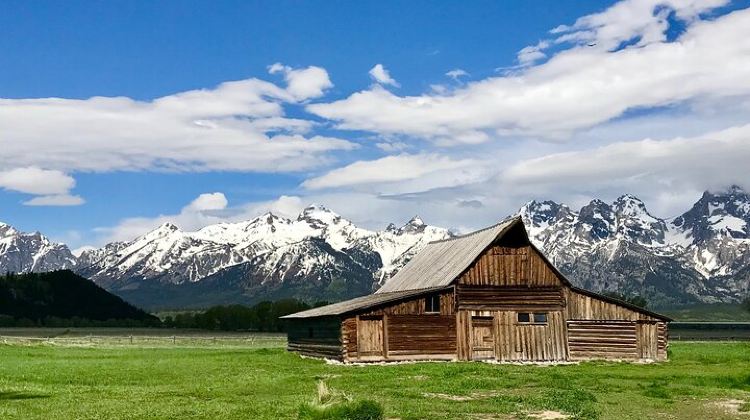
Start with the two parks, because their size explains the driving. Grand Teton National Park covers 310,000 acres in northwestern Wyoming, 10 miles south of Yellowstone and joined to it by the John D. Rockefeller, Jr. Memorial Parkway. It was established on February 26, 1929, and 3,800,648 people came through in 2025. Book lodge rooms and campsites inside the park well ahead, because they can fill months in advance. The peak itself reaches 13,775 feet and stands more than 7,000 feet above Jackson Hole.


Yellowstone is the larger half of the circuit: 3,472 square miles spread over Wyoming, Montana, and Idaho, established on March 1, 1872 as the world's first national park and named a UNESCO World Heritage Site in 1978. It holds roughly half the world's geothermal features, with more than 10,000 of them and more than 300 geysers, two-thirds of the world's total. The road network makes a figure-8, a lower loop of about 90 miles through West Thumb, Old Faithful, Madison, Norris and Canyon, and an upper loop of about 70 miles through Mammoth and Tower-Roosevelt. One day buys you one lobe, not both.


The towns anchor the ends. Salt Lake City sits between the Wasatch Mountains and the Great Salt Lake, home to about 200,000 people, with Temple Square as its most visited site. The lake beside it is the largest saltwater lake in the Western Hemisphere, averaging 16 feet deep at about 4,200 feet above sea level. Jackson sits just south of Grand Teton and marks the northern end of the drive, with the antler arches on its square as the scheduled photo stop.


Three scheduled versions cover this ground, and the start city is the detail to check on each. One runs four days round trip from Salt Lake City and matches the loop described here; one runs four days from Jackson in winter on a snowcoach, and one starts in Bozeman, Montana, gives the parks five days, and closes with Grand Teton, Inspiration Point, and Jenny Lake, ending in Jackson.

The Four Days, Day by Day

The four days below follow the Salt Lake City round trip, and the road figures come from its own schedule.


Day 1: Meet at the Airport Hotel


The opening day is a handover, not a sightseeing day. You make your own way to 2177 W North Temple St in Salt Lake City by 3 pm, and the meeting window is five minutes, so a flight landing at noon leaves room and one landing at two in the afternoon does not. The night is at the Radisson Hotel Salt Lake City Airport or a similar property, and no meals are included, which makes dinner a question of when you land.


Day 2: Jackson, Grand Teton, and the Climb into Yellowstone


This is the long driving day. The morning leg alone runs about 277 miles and five and a half hours to Jackson, then 5.6 miles to Grand Teton and 132 miles into Yellowstone, with the day's transport blocks adding up to about 404 miles and eight hours. In exchange, you get an hour at the antler arches, an hour in Grand Teton, and forty minutes at Thumb Geyser. Breakfast is the one included meal of the whole trip, and the night is at the Yellowstone Country Inn or similar.


Day 3: A Full Day Inside the Park


The whole day is spent inside Yellowstone, and driving drops to about 31 miles an hour because the sightseeing happens on foot and at pullouts. The schedule gives roughly seven hours to five stops: Norris Geyser Basin, Upper Falls View, Mud Volcano, Old Faithful, and Artist Point. Old Faithful erupts on average about every 80 minutes, and rangers predict the next one to within about 10 minutes. Check the prediction before you walk the basin, which holds another 150 geysers inside one square mile. Artist Point looks down on the Lower Falls, where the river drops 308 feet into the canyon. Breakfast does not come with this day. Eat before you leave the hotel.


Day 4: Geysers, Bear World, and the Lake


The last morning begins in Midway Geyser Basin. Grand Prismatic Spring measures 370 feet across and 160 feet deep, and with Fountain Paint Pots it fills about three hours, after which 93 miles and two hours of driving bring you to Yellowstone Bear World for an hour, with an indicative gate price of $27 and a group minimum of 25 people that drops away for parties of 13 or fewer. Then comes the long run south, with a twenty-minute stop at the Great Salt Lake before the drop-off at Salt Lake City International Airport, which runs around the clock. The day adds up to about 329 miles and six hours of driving, and no meals are included.

Winter Changes the Route

Winter rewrites this itinerary instead of trimming it, and the Jackson departure exists because of that.


Snowcoach Access and the Roads That Close


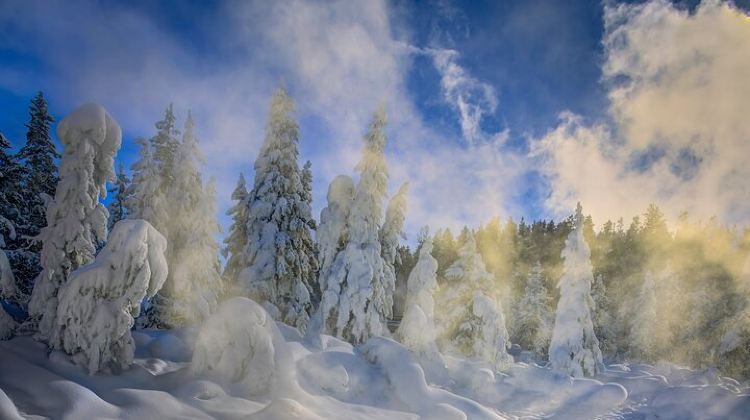
From mid-December to mid-March, most park roads open to snowmobile and snowcoach travel rather than cars, and the stretch between the North and Northeast entrances is the one road that stays open to automobiles all year. That single rule decides the winter plan, because you cannot drive yourself to Old Faithful in January. The Jackson winter trip rides a snowcoach to Old Faithful, the Madison River and Fountain Paint Pots, and the day inside the park runs about five hours. Daytime temperatures hold between zero and 20°F, and sub-zero readings are common after dark and at higher elevations.


Grand Teton Closures and What Still Runs


Grand Teton has four road entrances, and several are closed or limited to vehicles from November to May, with drives between entrances that can take hours. Check the status of the gate you intend to use on the day. The southern end of Jackson Hole averages 15 feet of snow across the winter. Boardwalks near thermal areas turn slick, and traction aids over your boots are worth the luggage space. Animals keep the right of way on park roads, so bison stops belong in the plan. Services thin out as well: Old Faithful Snow Lodge and Mammoth Hot Springs Hotel stay open through the season.


What the Winter Version Actually Does


The Jackson trip fills its four days differently from the summer loop. The opening day is wildlife viewing in Grand Teton for about three hours plus an hour at the National Elk Refuge. Day two adds a two-hour horse-drawn sleigh ride on the refuge, another hour in the park, and a stop in West Yellowstone, Montana. Day three is the snowcoach day. Day four runs back toward Jackson past Hebgen Lake. Breakfast is included from day two, and the tour takes ages 6 to 85.

Getting to the Start from Las Vegas

I-15 does most of the work if you are driving. The interstate runs south from Salt Lake City to Las Vegas, and the Salt Lake Express bus follows that corridor with stops in Las Vegas, St. George, and Salt Lake City, which makes a car-free version of the transfer possible. The same line runs from Idaho Falls to West Yellowstone, Montana, and on to Jackson, Wyoming, by way of Rexburg, so the winter start is reachable without a car as well.


Flying shortens the whole thing. Flights land at Salt Lake City International Airport, a Delta hub with more than 120 daily Delta departures, and the TRAX Green Line covers the run from the terminal to downtown for $2.50. It also takes direct international flights from Amsterdam, London, Paris, Seoul and several cities in Mexico and Canada.


If you would rather drive the whole way, the day-two leg sets the scale you are planning against. Whichever way you arrive, transport from your home city to the starting point is not part of the tour price, and that leg is yours to book and yours to insure.


So which way suits a Vegas trip? Drive if you want the mountain scenery on the way up and have the days for it; take the bus if renting a car for a one-way run feels wasteful; and fly if your calendar is tight or you are crossing an ocean to get here. Arriving the afternoon before the meeting time costs one hotel night and removes the risk of a delayed flight eating your first day.

What the Park Fees Add

Grand Teton and Yellowstone charge separately. Budget for two entrance fees. As of the National Park Service fee pages updated in June 2026, the rates run the same in both parks.


Park Private vehicle Motorcycle Per person Annual pass
Yellowstone $35 $30 $20 $70
Grand Teton $35 $30 $20 $70


Those figures decide what you hand over at the gate. A private vehicle pass covers the car and everyone inside it for seven consecutive days, so a family in one car pays $35 per park, or $70 for the pair, and can drive back in all week. Arriving on foot or by bike costs $20 a head, motorcycles pay $30, and both parks sell their own $70 annual pass. Grand Teton runs cashless entrance stations, so bring a card.


Travelers from outside the United States pay more. Every non-U.S. resident aged 16 or older owes a $100 fee in each park on top of the standard entrance pass, and the rule covers people arriving with a commercial tour group as well, which means two adults from overseas would add $400 across the two parks. An annual park pass or the America the Beautiful pass is the documented way around that charge.


The Park Service also waives standard entrance fees on set dates in 2026: February 16, May 25, June 14, July 3 to 5, August 25, September 17, October 27 and November 11. Those dates remove the entrance pass, not the nonresident charge, so the $100 per park still stands unless you hold an annual or America the Beautiful pass. A free-entrance weekend still saves a car the $70 in vehicle passes; it just does not touch the nonresident charge.


Group trips collect their own money on top of the federal fees. The Salt Lake City loop charges a mandatory $100 per person that covers entry to Grand Teton, Yellowstone and the Great Salt Lake, payable when you book or to the guide on the trip, and gratuities run $15 per person per day for adults and children alike. Keep an annual pass in the glove box if you already own one, and skip the per-person gate option when your group is riding in a single vehicle.

Three Days or Four, and Where You Start

Three days gives you a taste of both parks with one of them treated as a drive-through, and four days is the version where each park gets a proper block of time.


Settle the start city before the day count, because that choice decides whether you fly in for an afternoon in Salt Lake City or spend day one on the interstate from Las Vegas.


Book the airport hotel for the night before the meeting, drop the extra day if the calendar is tight, and the loop still covers both parks in a shape you can plan around.

FAQ

Do any of these tours leave from Las Vegas?

No. The three trips here start in Salt Lake City, Jackson or Bozeman, and none of them picks up in Nevada. From Las Vegas you reach the start on I-15 by car, on the Salt Lake Express bus along the same corridor, or by flying into Salt Lake City. Give yourself a night before the meeting time.

Can you see Grand Teton and Yellowstone in three days?

Not comfortably. The shortest loop sold is four days, which means a third day costs you a park or a geyser basin, and whichever goes becomes a drive-through.

Where does the four-day loop start and end?

It meets at the airport hotel in Salt Lake City at 3 pm on day one and ends with a free drop-off at the airport on day four.

Is the loop worth doing in winter?

The winter version runs from Jackson instead, because most Yellowstone roads close to cars from mid-December to mid-March and open to snowcoaches. You give up self-driving for a guided snowcoach day, gain the elk refuge sleigh ride, and pack for days between zero and 20°F.

Do I pay park fees on top of the tour?

On the Salt Lake City loop, yes: a mandatory $100 per person covers Grand Teton, Yellowstone and the Great Salt Lake. Non-U.S. residents 16 and older also owe the federal $100 per park charge. Gratuities of $15 per person per day are separate from both.