LausanneMontreuxGenevaSwitzerlandEuropePlaces to GoTravel TipsExcursionsWeekend Trips
Show All

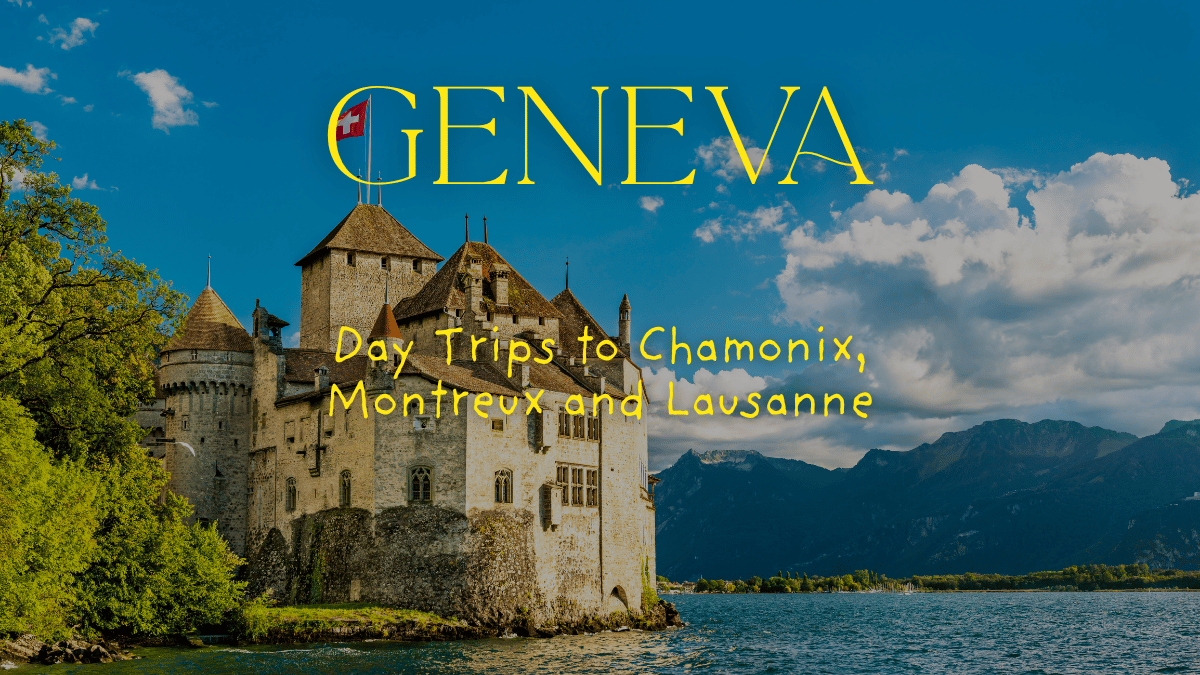
Geneva Tours: Day Trips to Chamonix, Montreux and Lausanne

cover

Three day trips sit close enough to Geneva that people treat them as interchangeable, and they are not. Chamonix means a French border, a cable car and a summit at 12,391 feet. Montreux means a lake shore lined with Belle Époque hotels. Lausanne is 51.7 km of railway and a hilly old town built around a cathedral.
 

Sort them by the hours you can spare, then by money, then by what you want to look at. The mountain day is the longest and the most expensive. The Lausanne run is the shortest ride and the simplest to arrange without a car. Montreux sits in the middle on hours and needs a train ticket, nothing else.


A Geneva travel guide that skips the drive times is not much use on a two-day stay, and the arithmetic is the same whether you join one of the Geneva tours running these routes or drive yourself.


Day Trip Destinations from Geneva

Each of the three works as a single day, but they spend that day in different ways. One puts you above the tree line, one keeps you at lake level, one keeps you inside a city. The practical difference shows up in how many hours you spend sitting down.


Chamonix, France: the mountain day


Chamonix sits 80 km from Geneva at the foot of Mont Blanc, and the motorway run through the Arve Valley puts you in the village in about an hour when the border behaves. The village is small for its reputation, with around 8,900 residents, and it hosted the first Winter Olympic Games in 1924. Mont Blanc, the highest peak in the Alps, closes the end of the street.


The reason to come is the cable car to the Aiguille du Midi, which climbs to 12,391 feet above sea level. The air up there bears no resemblance to Geneva's, so a jacket belongs in your bag in July as well as January. From the summit you look straight across at Mont Blanc, and the valley sits on the border with both Switzerland and Italy.


Booked as a day trip, this one folds in the Geneva city circuit on the way back, returning at 4:30 pm and finishing around 7:00 pm.  One condition is worth knowing before you book. Meals are excluded, so a bakery stop in the village covers the middle of the day.


Montreux: the lake day


Montreux is the easiest of the three to do without a plan. The town has around 27,000 residents, sits at the foot of the Alps, and has pulled visitors in since the 19th century, when the Belle Époque palaces and grand hotels went up along the water.


Two things shape a day here. The lake is the point of the place, and the old steamer boats that work it dock at ports along the shore. Then there is wine: the sunny slopes from Lavaux to Montreux have carried vines since the 12th century.


Montreux station is a mountain railway hub as well as a stop on the Simplon line, and the municipality runs from the lake shore up to the foothills at Rochers-de-Naye. The Hôtel des Alpes, the old Grand-Hôtel at Territet, is where Deep Purple recorded Machine Head, and it sits on the Swiss heritage list.


Time it right and the day is a walk, a long lunch and a boat. That makes it the gentlest first afternoon of the three.


Lausanne: the city day


Lausanne is the nearest major city to Geneva, and the trains from Cornavin leave every 15 minutes. It is built on a slope, with about 500 m of height between the Ouchy lakeshore and the northern edge of town, which is why the metro does most of the climbing.


It has 28 stations, making Lausanne the smallest city in the world with a rapid transit system. It is also the Olympic capital, a title the IOC has used since 1994, with the Court of Arbitration for Sport and some 55 sports associations based here. The cathedral was consecrated in 1275, and Plateforme 10 opened in 2022 as three museums in one district.


The day works on foot and by metro: old town and cathedral in the morning, Ouchy for lunch, Plateforme 10 or the Olympic Museum after that. Wine country starts at the city limits, with Lavaux to the east and la Côte to the west.


Lausanne suits anyone who wants a Swiss city that is not Geneva, and its museums make it the fallback when the forecast turns.


 

Drive Times, Trains, and the French Border

Frequency, paperwork and traffic settle the rest of the transport question.


Driving, and the Swiss motorway sticker


The motorway runs right into Geneva, 80 km from Chamonix, with customs at Bardonnex – Saint-Julien. Any car on Swiss motorways needs the annual sticker, Fr. 40, and it is compulsory from the first motorway kilometre. Buy it at a customs post, a gas station or a post office.


You can avoid the sticker by staying off the motorway and using crossings such as Thônex-Vallard or Moillesulaz. That works for Annecy and the near side of the border, less well for the long run into the Alps. Chamonix itself is 88 km from Geneva Airport if you are collecting a car there.


Trains along the lake


Trains to Lausanne leave Cornavin every 15 minutes and run on to Vevey, Montreux and the Valais at least every half hour, which is close enough to turn up and go. Most start at Genève-Aéroport, 7 minutes from the main station, so a midday landing can become a Lausanne afternoon.


Boats are the third way along the shore. Paddle steamers built between 1904 and 1927 work the lake, calling at Parc des Eaux Vives and the Jardin Anglais before the Pâquis.


The border into France


Chamonix is in France, so that day includes a border stop, and everyone in the group needs a valid passport. Buses run from the Gare des Eaux-Vives side of town alongside the SNCF services to Evian and Annecy, and the rail line into the valley is the St Gervais – Vallorcine route.


An hour is the honest figure for Geneva to Chamonix on a good run. A February Friday is not a good run, so leave slack for the return. Plenty of people skip the timetable and take one of the Geneva tours that handle the road and the border.

Which Day to Take, and When

Geneva's own averages set the baseline for all three trips. Summer highs run about 25°C, which is 77°F. Spring climbs from 8°C to 17°C, autumn falls from 22°C to 8°C, and winter sits between 2°C and 7°C. What changes with the season is which of the three days is worth your time.


June through August


Chamonix summers are mild, so the cable car to 12,391 feet is a jacket-and-sunglasses trip. Back in Geneva the lake sets the pace: swimming off the lakefront, boats toward Montreux, wine tastings in the Lavaux terraces. A mountain day and a lake day fit the same week.


September and October


Temperatures fall from 22°C to 8°C. The Lavaux slopes are working vineyards in the weeks before harvest, which makes Montreux the one to pick for walking, lunch and a boat. Chamonix stays open and the crowds thin, though the summit is far colder than the village.


November through March


Geneva gets cold enough for snow on the Alps and a temporary rink by the lake, and the Christmas market fills Place de Cornavin. Chamonix becomes a ski town, reachable by public transport, with three ski areas along the valley. If you do not ski, give the daylight hours to Lausanne and keep the mountain for a clear forecast.


Rain decides more days than temperature does. Lausanne sees rain or snow on about 120 days a year, wettest in May at 117 mm over roughly 12 days and driest in February at 67 mm. A wet forecast argues for its museums rather than a cable car, and it can take the Old Town leg off the city circuit, which runs by mini-train and needs decent weather.

What the Evening Looks Like Back in Geneva

The return time decides the evening, and the three days hand it back at different hours. Montreux and Lausanne are yours to end, since the trains run often and late. The mountain day ends latest. The city circuit is done by mid-afternoon.


The city circuit, and its two departure shapes


In the November 2026 timetable, the afternoon departure runs daily from Gare Routiere at Place Dorciere and returns to the same corner about 4:15pm, which leaves a full evening. A morning slot runs daily in July and August and on June and September weekends, back by 12:15pm. Booked alone the circuit is $53.71 per person. Paired with Chamonix it comes after the mountain, so that day runs into the evening.


Filling the hours after 4:30pm


Geneva has more than 30 museums and galleries, and the two that come up most are the Red Cross Museum and the UN Building, both of which run tours. The old town is cobbled and steep, with Saint Peter's Cathedral, begun in 1160, at the top and Bastions Park and the Reformation Wall below. The Jet d'Eau, the tallest fountain in the world, is a five-minute look that turns into twenty.


Getting around is the easy part. Hotels, hostels and campgrounds in Geneva hand guests a free transit card that covers trams, buses and the small mouette boats crossing the lake every 10 minutes. Without one, a day pass costs Fr. 8 and runs from 09:00 to 23:59. In winter, fondue in an old town café is the local answer to a cold evening.

Picking One, or Two, for the Days You Have

Choose by subtraction rather than by wish list. With one free day and a clear forecast, take Chamonix and accept the 10.5 hours. With one free day and a doubtful forecast, take the train along the lake; you lose the mountain view, not the day.


With two days, pair Chamonix with Montreux rather than with Lausanne. The mountain day is long, timed and full of moving parts. The lake day is short and loose. Two structured city days in a row feel like work by the second afternoon.


With three, the order matters more than the list. Put Montreux or Lausanne the day after Chamonix, never the day before, because a 7:00pm return makes an early start the next morning unlikely. Keep the city circuit for the day you arrive or leave, since it ends at 4:15pm and leaves the rest of the day free.


When something has to go, drop the second city day. Lausanne and Montreux sit on one rail line, share a lake and grow wine on the same slopes, so the second visit repeats the first one's argument. The mountain gives you something Geneva cannot, and the city circuit covers Geneva itself while the long day goes to France.


If the stay stretches beyond three days, keep one base in Geneva and run day trips from it rather than moving hotels every night; Geneva vacation packages are usually built that way, and they suit anyone who would rather unpack once. Whatever you choose, check the forecast the night before, carry your passport on the France day, and leave the evening free for the lake.

FAQ

Do you need a passport for the Chamonix day?

Yes, for everyone in the group. Chamonix is in France and officers check documents at the crossing. Carry the same passport in Switzerland too, since Swiss authorities can ask for photo ID.

Can you see Montreux and Lausanne in one day?

You can, because they sit on one rail line with frequent trains. You will not see much of either. Lausanne alone fills a day, and Montreux rewards a slow afternoon rather than a stop between trains.

Is the mountain day workable with small children?

Not for the youngest. The cable car to the Aiguille du Midi does not carry children under 2, and the altitude is a factor for anyone who finds cold, thin air hard going. The lakefront towns are the easier day with a stroller.

Which of the three works without a car?

All three. Trains from Cornavin cover Lausanne and Montreux, and buses or the St Gervais line reach Chamonix. The car question is about the border and the timing, not about access.

Summary

Day Trip Destinations from Geneva

Drive Times, Trains, and the French Border

Which Day to Take, and When

What the Evening Looks Like Back in Geneva

Picking One, or Two, for the Days You Have

FAQ

America's 250th Anniversary Mega Sale

image