Choose the Right Type of France Tour
A multi-day escorted itinerary is best for travelers who want transport, lodging transitions, and major sightseeing organized together. It reduces daily decisions, but its timetable may limit neighborhood walks, long meals, and independent museum time.
Small-group day tours fit travelers who want guidance without surrendering an entire vacation to a fixed schedule. They are especially useful for D-Day sites, Loire châteaux, vineyards, or rural villages where public transport does not align with sightseeing. Private tours offer more control over pace and emphasis, though the experience still needs to fit logically between timed entries and meals.
Active visitors beginning in the capital can consider a private guided bike tour of Paris. A private cycling format can provide early orientation and cover more ground than a walk, making it useful on the first full day. The limitation is that it depends on cycling confidence and weather, and it cannot replace indoor landmarks or museum visits. A hybrid plan is often strongest: arrange intercity rail and hotels independently, then add tours only where they solve a real problem. This preserves flexibility in walkable cities while providing interpretation or transport on difficult regional days.
Recommend Tour
4.9
( 8 reviews )
Tour Code: 709776City & Attractions
Paris, Eiffel Tower, Place de la Concorde
+1 more
Languages
English Live, Italian Live, Spanish Live
Group Size
Max. 10 travelers
Tour Audience
Primarily English-Speaking Travelers
FAQ
What Is the Best France Tour for First-Time Visitors?
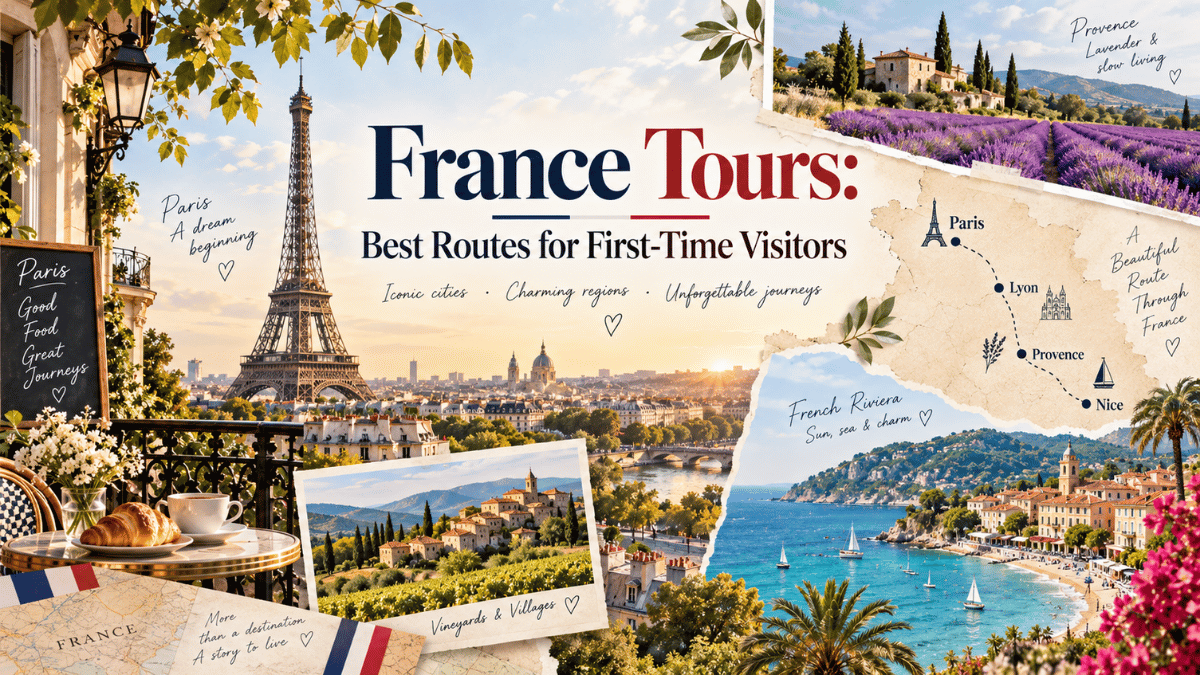
Paris plus one contrasting region is the most reliable first route. Choose Normandy or the Loire for history, Provence for villages and markets, the Riviera for coastal scenery, or the southwest for wine and smaller cities. Match the choice to usable days.How Many Days Should a First France Tour Last?
Seven days supports Paris and one nearby region at a moderate pace. Ten to fourteen days allows two or three stable bases. Count arrival, departure, and long transfers as partial days rather than full sightseeing days.Are Guided Tours in France Worth It?
Yes, when guidance adds historical context or solves difficult transport. They are particularly useful for major museums, D-Day sites, Loire châteaux, vineyards, and rural villages. In walkable cities, combine selected tours with independent time.Is It Better to Tour France by Train or Car?
Train travel is usually best between major cities, while a car provides flexibility in rural regions. Many first trips work best with both: rail for long intercity journeys, then a short rental or organized day tour for dispersed sights.