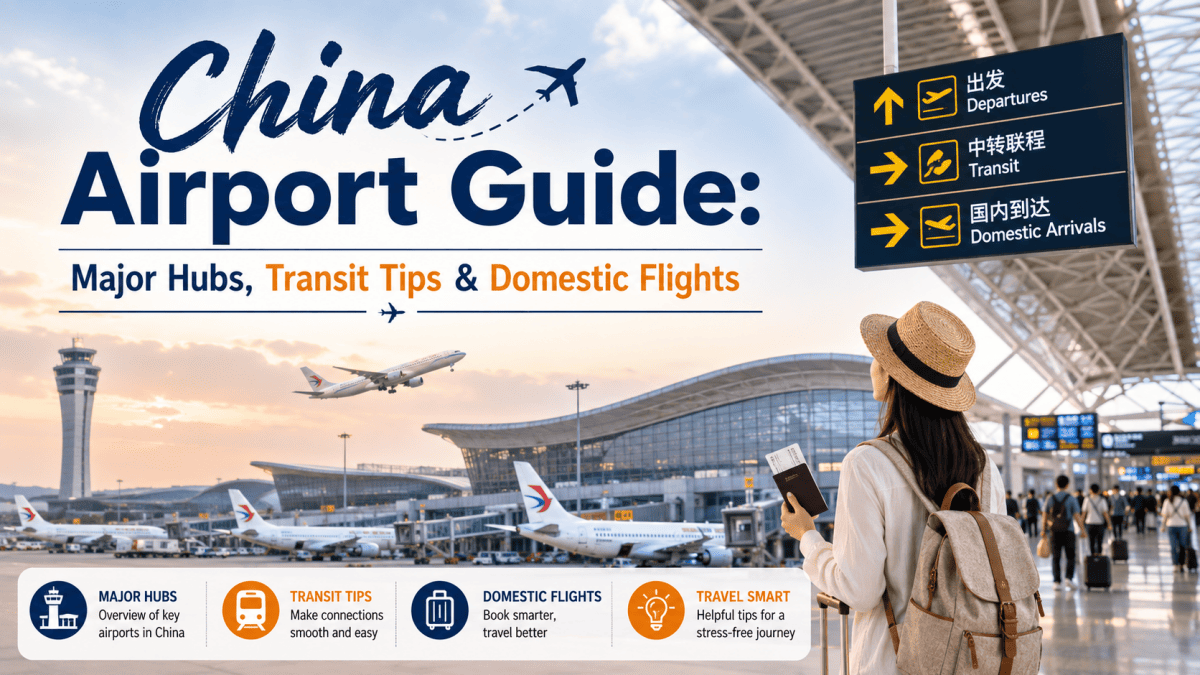
China Airport Guide: Major Hubs, Transit & Domestic Flights

cover

Flying into China means landing at one of the world's busiest airport systems. With over 200 commercial airports across the country, knowing which hub you'll use and how to navigate it makes a real difference in your travel experience.

This guide covers the major international gateways, including Beijing Capital, Beijing Daxing, Shanghai Pudong, Guangzhou Baiyun, and Chengdu's airports. You'll find practical information about terminal layouts, ground transportation, visa-free transit options, and how to book domestic flights once you're in the country.

Why Understanding China's Airports Matters

China's aviation infrastructure has expanded dramatically over the past decade. Beijing now operates two massive international airports: Shanghai Pudong handles most international traffic, while Hongqiao focuses on domestic routes, and new hubs like Chengdu Tianfu have opened to relieve congestion at older facilities. Well-planned China tours account for airport logistics in their itineraries.

For international visitors, understanding which airport you'll arrive at affects your ground transportation options, connection times, and even visa requirements if you're using the transit policy. The difference between landing at Beijing Capital versus Beijing Daxing, for example, means different metro lines, different distances to the city center, and different terminal layouts.


China's Major Airport Hubs

China's top five international airports handle the majority of foreign visitor traffic:

Beijing Capital International Airport (PEK): The traditional gateway to China, located 26 km northeast of central Beijing. Handles most Star Alliance and some Oneworld carriers.

Beijing Daxing International Airport (PKX): Beijing's newer mega-hub opened in 2019, located 46 km south of the city center. Serves SkyTeam alliance members and most domestic flights.

Shanghai Pudong International Airport (PVG): Shanghai's primary international gateway, located 30 km east of downtown. Handles nearly all international flights, while Hongqiao Airport serves domestic routes.

Guangzhou Baiyun International Airport (CAN): Southern China's main hub, located 28 km north of Guangzhou city center. Major gateway for Southeast Asia connections and hub for China Southern Airlines.

Chengdu Airports (CTU and TFU): Western China's aviation hub with two airports. Shuangliu (CTU) is closer to the city, while Tianfu (TFU) opened in 2021 as the new primary international gateway.

Beijing Airports: Capital International vs. Daxing

Beijing Capital International Airport (PEK)


Beijing Capital International Airport served as China's primary aviation gateway for decades before Daxing opened. The airport features three terminals, with Terminal 3 handling most international flights. The complex is massive, so allow extra time for connections between terminals.

Getting to central Beijing takes 40-60 minutes by Airport Express train plus metro, or 60-90 minutes by taxi depending on traffic. The Airport Express costs 25 yuan and connects to the metro system at Dongzhimen and Sanyuanqiao stations. Taxis to downtown typically cost 100-130 yuan plus a 10 yuan fuel surcharge.

Beijing Daxing International Airport (PKX)


Beijing Daxing International Airport opened in September 2019 as one of the world's largest single-terminal airports. The starfish-shaped design by Zaha Hadid Architects minimizes walking distances, with most gates within a 600-meter walk from the central hub. The airport can handle 100 million passengers annually when fully built out.

Transportation options include the Daxing Airport Express train (35 yuan, 20 minutes to Caoqiao station in southern Beijing), airport buses to various city locations, and taxis (150-200 yuan to central Beijing). The airport is farther from the city center than Capital Airport, so factor in extra travel time.

daxing airport

Which Beijing Airport Should You Use?


Your airline choice determines which Beijing airport you'll use. Air China, United, Lufthansa, and most Star Alliance carriers operate from Capital Airport. China Southern, China Eastern, and SkyTeam members use Daxing. Check your ticket carefully, as the two airports are on opposite sides of the city and transferring between them takes 2-3 hours.

Shanghai Pudong International Airport (PVG)

Terminal Layout and Facilities


Shanghai Pudong International Airport operates two main passenger terminals plus a satellite terminal connected by underground automated people movers. Terminal 1 handles most Oneworld alliance flights, while Terminal 2 serves Star Alliance and SkyTeam carriers. The satellite terminal (S1 and S2) adds additional gates for both terminals.

Both terminals offer duty-free shopping, restaurants, lounges, and free WiFi. English signage is clear throughout the airport, and staff at information desks typically speak basic English. The Maglev train, which reaches speeds of 430 km/h, connects Pudong Airport to Longyang Road metro station in just 8 minutes.

pudong airport

Getting to/from Pudong Airport


The Maglev train costs 50 yuan (40 yuan with a valid flight ticket) and runs every 15-20 minutes from 6:45 AM to 9:30 PM. From Longyang Road station, you can transfer to metro lines 2, 7, and 16 to reach different parts of the city. Total journey time to central Shanghai is 45-60 minutes.

Metro Line 2 also connects directly to Pudong Airport, though it takes 60-75 minutes to reach central Shanghai and costs 7-9 yuan. Taxis to downtown Shanghai cost 150-200 yuan and take 45-75 minutes depending on traffic. Airport buses serve various locations across the city for 20-40 yuan.

Guangzhou Baiyun International Airport (CAN)

Airport Overview


Guangzhou Baiyun International Airport is southern China's busiest aviation hub and a major gateway for travelers connecting to Southeast Asia. The airport features two terminals, with Terminal 2 opened in 2018 to handle growing passenger demand. China Southern Airlines uses Guangzhou as its primary hub, operating extensive domestic and international networks from here.

The airport handles over 70 million passengers annually and continues expanding. English signage is available throughout, though less comprehensive than at Beijing or Shanghai airports. Free WiFi requires a Chinese phone number for registration, so consider getting a local SIM card or using airport charging stations to keep your device powered.

guangzhou airport

Transportation Options


Metro Line 3 connects Baiyun Airport to central Guangzhou in 40-50 minutes for 7-9 yuan. The metro runs from 6:00 AM to 11:00 PM. Taxis to downtown Guangzhou cost 100-150 yuan and take 40-60 minutes. Airport express buses serve major hotels and transportation hubs for 20-35 yuan.

Guangzhou serves as a convenient starting point for exploring southern China, including destinations like Guilin, Yangshuo, and the coastal cities of Shenzhen and Zhuhai. Many travelers use Guangzhou as their entry point when planning China tours that focus on the southern regions.

Chengdu Airports: Shuangliu and Tianfu

Chengdu Shuangliu International Airport (CTU)


Chengdu Shuangliu International Airport served as the city's primary airport for decades and remains operational, though most international flights have moved to the newer Tianfu Airport. Shuangliu is located just 16 km from downtown Chengdu, making it much more convenient for city access. The airport now primarily handles domestic flights and some regional international routes.

Metro Line 10 connects Shuangliu Airport to central Chengdu in 30-40 minutes for 5-7 yuan. Taxis to downtown cost 50-80 yuan and take 30-50 minutes. The airport is small and easy to navigate, with clear signage in English and Chinese.

chengdu airport

Chengdu Tianfu International Airport (TFU)


Chengdu Tianfu International Airport opened in June 2021 as the city's new primary international gateway. The airport is located 51 km southeast of downtown Chengdu, significantly farther than Shuangliu. The massive facility features two terminals and can handle 90 million passengers annually when fully developed.

Metro Line 18 connects Tianfu Airport to central Chengdu in 40-50 minutes for 10-12 yuan. The journey is longer than from Shuangliu, so factor in extra time. Taxis to downtown cost 150-200 yuan and take 60-90 minutes. Most international flights now operate from Tianfu, while Shuangliu focuses on domestic routes.

Transit Tips for International Connections

Visa-Free Transit Policy


China offers 240-hour visa-free transit for citizens of 57 countries, including the United States, Canada, the UK, Australia, and most European nations. This policy allows you to leave the airport and visit the city during a layover without obtaining a visa in advance.

To qualify, you need a confirmed onward ticket to a third country or region (not your origin country), and you must stay within the designated transit area. For Beijing, this includes the Beijing-Tianjin-Hebei region. Shanghai covers Shanghai-Jiangsu-Zhejiang. Guangzhou covers all of Guangdong province. Check current eligibility requirements before your trip, as policies can change.

Minimum Connection Times


For international-to-international connections at Chinese airports, allow at least 2-3 hours. For international-to-domestic connections, plan for 3-4 hours since you'll need to clear immigration, collect baggage, clear customs, and check in again for your domestic flight.

Beijing Capital and Daxing are not connected, so if your itinerary requires switching between these airports, you need at least 5-6 hours total transfer time including ground transportation. Shanghai Pudong and Hongqiao are also separate airports with no direct rail connection, requiring 2-3 hours for transfer including metro travel.

Airport Transit Hotels


Major Chinese airports offer transit hotels for long layovers. Beijing Capital has hotels inside both Terminal 2 and Terminal 3 that can be accessed without clearing immigration. Shanghai Pudong offers similar facilities. These hotels charge by the hour (typically 400-800 yuan for 6-12 hours) and provide basic rooms with beds, showers, and WiFi.

If you qualify for visa-free transit and want to see the city during a long layover, several airports offer luggage storage services (30-50 yuan per bag per day) so you can travel light. Some airports also have shower facilities (30-50 yuan) for refreshing between flights.

Domestic Flights in China

Major Domestic Routes


China's domestic aviation network connects all major cities and many smaller destinations. The busiest routes include Beijing-Shanghai (multiple daily flights, 2.5 hours), Beijing-Guangzhou (3 hours), Shanghai-Guangzhou (2.5 hours), and Chengdu-Lhasa (2.5 hours). High-speed trains compete on shorter routes, but flights remain the fastest option for distances over 1,000 kilometers.

Major domestic carriers include Air China, China Eastern, China Southern, Hainan Airlines, and Spring Airlines (a budget carrier). Flight prices vary significantly by season and how far in advance you book. A Beijing-Shanghai flight might cost 400-800 yuan in economy if booked early, but prices can double during peak travel periods.

Booking Domestic Flights


You can book domestic Chinese flights through airline websites, travel agencies, or online platforms like Trip.com (English interface) or Ctrip (Chinese interface). Most airlines accept international credit cards, though some may require a Chinese phone number for verification.

Book at least 2-4 weeks in advance for the best prices, especially during peak seasons (spring, autumn, and Chinese holidays). Budget carriers like Spring Airlines offer lower fares but charge extra for baggage, seat selection, and meals. Compare total costs including fees before booking.

What to Expect on Domestic Flights


Domestic flights in China follow similar procedures to international flights. Arrive at the airport 2 hours before departure for domestic flights. You'll need to show your passport (foreign visitors) or Chinese ID (for Chinese citizens) at check-in and security.

Security screening is strict and similar to international standards. Liquids must be in containers under 100ml and placed in a clear plastic bag. Power banks must be carried in carry-on luggage, not checked bags. Most domestic flights are on time, though delays can occur during summer thunderstorms or winter snow in northern cities.

Common Mistakes to Avoid

The most frequent mistake travelers make is confusing Beijing's two airports or Shanghai's two airports. Always double-check which airport your flight uses, especially when booking connections. The airport codes are different (PEK vs. PKX for Beijing, PVG vs. SHA for Shanghai), but it's easy to miss this detail when booking.

Another common error is underestimating connection times. Chinese airports are large, and security lines can be long. If you're connecting from an international flight to a domestic flight, you need to clear immigration, collect baggage, and check in again. Allow at least 3-4 hours for this process.

Finally, many travelers don't realize that some domestic flights in China are operated by high-speed trains. The Beijing-Shanghai route, for example, has both flights and high-speed trains. Trains take 4.5-6 hours versus 2.5 hours by plane, but when you factor in airport arrival time, security, and travel to/from airports, the total journey time is similar. Trains offer more legroom, no baggage fees, and city-center to city-center service.


Plan Your China Trip

Understanding China's airport system helps you make better decisions about routing, connections, and ground transportation. Whether you're flying into Beijing, Shanghai, Guangzhou, or Chengdu, knowing which terminal you'll use and how to reach your final destination reduces travel stress.

Many visitors find that booking China vacation packages simplifies the logistics of multi-city trips. These packages handle domestic flights or train tickets between destinations, airport transfers, and hotel check-ins, so you can focus on enjoying your trip rather than navigating transportation details.

Ready to start planning? Check current China visa requirements, compare flight options to different entry points, and consider which cities you want to include in your itinerary. China's aviation network makes it easy to explore multiple regions in a single trip.


FAQ

Which Beijing airport is better for international flights?

Beijing Capital International Airport (PEK) handles most international flights, especially Star Alliance carriers like Air China and United. Beijing Daxing (PKX) serves SkyTeam members like China Southern and China Eastern. Both airports are modern and well-equipped for international travelers. Capital Airport is closer to central Beijing, while Daxing is newer with a more efficient terminal design. Your airline choice determines which airport you'll use.

How long does it take to get from Shanghai Pudong Airport to the city center?

The fastest option is the Maglev train, which takes 8 minutes to Longyang Road Station, then 20-30 minutes by metro to central Shanghai, for a total of 45-60 minutes. Metro Line 2 runs directly from the airport to central Shanghai in 60-75 minutes. Taxis take 45-75 minutes depending on traffic and destination. Budget 1-1.5 hours total for the airport-to-hotel transfer.

Are Chinese airports English-friendly?

Major international airports in China have English signage throughout, and staff at information desks and immigration typically speak basic English. However, English proficiency varies, especially at smaller regional airports. Download a translation app like Pleco or Baidu Translate before your trip. Most airports also have free WiFi, though registration may require a Chinese phone number.

How much do domestic flights cost in China?

Domestic flight prices in China vary by route, season, and booking time. A typical Beijing-Shanghai flight costs 400-800 yuan in economy class if booked 2-4 weeks in advance. Shorter routes like Chengdu-Xi'an might cost 300-600 yuan. During peak travel periods (Chinese New Year, National Day holiday, summer vacation), prices can double or triple. Budget carriers like Spring Airlines offer lower base fares but charge extra for baggage and seat selection.

What's the difference between Chengdu's two airports?

Chengdu Shuangliu International Airport (CTU) is the older airport, located just 16 km from downtown Chengdu. It now primarily handles domestic flights. Chengdu Tianfu International Airport (TFU) opened in 2021 and is located 51 km southeast of the city. Tianfu handles most international flights and serves as the new primary gateway. If you're flying internationally to Chengdu, you'll likely use Tianfu. For domestic connections, check your ticket carefully, as flights operate from both airports.