CanadaNorth AmericaTransportationTravel Tips
Show All

Canadian Rockies by Train Tours: Routes, Seasons & Tips

cover

A Canadian Rockies train trip is not one single route. Travelers can cross the mountains on a scheduled long-distance passenger train, take a daylight sightseeing train with hotel nights, or combine a rail segment with motorcoach transfers through Banff, Lake Louise, and Jasper. Those formats differ in scenery, sleeping arrangements, pace, season, and price structure.

The first decision is where you want the rail journey to take you. VIA Rail's Canadian links Vancouver and Jasper as part of a much longer transcontinental service. Rocky Mountaineer operates seasonal daylight sightseeing routes between Vancouver and destinations in the Rockies, with an overnight hotel stop en route. Banff does not function as a stop on VIA Rail's scheduled passenger network, so trips that include both rail and Banff require another form of transportation.


Canadian Rockies Train Options

Travel style Core route concept Nights Best for
Scheduled passenger rail Vancouver to Jasper on VIA Rail's Canadian Onboard accommodation may be available by class Travelers who value traditional long-distance rail and an overnight journey
Daylight sightseeing rail Vancouver to Jasper or Banff/Lake Louise area on Rocky Mountaineer routes Hotel night between rail days Scenic viewing, hosted service, and travelers who prefer not to sleep onboard
Rail-and-coach package Train segment plus road transfers through mountain parks Hotels in resort towns First-time visitors who want Banff, Lake Louise, Icefields Parkway, and Jasper in one route
Independent combination Separately booked rail, hotels, buses, tours, or rental car Chosen by traveler Flexible travelers comfortable coordinating connections and contingency time

No option is universally best. Scheduled rail provides a classic transportation journey, while sightseeing rail makes the train itself a premium daytime attraction. A rail-and-coach itinerary often covers more of the national parks because many major sights are away from the tracks.

VIA Rail's Canadian: Vancouver to Jasper

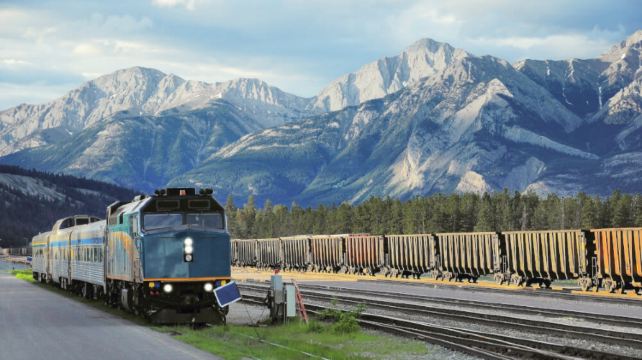
The Canadian is VIA Rail's long-distance train linking Vancouver and Toronto, with Jasper as the principal Rockies stop. For a western Canada itinerary, travelers can book the Vancouver–Jasper segment and continue by road through Jasper National Park.

This is an overnight rail journey rather than a sightseeing service designed to pause at mountain viewpoints. The train operates as part of a wider national network, carries travelers between communities, and can be affected by freight traffic and operational delays. Do not book a tight same-day flight, tour, or separate ticket immediately after arrival.

via rail


Available service classes and onboard features depend on the train, date, and booking. Seats and sleeping accommodations differ significantly in privacy, comfort, meals, and access to common areas. Review the operator's current descriptions instead of assuming that every ticket includes a bed, shower, dome car, lounge, or dining service.

The scenery also depends on direction and daylight. An overnight schedule means part of the landscape passes in darkness, and seasonal day length affects what is visible. Travelers should choose this route for the total long-distance rail experience, not for a guarantee that every mountain section will appear in perfect light.

Who Should Choose VIA Rail?

VIA Rail suits travelers who enjoy traditional train travel, want an overnight journey, or are continuing across Canada. It can also be a practical component of a one-way route beginning in Vancouver and ending in Calgary after a road journey through Jasper, Lake Louise, and Banff.

It is less suitable for someone expecting an all-inclusive luxury excursion or direct rail access to Banff's hotels and attractions. Jasper is the logical transfer point, and onward transportation must be arranged separately.

Rocky Mountaineer: Daylight Scenic Rail

Rocky Mountaineer is a privately operated sightseeing train rather than scheduled public transportation. Its western Canadian routes are built around daylight viewing, onboard hosting, and an overnight hotel stop between rail days. Travelers sleep in a hotel rather than on the train.

Routes from Vancouver have historically connected with Jasper and the Banff or Lake Louise area through different corridors. Exact endpoints, operating days, service levels, hotel arrangements, transfers, and seasonal dates vary. Consult the operator's current itinerary for the year of travel before comparing flights or nonrefundable accommodation.

The value lies in large-window viewing, commentary, food service associated with the selected package, and the ability to watch the landscape change from the Pacific coast through river canyons and mountain corridors. The train does not stop at every scenic feature, and views can be affected by weather, wildfire smoke, seat position, or the side of the train.

Rocky Mountaineer


Who Should Choose Rocky Mountaineer?


This format fits travelers who prioritize scenery and hosted service, prefer hotel beds, and are comfortable treating rail as a major part of the vacation budget. It works especially well when combined with several hotel nights in Banff, Lake Louise, or Jasper.

It is not the same as a sleeper train, a commuter service, or a hop-on, hop-off railway. Once the train segment begins, passengers follow the scheduled program. Independent sightseeing happens before or after the rail journey.

Can You Travel to Banff by Train?

Banff has railway history and an active rail corridor, but it is not served by VIA Rail's regular passenger network. Travelers commonly reach Banff by road from Calgary or as part of a seasonal sightseeing rail itinerary and associated transfer arrangements.

This distinction matters when searching for a Canadian Rocky Mountain train trip. A map may show tracks through Banff, yet that does not mean a scheduled passenger train stops there. Confirm whether a package's destination is Banff itself, Lake Louise, Calgary, or a motorcoach transfer point.

For an independent journey, Calgary is the main flight gateway for Banff. Jasper can be reached by VIA Rail, then connected to Banff through a road trip or organized transfer along the Icefields Parkway when seasonal and road conditions permit. That highway journey is a major scenic component, not a minor station transfer.

banff

Jasper, Banff, and Lake Louise after the Train

Rail alone cannot cover most of the Canadian Rockies' signature landscapes. Jasper National Park, Banff National Park, and the Lake Louise area extend well beyond their town centers, and trailheads, lakes, viewpoints, and wildlife areas require road transportation or organized excursions.

Jasper

Jasper is the natural stop for VIA Rail passengers. The town is compact, but the national park's major areas are dispersed. Local tours, seasonal shuttles, taxis, cycling, or a rental vehicle may be needed depending on the itinerary. Wildfire, restoration work, weather, and park operations can affect access, so consult current Parks Canada and local information before travel.

Banff

Banff has the broadest range of hotels, restaurants, tours, and regional transportation in the mountain parks. The town works well as a multi-night base for nearby viewpoints, lakes, hiking, and day trips. Parking pressure can be high, which makes local and regional transit useful when available.

Lake Louise

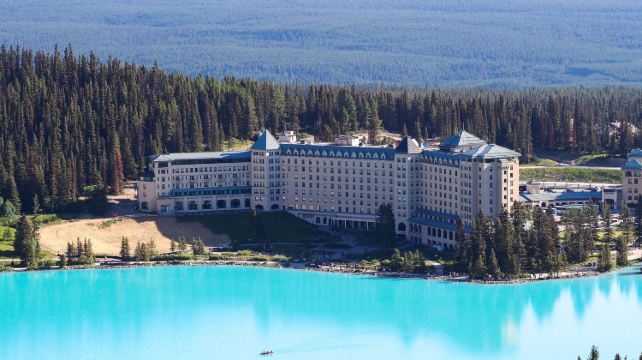
Lake Louise is a mountain destination and a small service area, not a large town. Access and parking systems can change by season, and popular locations may use reservations or shuttle arrangements. Verify current Parks Canada guidance instead of assuming a rental car can be driven directly to every viewpoint.

Best Seasons for Train Travel in the Canadian Rockies

Spring: Longer Days and Changing Conditions


Spring brings increasing daylight, snow remaining at higher elevations, and a gradual reopening of seasonal activities. Lower-elevation trails may be accessible while alpine routes remain snowy or closed. Rail and package operations do not all begin on the same date.
This season can suit travelers who value cooler weather and fewer peak-summer crowds. Pack for rapid changes and check the status of roads, lakes, trails, and sightseeing services separately.


Summer: The Broadest Choice


Summer offers long daylight hours and the widest range of train departures, tours, and park activities. It is also the busiest period. Rail inventory, hotel rooms, and popular excursions can sell out well in advance.

Wildfire smoke is a potential issue across western Canada during fire season. Its location, intensity, and visibility cannot be predicted far ahead. Build flexibility into outdoor plans and follow official air-quality and emergency information during the trip.


Fall: Color and Cooler Travel


Early fall can bring crisp air, lighter crowds, and yellow larch foliage at higher elevations. Timing varies with weather and elevation, so no date guarantees peak color. Days shorten, nights cool quickly, and some seasonal services reduce operations.

Fall is a strong option for travelers who want scenery without midsummer heat, provided the chosen rail route still operates on their dates.


Winter: A Different Kind of Rail Journey


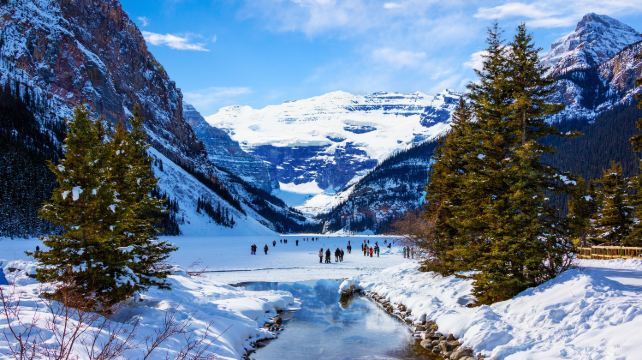
VIA Rail's national passenger service can provide a winter view of the mountains, subject to its current schedule and operating conditions. Seasonal sightseeing trains may not operate during winter. Snow, short daylight, cold, and weather disruption change the character of the trip.

Winter visitors need realistic connection buffers and suitable clothing. Many summer attractions, roads, and excursions follow different operating patterns or are unavailable.

Choosing Direction: Vancouver to the Rockies or the Reverse

Traveling eastbound from Vancouver creates a natural progression from coastal city to interior plateaus and mountain parks. It also supports an open-jaw itinerary that ends with a flight from Calgary after Banff.

Westbound travel works well for visitors who want the mountain parks first and a relaxed finish in Vancouver. Neither direction guarantees better scenery. Daylight, weather, seat position, and the specific schedule matter more than a universal "best side" of the train.

Check arrival time before booking a hotel or transfer. If the train can be delayed, reserve a flexible first night and avoid a separate excursion that depends on an exact arrival.

Sample Canadian Rockies by Train Routes

7 Days: Vancouver, Rail, and Jasper

Spend two nights in Vancouver, take the chosen rail service toward Jasper, then use the remaining nights for Jasper National Park. This is the simplest rail-focused itinerary and avoids trying to add Banff without enough road time.

10 Days: Vancouver to Jasper, Lake Louise, and Banff

Begin in Vancouver, travel by train to Jasper, then continue by organized coach or rental vehicle along the Icefields Parkway. Stay in the Lake Louise area and Banff before departing through Calgary. Road access, stops, and transfer services must be checked for the season.

12 to 14 Days: A Slower Western Canada Journey

Add more time in Vancouver, Jasper, and Banff, plus a night or two in another mountain base. This schedule creates buffers for weather and avoids making every scenic stop a short photo break. It also leaves room for a lake cruise, gondola, guided walk, or wildlife-focused outing when operating.

Travelers who want coordinated rail and road logistics can compare
Canadian Rockies tours with multi-day Canadian Rockies vacation packages before booking each component separately.

What to Compare before Booking

  • Exact route: Identify every rail station, hotel stop, road transfer, and final airport.
  • Train type: Confirm whether it is scheduled passenger rail or a daylight sightseeing train.
  • Sleeping arrangement: Determine whether the night is onboard or in a hotel.
  • Service class: Compare seating, windows, meals, lounge access, baggage, and privacy.
  • Daylight exposure: Check which landscape sections occur during likely daylight hours.
  • Transfer protection: Learn what happens if the train arrives late for an included connection.
  • Mobility needs: Ask about boarding steps, narrow corridors, accessible rooms, and assistance.
  • Cancellation terms: Rail, hotels, and packages may use different payment and refund rules.
  • Park transportation: Confirm how you will reach lakes, trailheads, and viewpoints after arrival.
  • Current conditions: Review operator notices, Parks Canada updates, road reports, weather, and air quality.

Packing Tips for Train Travel in Canadian Rockies

  • Keep medications, documents, chargers, a warm layer, and overnight essentials in a small bag that stays with you. Checked luggage may not be accessible during the journey, depending on the operator and route.
  • Bring layered clothing rather than one heavy outfit. Mountain mornings can feel cool even when afternoons are warm. A light waterproof shell, comfortable walking shoes, sunglasses, and sun protection support both train days and park excursions.
  • For photography, use a lens hood or dark clothing to reduce window reflections. Avoid pressing equipment against the glass, and respect instructions about movement between cars or viewing areas. Binoculars are useful, but wildlife sightings are never guaranteed.
  • Pack snacks only after checking the meal service included with the ticket. Dietary requests may require advance notice and may not be available for last-minute bookings.

Practical Tips

  • Book the train first. Limited rail inventory can determine the rest of the itinerary.
  • Do not schedule tight connections. Long-distance trains can experience substantial delays.
  • Verify the station name. Vancouver, Jasper, Banff-area transfer points, and Calgary are not interchangeable.
  • Read inclusions line by line. A package may include some meals, transfers, and hotels but exclude others.
  • Check baggage rules. Allowances and access differ between rail operators and service classes.
  • Use flexible hotel rates where possible. They provide protection when transport plans change.
  • Prepare for limited connectivity. Mobile service can be inconsistent through mountain corridors.
  • Follow park rules. Keep distance from wildlife and never leave the train or vehicle outside permitted areas.
  • Check conditions close to departure. Weather, fire, smoke, construction, and seasonal operations can affect the trip.
 
Train travel in Canadian Rockies landscapes works best as the spine of a wider journey, not the entire itinerary. Select the rail style first, protect connections with realistic buffers, then add the road-based places the tracks cannot reach. With the right route and season, the train becomes a memorable transition between Vancouver and the mountain parks rather than a complicated transportation puzzle.

FAQ

What is the best Canadian Rockies train trip?

Choose VIA Rail Canada for a traditional overnight passenger journey between Vancouver and Jasper. Choose Rocky Mountaineer for a premium daylight sightseeing format with a hotel night. Choose a rail-and-coach package when Banff, Lake Louise, Jasper, and the Icefields Parkway are all priorities.

Can you see the Canadian Rockies by train only?

You can cross part of the Rockies by train, but rail alone does not reach most lakes, trails, viewpoints, or park attractions. A complete trip needs road transportation, local transit, or guided excursions after the rail segment.

Does a train go directly from Vancouver to Banff?

There is no regular VIA Rail passenger service to Banff. Seasonal sightseeing itineraries may connect Vancouver with the Banff or Lake Louise area through their published route and transfer arrangements. Verify the current operator's itinerary before booking.

How many days do you need?

Seven days support Vancouver, one rail segment, and Jasper. Ten days allow for Jasper, the Icefields Parkway, Lake Louise, and Banff. Twelve to 14 days provide a more relaxed route with weather buffers and additional activities.

Which side of the train has the best views?

There is no consistently superior side across the entire journey. Rivers, peaks, canyons, and valleys appear on both sides, while direction, route, daylight, and weather shape visibility. Shared viewing areas may provide more flexibility than choosing a seat solely by side.

Summary

Canadian Rockies Train Options

VIA Rail's Canadian: Vancouver to Jasper

Rocky Mountaineer: Daylight Scenic Rail

Can You Travel to Banff by Train?

Jasper, Banff, and Lake Louise after the Train

Best Seasons for Train Travel in the Canadian Rockies

Choosing Direction: Vancouver to the Rockies or the Reverse

Sample Canadian Rockies by Train Routes

What to Compare before Booking

Packing Tips for Train Travel in Canadian Rockies

Practical Tips

FAQ

America's 250th Anniversary Mega Sale

image