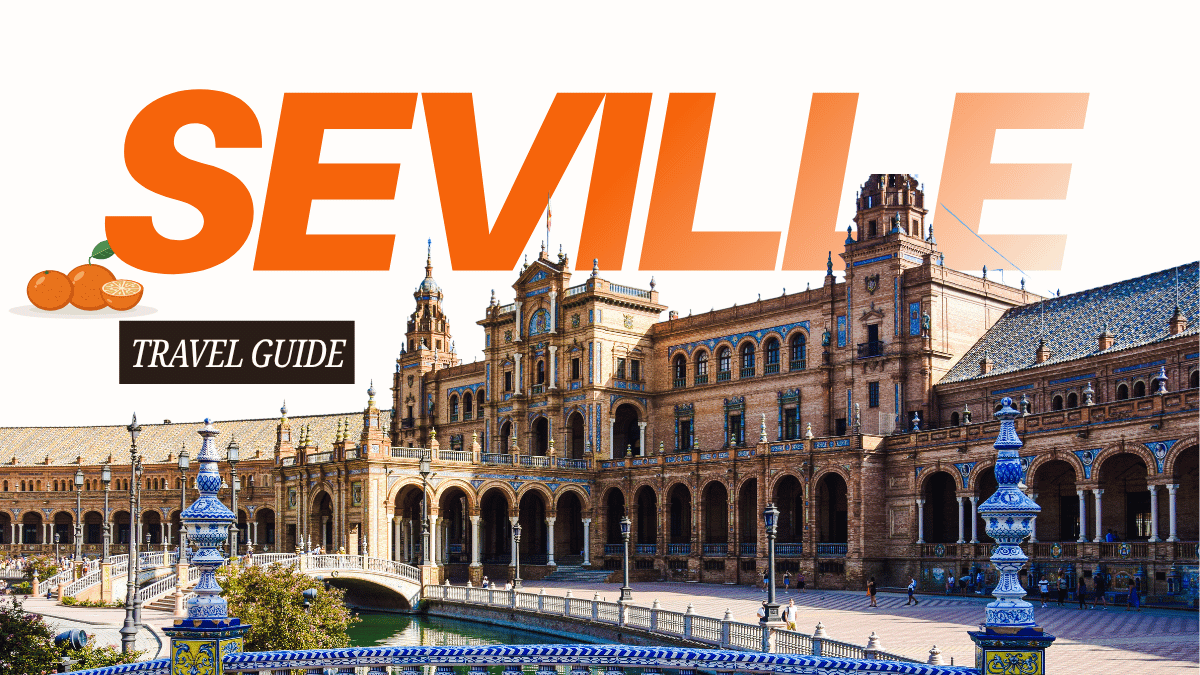
All three sit within a few hundred meters of each other around Plaza del Triunfo. Which one gets the first morning? The Alcázar, because it takes the longest.
The Alcázar: A Palace Still in Use
The Real Alcázar de Sevilla is one of the official residences of the Spanish royal family, and the upper storeys are still used when they visit. Work began in the 10th century under the Umayyads; the Abbadids and then the Almohads expanded it, and it was rebuilt after the city surrendered in 1248.
What you walk through is mostly Mudéjar, with Gothic and Renaissance layers on top. Pedro I's palace from the 1360s carries a façade inscription dated 1364 and an Arabic inscription dated 1366 in the Hall of Ambassadors; the courtyard at its center is now the Patio de las Doncellas. Entry is through the Puerta del León, and the gardens hold the Estanque de Mercurio and the Galería de Grutesco.

Give it three hours for the palace rooms and the gardens. The building reads small from the outside and then keeps going. In summer, the courtyards and water channels make it a cool retreat from the sun's glare.
High season gets busy, so buy online in advance and buy from the official site rather than a reseller.
The Cathedral and the Giralda
The Catedral de Santa María de la Sede was listed with the other two in 1987. It is the largest Gothic cathedral anywhere: 135 m long, 100 m wide, with a central nave that rises 36 m and the longest nave of any cathedral in Spain.
Work began in 1402; the building was consecrated in 1507 and finished in 1519. Christopher Columbus and his son Diego are buried inside, under an ornate canopy and statue. The cathedral stands on the site of the Almohad grand mosque of 1172 to 1198, and the mosque's ablutions courtyard survives as the Patio de los Naranjos, with a fountain and orange trees.

The Giralda is that mosque's former minaret, 104.5 m to the weather vane. It was begun in 1184, finished on 10 March 1198, given a belfry in the 16th century, and topped by El Giraldillo in 1568. You climb by 34 ramps rather than stairs, and the tower comes with the cathedral ticket.
The Archive, and Fitting the Three Together
The General Archive of the Indies completes the listing and costs nothing to enter. It closes on Mondays, which is worth building the plan around.
The city's administrative weight is old: the Casa de Contratación moved here in 1503, and that administration's records are what the building now holds.
A workable split is the cathedral in the morning, the Alcázar in the afternoon, and an hour for the Archive on a weekday. If one day has to hold all three, cut the Archive rather than the gardens.