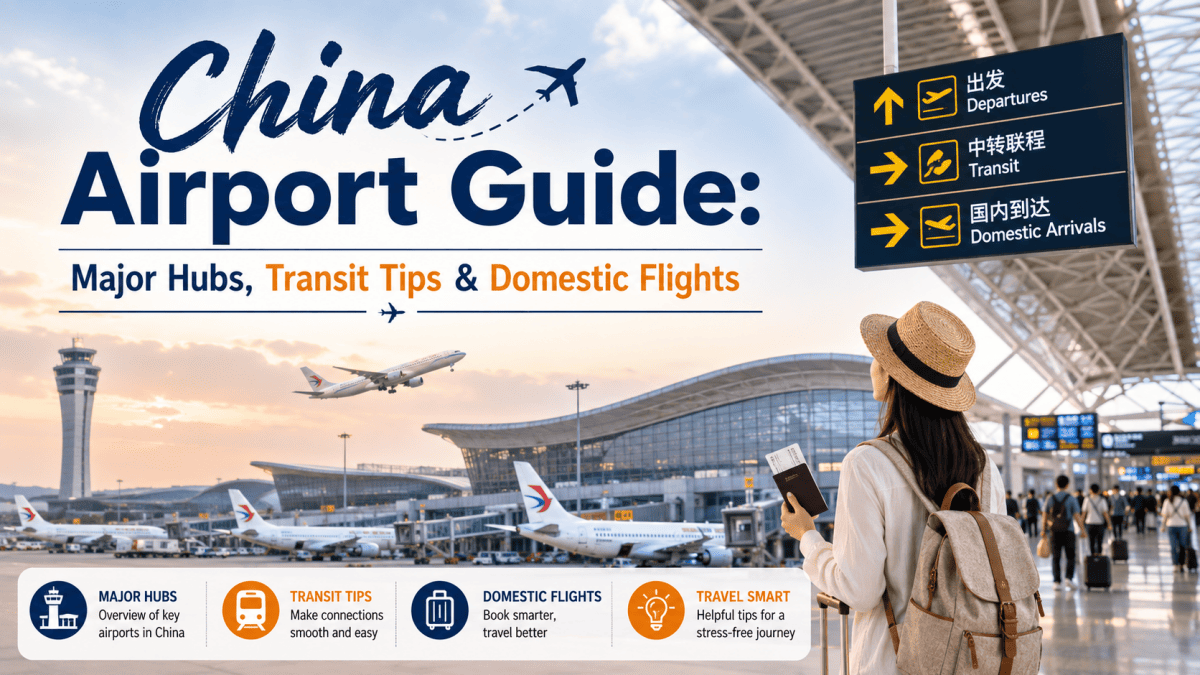
A China tour involves several key steps that you should complete before departure: apply for the appropriate visa (or confirm your visa-free eligibility), set up mobile payment apps like Alipay and WeChat Pay by linking your overseas bank card, arrange internet access through a travel eSIM or roaming plan, book your flights and accommodations, purchase travel insurance, pack essential items including medications and adapters, and familiarize yourself with basic cultural etiquette. Most travelers need 4 to 6 weeks before departure to complete all preparations, though some tasks like visa applications should start even earlier.
China Travel Preparation Checklist
| Preparation Task | When to Start | Difficulty | Time Required |
| Passport validity check | 3-6 months before | Easy | 5 minutes |
| Visa application | 2-3 months before | Moderate | 1-2 weeks |
| Flight booking | 2-4 months before | Easy | 1-2 hours |
| Accommodation booking | 2-3 months before | Easy | 1-2 hours |
| Travel insurance | 1-2 months before | Easy | 30 minutes |
| Mobile payment setup | 2-4 weeks before | Moderate | 30 minutes |
| Internet/VPN arrangement | 2-4 weeks before | Easy | 1 hour |
| Vaccinations/health check | 1-2 months before | Easy | 1-2 hours |
| Packing | 1-2 weeks before | Easy | 2-3 hours |
| Currency exchange | 1-2 weeks before | Easy | 30 minutes |
Why Preparation Matters for China Travel
China is unlike many other tourist destinations. The digital ecosystem, payment methods, internet access, and language environment are quite different from what most Western travelers experience. While this makes China an incredibly rewarding destination, it also means that last-minute preparation can lead to unnecessary stress.
Travelers who prepare properly find that China is welcoming, efficient, and fascinating. Those who skip key preparation steps may struggle with basic tasks like paying for meals, accessing their email, or communicating with locals. The good news is that most preparation tasks are straightforward if you start early.

Travelers who prepare properly find that China is welcoming, efficient, and fascinating. Those who skip key preparation steps may struggle with basic tasks like paying for meals, accessing their email, or communicating with locals. The good news is that most preparation tasks are straightforward if you start early.
Step 1: Check Your Passport and Visa Requirements
Passport Validity
Before anything else, check your passport. China requires that your passport be valid for at least six months beyond your planned date of entry. If your passport expires sooner, you need to renew it before applying for a visa.
Visa Requirements
Visa requirements depend on your nationality and the purpose of your visit:
Visa-free entry: Citizens of certain countries can enter China without a visa for short stays. For example, citizens of Singapore, Japan, and several European countries can visit visa-free for up to 30 days. The 240-hour transit visa exemption allows travelers from many countries to stay in specific regions for up to 240 hours (10 days) when transiting through international airports.
Tourist visa (L visa): Most travelers from the United States, Canada, Australia, and many other countries need to apply for a tourist visa at a Chinese embassy or consulate. The application process typically takes 4 to 7 business days, but you should apply at least 2 to 3 months before your trip to allow for any delays.
Required documents for visa application:
- Valid passport with at least six months' validity
- Completed visa application form
- Passport-style photo
- Proof of travel arrangements (flight itinerary, hotel bookings)
- Proof of financial means (bank statements)
- Travel itinerary
Step 2: Set Up Mobile Payment
China is one of the most cashless societies in the world. Cash is rarely used, and credit cards are only accepted at high-end hotels and international chain restaurants. Almost all daily transactions happen through mobile payment apps.

Both Alipay and WeChat Pay now accept overseas bank cards, including Visa, Mastercard, JCB, and Diners Club. You do not need a Chinese bank account.
Setup process:
1. Download the app (Alipay or WeChat) from your app store
2. Register with your overseas phone number
3. Complete identity verification with your passport
4. Add your bank card
5. Start using the app for payments
Transaction fees:
Alipay and WeChat Pay
Both Alipay and WeChat Pay now accept overseas bank cards, including Visa, Mastercard, JCB, and Diners Club. You do not need a Chinese bank account.
Setup process:
1. Download the app (Alipay or WeChat) from your app store
2. Register with your overseas phone number
3. Complete identity verification with your passport
4. Add your bank card
5. Start using the app for payments
Transaction fees:
- Transactions under 200 CNY (approximately $28 USD): Usually free
- Transactions over 200 CNY: Around 3% fee
Step 3: Arrange Internet Access
The Great Firewall
China restricts access to many Western websites and apps, including Google, Gmail, Facebook, Instagram, WhatsApp, YouTube, and many news sites. This restriction is known as the Great Firewall.
Solutions for Internet Access
Travel eSIM: Many travelers use eSIM services that provide internet access without the restrictions of local Chinese networks. Services like Airalo, Holafly, and others offer China-specific or Asia-wide eSIM plans. Purchase and install the eSIM before you arrive.
International roaming: Check with your mobile carrier about international roaming plans. Some carriers offer China roaming packages, though these can be expensive.
VPN apps: Many travelers use VPN (Virtual Private Network) apps to access restricted websites. However, VPN usage in China exists in a legal gray area, and some VPNs are blocked. If you choose to use a VPN, download it before arriving in China and test it thoroughly.
Hotel and cafe WiFi: Most hotels and cafes offer WiFi, but the same restrictions apply. You will still need an eSIM, roaming plan, or VPN to access blocked sites.
Plan your internet access strategy before departure. Trying to set it up after you arrive can be frustrating and time-consuming.
Step 4: Book Flights and Accommodations
Flights
Book your flights 2 to 4 months in advance for the best prices and availability. Major international airports in China include:
- Beijing Capital International Airport (PEK)
- Shanghai Pudong International Airport (PVG)
- Guangzhou Baiyun International Airport (CAN)
- Chengdu Tianfu International Airport (TFU)
- Xi'an Xianyang International Airport (XIY)
Accommodations
If you are not booking a guided tour, you need to arrange accommodations independently. Options include:
- International hotel chains (Marriott, Hilton, IHG)
- Chinese hotel chains (Huazhu, Home Inn, Jinjiang)
- Boutique hotels
- Hostels (for budget travelers)
Step 5: Purchase Travel Insurance
Travel insurance is not mandatory for entering China, but it is highly recommended. A good travel insurance policy covers:
- Medical emergencies and hospitalization
- Trip cancellation or interruption
- Lost or delayed baggage
- Emergency evacuation
- Flight delays or cancellations
Step 6: Health Preparations
Vaccinations
Check with your doctor or a travel clinic 1 to 2 months before departure about recommended vaccinations. Routine vaccinations should be up to date. Depending on your itinerary, your doctor may recommend:
- Hepatitis A and B
- Typhoid
- Japanese encephalitis (for rural areas)
- Rabies (for extended stays or rural travel)
Medications
Bring an adequate supply of any prescription medications you take, plus a copy of your prescription. Pack a basic first-aid kit with:
- Pain relievers
- Antidiarrheal medication
- Antihistamines
- Motion sickness medication
- Bandages and antiseptic
Step 7: Pack Essentials
Clothing
Check the weather forecast for your destinations and travel dates. China has diverse climates:
- Northern China (Beijing, Xi'an): Cold winters, hot summers
- Southern China (Guangzhou, Guilin): Mild winters, hot and humid summers
- Western China (Tibet, Yunnan): Varies by altitude
Electronics
- Universal power adapter (China uses Type A, C, and I outlets)
- Portable charger/power bank
- Phone and charging cables
- Camera (optional)
Other Essentials
- Copy of your passport and visa (keep separate from the originals)
- Printed itinerary and booking confirmations
- Small amount of Chinese Yuan in cash (for emergencies)
- Reusable water bottle
- Hand sanitizer and tissues
- Basic Chinese phrasebook or translation app
Step 8: Learn Basic Chinese Phrases
While English is spoken in major tourist areas and international hotels, most locals do not speak English. Learning a few basic Chinese phrases will help you navigate daily interactions:
- Nǐ hǎo (你好) - Hello
- Xièxiè (谢谢) - Thank you
- Duōshǎo qián? (多少钱?) - How much?
- Zàijiàn (再见) - Goodbye
- Duìbùqǐ (对不起) - Sorry/Excuse me
Step 9: Understand Cultural Etiquette
China has distinct cultural norms that differ from Western customs. Basic awareness will help you avoid awkward situations:
- Greet people with a slight bow or nod rather than a handshake
- Use both hands when giving or receiving items
- Do not stick chopsticks upright in a bowl of rice (this resembles incense at a funeral)
- Avoid discussing sensitive political topics
- Tipping is not customary in China (except in some international hotels)
- Remove shoes when entering someone's home
Step 10: Exchange Currency
While mobile payment is dominant, having some cash as a backup is wise. Exchange a small amount of Chinese Yuan (CNY) before your trip or withdraw from ATMs upon arrival.
ATM withdrawals: Most ATMs in major cities accept international cards (Visa, Mastercard). Look for ATMs at banks rather than standalone machines for better security.
Credit cards: International credit cards are accepted at major hotels, high-end restaurants, and luxury shopping malls, but not at most local businesses.
Notify your bank about your travel plans to China to avoid having your card blocked for suspicious activity.
ATM withdrawals: Most ATMs in major cities accept international cards (Visa, Mastercard). Look for ATMs at banks rather than standalone machines for better security.
Credit cards: International credit cards are accepted at major hotels, high-end restaurants, and luxury shopping malls, but not at most local businesses.
Notify your bank about your travel plans to China to avoid having your card blocked for suspicious activity.
Common Mistakes to Avoid
- Waiting Until the Last Minute. Visa applications, mobile payment setup, and internet arrangements take time. Start preparing at least 4 to 6 weeks before departure.
- Assuming Credit Cards Work Everywhere. Credit cards are not widely accepted in China. Set up Alipay and WeChat Pay before you arrive.
- Forgetting About Internet Restrictions. Without an eSIM, roaming plan, or VPN, you will not be able to access Gmail, Google Maps, WhatsApp, and many other essential apps.
- Not Bringing a Power Adapter. China uses different outlet types than North America and Europe. A universal adapter is essential.
- Overpacking
- You will be moving between cities and attractions. Pack light and bring only what you need. Laundry services are widely available and affordable.
Recommended Tours from Tours4fun
If the preparation process feels overwhelming, consider booking a guided tour. Tours4fun offers China vacation packages that handle most logistics for you, including:
- Accommodations
- Transportation between cities
- English-speaking guides
- Entrance fees to attractions
- Some meals
Recommended Classic China Tours




Final Thoughts
Preparing for a trip to China requires attention to several unique factors that do not apply to other destinations. Mobile payment setup, internet access arrangements, and visa applications are the most critical tasks that travelers often overlook.
Start your preparation 4 to 6 weeks before departure, and tackle tasks in order of priority. Passport and visa requirements come first, followed by mobile payment and internet access. Then handle bookings, insurance, health preparations, and packing.
Start your preparation 4 to 6 weeks before departure, and tackle tasks in order of priority. Passport and visa requirements come first, followed by mobile payment and internet access. Then handle bookings, insurance, health preparations, and packing.