ComoMilanItalyEuropeBest TimePlaces to GoThings to DoFood & DrinkExcursions
Show All

Milan and Lake Como Guide: Duomo, Fashion & Da Vinci

cover

Milan attractions fall into two groups, and the split explains most itinerary mistakes. One group sits inside the historic center: the cathedral, the Galleria Vittorio Emanuele II arcade, La Scala, and the four streets of the fashion quadrangle. The other group needs a train. Leonardo's Last Supper sits west of the center, and Lake Como is roughly an hour from Milano Centrale.


The city is Italy's second-largest, with about 1.36 million residents and 6.55 million in the wider metro area, which produces around 20% of the country's GDP. That working rhythm shapes everything, from when bars fill to which museums bother opening on a Monday. Plan the center in clusters you can walk, and treat the lake as a separate day rather than an add-on.

8-Day Northern Italy Tour from Milan

8-Day Northern Italy Tour from Milan: Cinque Terre and Parma | 1 Country and 6 Cities | 7 Breakfasts, 3 Dinners
Shared Room Available
Daily breakfast
Local Specialty Meal
4.8( 8 reviews )
Tour Code: 717051
Start / End City
Milan
Duration
8 Days
City & Attractions
Milan, Lake Como, Parma+5 more
Languages
English Live
Group Size
Max. 50 travelers
Tour Audience
English speakers
Operator
The Travel Corporation (TTC)
From
$2,079.00


The Duomo: Rooftop or Floor

The cathedral gives you two visits in one building, and they feel nothing alike. Down on the floor you read the scale: this is one of the largest Gothic churches anywhere, and the facade fills the east side of Piazza del Duomo. Up on the roof, the city flattens into terracotta tiles, courtyards, and the glass towers of Porta Nuova.


Do the interior first and the roof second, on your first morning while your legs are fresh. Entry runs on timed tickets, so pick a time rather than joining whatever line has formed at the door.


What the Milano City Card Actually Saves


The card covers more than 15 museums plus public transit and runs €25 to €35 for 24 to 72 hours, and Duomo timed entry is among the included sites, alongside Pinacoteca Ambrosiana and Castello Sforzesco. Three included sights in a day, and it has paid for itself. One cathedral and a lot of walking, and it has not.


Pair the roof with a second viewpoint, and you read the city twice. Torre Branca gives the same kind of panorama from a different angle, and the walk between the two crosses the historic center on foot, past La Scala and into Brera. Cobblestones slow that walk down, so wear shoes with a real sole and leave the metro map in your pocket.

Leonardo's Last Supper: The Booking Rule

Santa Maria delle Grazie sits west of the center, and this is not a gallery you drift through. The fresco covers one wall of a single room, and everyone who comes in stands in that same space at the same time. It is one of the world's most famous paintings, which is the whole reason to plan a day around it.


So what gets booked first? The reservation, and the flight second. Fix Santa Maria delle Grazie before you commit to dates, then build the flight and the hotel nights around it. Skip Monday as an arrival day, since the city's museums and sights largely close then, and keep the hours around your visit loose.


If the reservations are gone, Milan still answers the same question. Castello Sforzesco holds museums and sculptures by Michelangelo, and the Brera art gallery carries some of the finest work in Europe. Either one fills the Leonardo-shaped hole in an afternoon.

The Fashion Quarter and What It Actually Is

People travel to Milan, Italy, for shopping as much as for the cathedral, and the two are a few streets apart. The quadrilatero della moda, or fashion quadrangle, is a set of blocks bounded roughly by Piazza del Duomo, Piazza Cavour and Piazza San Babila. Via Montenapoleone carries the prime brands, with Via della Spiga, Via Sant'Andrea and Via Manzoni filling in the rest.


What surprises first-timers is the price ladder. Montenapoleone is showroom territory, while Corso Buenos Aires, reputed to be Europe's longest shopping street, and Corso Vercelli sell to people who live here. Brera, north of the center, pairs the art gallery with young designers whose boutiques undercut the famous streets.


The Galleria Vittorio Emanuele II is the free version of all of it: a 19th-century arcade of glass and iron, one of the oldest shopping galleries in the world, with Rizzoli and Libreria Bocca bookshops, a Bernasconi silverware counter and a Gucci cafe under the dome.


Evenings belong to the Navigli. Those canals once carried goods in from the Lombardy countryside, and the banks now hold the bars that fill at aperitivo hour. Fashion Week runs twice a year, in the February-March and September-October windows, and Design Week lands in April, so hotel rates track both.


South of the canals, the Prada Foundation has built a second fashion quarter around itself, with the headquarters of Louis Vuitton, Bottega Veneta, Prada, Moncler and Jil Sander grouped nearby, and the Porta Romana streets behind it given over to restaurants rather than showrooms. It is worth an evening if the Navigli bars are too packed to get a table.

Lake Como as a Day Trip

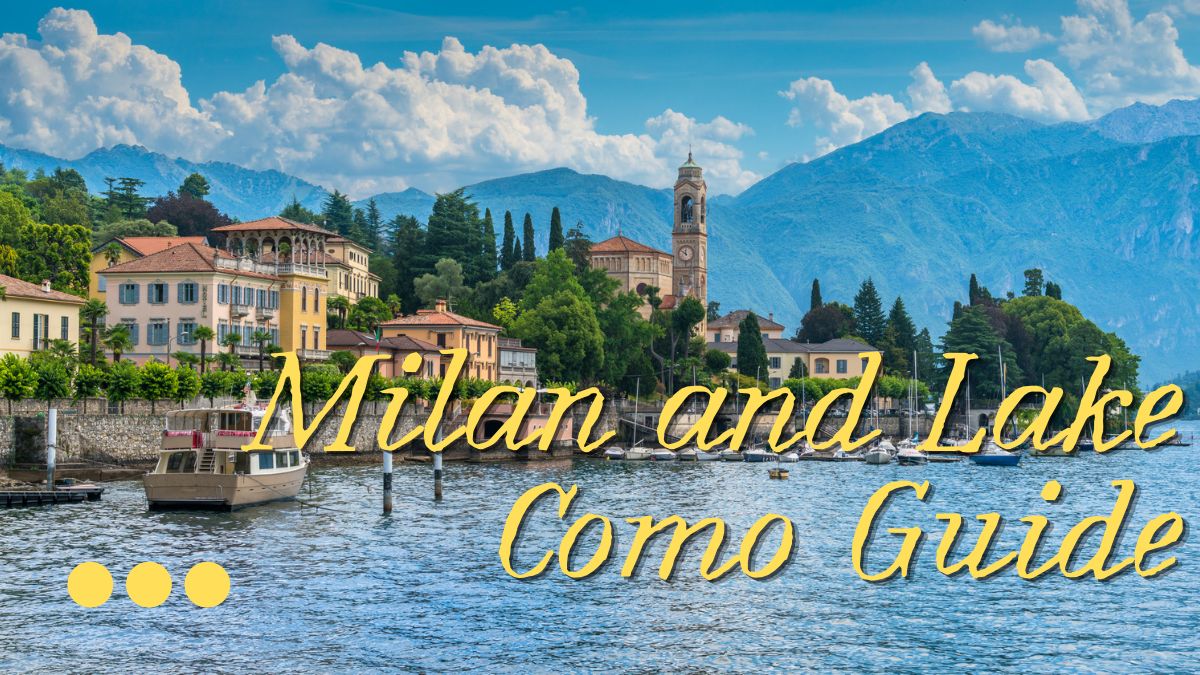
The lake is why plenty of people bolt Milan onto a longer Italy route, and a day trip to Lake Como is easier than its glossy reputation suggests. It is Italy's third-largest lake, 146 square kilometers of water more than 400 meters deep, bent into an inverted Y by an old glacier, with the Alps at the northern end and villas along both legs.


Trains leave Milano Centrale for Como San Giovanni in about an hour, and tickets come from the station tobacconist for a few euros. That station sits outside the center, with buses meeting the platforms. Fast direct trains also reach Varenna on the eastern shore in roughly the same hour, and that choice decides your whole day.


From Como, the regular ferry to Bellagio runs about two hours, while the hydrofoil does it in 45 minutes for a higher fare. From Varenna, one short crossing lands you in Bellagio, the "Pearl of Lake Como," with frequent boats on to Menaggio and Tremezzina. Two villages make a good day, and three is ambitious.


Villa Carlotta at Tremezzo is the garden stop, a terraced botanical garden above the water. Villa del Balbianello at Lenno is the one that showed up in Star Wars Episode II. In season, the mid-lake boats link Menaggio, Varenna and Bellagio hourly between 09:00 and 18:00, and a lake-wide day pass covers most of the water with a supplement for the fast boats.


Varenna is worth more than the crossing to Bellagio. Villa Cipressi and Villa Monastero keep gardens on the water, and the remains of Castello di Vezio sit above town at the end of a steep climb. On the western shore, the Lake Como Greenway runs almost 6.4 kilometers of path between Lenno and Tremezzo, which links the two villas without waiting on a boat.


Which is why a Lake Como day trip from Milan eats a full day, not a half. The eastern-shore line starts running around 06:00 and the last train out of Milan leaves at 21:20, so the timetable is not what limits the day. Two ferry hops and the return leg burn the hours until dinner. Squeeze the lake between a Duomo morning and an evening reservation, and you will spend it looking at a train window.


Where you sleep on the lake matters less than which shore you pick first. Como town is the transport hub, so it suits a tight schedule and a single ferry loop. Varenna is the quieter base with the short crossing to Bellagio, and it rewards anyone who wants two villages without a long boat ride between them. Bellagio sits in the middle and charges for the position, which is worth paying once if you plan to eat dinner on the water rather than catch a return train.

Best Time to Travel to Milan

Timing here works by season rather than by calendar month, and the answer usually lands on two windows with a lot of gray in between. Weather, crowd levels, and opening hours all move together, and the lake moves with them.


Autumn: Warm Stone, Then Rain


September averages 25°C and November slides to 13°C, so late September is the sweet spot for walking tours and lake days. Autumn is also the wettest stretch of the year, with October the dampest month and July the driest, so bring a real coat and shoes that survive puddles. Fashion Week returns in September and lifts rates for a week.


Spring: Bright and Crowded


March starts near 14°C, May reaches 22°C, and the terraces fill for aperitivo. This is one of the wettest seasons, May especially. Design Week in April and the late February and early March fashion dates pack hotels, so late April or May buys the same weather with less crush.


Summer: Heat, Then an Empty City


July and August peak near 30°C, and the humidity makes the stone radiate at night. Afternoon thunderstorms arrive fast and hard. August brings a strange trade: residents leave, the Duomo and museums thin out, and plenty of small restaurants and boutiques close for the month with a Chiuso per ferie sign in the window. Come for quiet galleries, not for dinner.


Winter: Fog, Markets, Low Rates


January highs sit near 7°C, fog eats the skyline, and snow is rare but possible. December is the exception, with lights and Christmas markets around the Duomo. This is low season, so hotel rates soften and the winter sales start in January, which makes it the window for La Scala, the museums and the arcade. The lake runs colder still at 2°C to 8°C.

Milan Itinerary

Two days is the honest minimum, and it forces a choice the city will not make for you: the lake or Leonardo. Four days fits both, and the extra pair also buys the thing Milan does well and most visitors skip, which is a morning with nothing booked until noon. Both plans below are mostly walking. If the opening hours are the part you would rather not track, Milan tours cover the center in one block and leave your afternoons alone.


Day Two Days Four Days
Day 1 Duomo roof, Galleria, fashion quadrangle Duomo roof, Galleria, Montenapoleone, Brera
Day 2 Train to Como, ferry to Bellagio, back by evening Last Supper booking, Castello Sforzesco, Parco Sempione
Day 3 — Lake day: Como to Bellagio by ferry, Varenna return
Day 4 — Bergamo by train, or a slow Navigli morning


Bergamo sits about an hour out by train, which puts it in the same bracket as Como with a fraction of the ferry planning. Otherwise hand the fourth day to the Navigli and Brera and let Milan be a city instead of a checklist, which is the part two-day visitors never get. Either way, group the Milan attractions into indoor days and outdoor days, and the forecast stops running the trip.


So what gives way first? With two days, cut Bergamo and Brera rather than squeezing Como into an afternoon, because the lake rewards a full day and punishes a half one. If Leonardo matters more than the water, skip the lake and let the four-day shape run with the fresco as its spine. Take the lake when the forecast is clear, since fog over water is still fog.

FAQ

How many days do you need for the Milan attractions?

Two days covers the cathedral, the fresco and the fashion streets if you leave the lake out; four adds a lake day, Bergamo and a slow Navigli morning.

Is a Lake Como day trip from Milan worth the train ride?

It is, as long as you give it a whole day. Trains reach Como San Giovanni or Varenna in about an hour, and ferries link the mid-lake towns, so a car adds nothing. A half day gets you to the water and straight back.

Should you reserve the Duomo roof and the Last Supper in advance?

Yes. Reserve the Duomo roof and the fresco before you fix your flight dates, and start the trip on a Tuesday or Wednesday so a Monday closure cannot cost you a day.

What is the simplest way to reach Como from Milan?

The regional train from Milano Centrale is the easy option, and tickets come from the station tobacconist for a few euros. Buses meet the platforms at Como San Giovanni because the station sits outside the old center.

Which months bring the most rain?

October is the wettest month of the year in Milan, and May is the dampest part of spring. Late September stays warm enough for the lake and dry enough for walking tours.