China Asia Places to Go Travel Tips

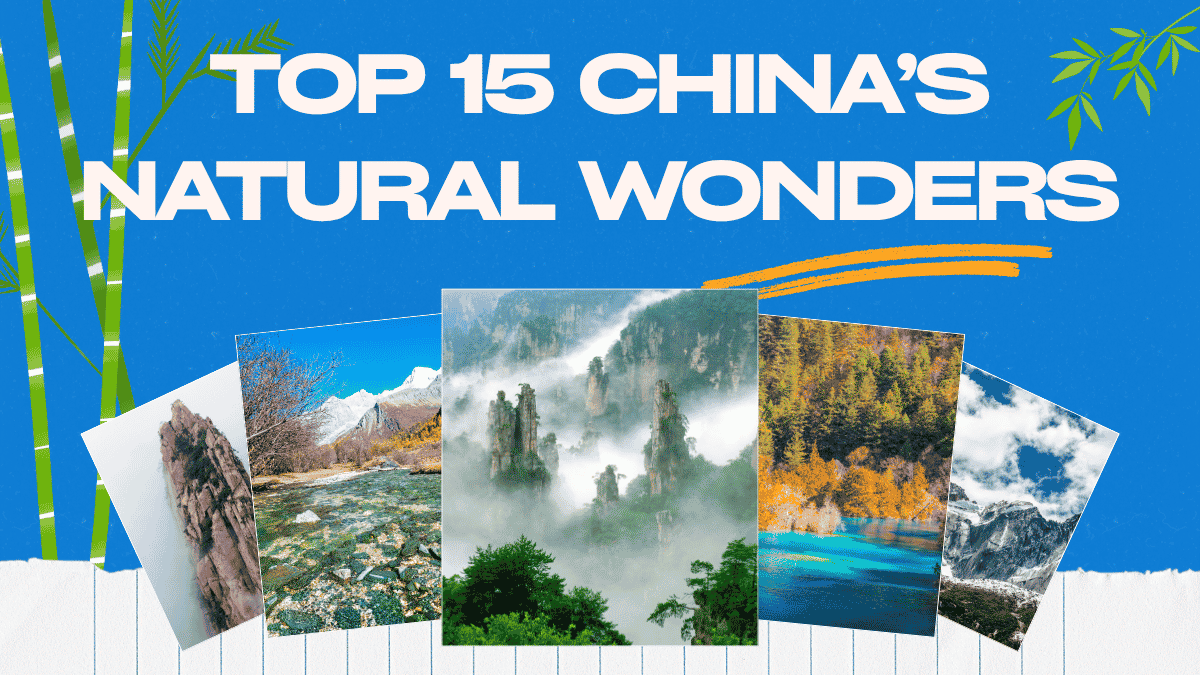
Top 15 China’s Natural Wonders That Feel Otherworldly

cover

For most international tourists, their first impression of China is likely the spectacular Great Wall and the historic Forbidden City. But in reality, this vast country is home to many natural wonders; as soon as you venture out of the city, you’ll find yourself surrounded by unique landscapes.

From gravity-defying stone spires to multi-colored mountain ranges that look like oil paintings, the country holds some of the most spectacular topography you will ever see. Why stick to the usual city breaks when you can experience the wild, untouched side of East Asia? Let’s dive into the ultimate breakdown of the most surreal China natural wonders and prepare your bucket list for an unforgettable venture.

 

Types of Natural Wonders in China

To give you a basic understanding of China's landscapes, I will introduce you to the main categories of China's natural wonders.

Because the country spans multiple climate zones and features a steep, stepped drop in elevation from the Qinghai-Tibet Plateau to the eastern plains, its geological structure is extremely diverse.

 
Landform Type Core Geological Characteristics Key Regional Examples
Karst Topography Soluble bedrock (like limestone) dissolved over millennia, creating towers, caves, and sinkholes. Guilin, Yangshuo, Shilin Stone Forest
Danxia Landforms Redbed sandstone eroded into cliffs, isolated peaks, and vibrant multicolored ridges. Zhangye Danxia, Taining Danxia
Alpine Glacial Plateaus High-altitude peaks, pristine meltwater lakes, and dramatic U-shaped valleys. Daocheng-Yading, Jiuzhaigou
Volcanic Calderas Ancient collapsed volcanic craters have filled with water over thousands of years. Changbai Mountain Tianchi

Best 15 Chinese Landscapes

Whether you want to gain a deeper understanding of China’s natural landscapes or are looking to choose a destination for your next trip to China, we’ve compiled a list of the most popular natural attractions among local tourists.

Zhangjiajie, Hunan

Zhangjiajie is not only popular among domestic tourists but also enjoys a strong international reputation. One of the most attractive tourist attractions in China. The quartz-sandstone pillars of Zhangjiajie National Forest Park are so massive and vertical that they served as the direct inspiration for the floating Hallelujah Mountains in the movie Avatar. Over three thousand towering pillars rise out of deep, forested chasms, often wrapped in thick blankets of mountain mist.

zhangjiajie


Best Time to Visit: September to November or April to May. Autumn brings crisp air and brilliant foliage colors, while spring gives you the best chance of witnessing the famous "sea of clouds" rolling between the stone pillars. Please avoid traveling from July to August, as the weather is hot during this time and there are large crowds of domestic tourists on summer vacation.

What to Expect: Expect plenty of walking, steep stairs, and highly sophisticated park infrastructure. You can ride the Bailong Elevator, the world’s tallest outdoor lift, up the side of a cliff face, or challenge your fear of heights on the glass skywalks of nearby Tianmen Mountain. Keep a close eye on your belongings, as the local macaque monkeys are notorious for snatching snacks straight out of tourists' hands.

Top Zhangjiajie Tour

5-Day Scenic Zhangjiajie Group Tour· National Park Wonders & Fenghuang Ancient Town
Guaranteed Departure
Free Cancellation
5.0 ( 44 reviews )
Tour Code: 741885
Start / End City
Zhangjiajie
Duration
5.0 Days
City & Attractions
Zhangjiajie, Fenghuang County, The Rocky Natural Bridge +17 more
Languages
English Live
Save 3%
From $607.35
$589.13

Jiuzhaigou, Sichuan

Jiuzhaigou is located in northern Sichuan Province, on the edge of the Qinghai-Tibet Plateau. The valley features multi-tiered waterfalls and dozens of high-altitude lakes with crystal-clear water. The water here changes color constantly, shifting from turquoise and emerald to deep sapphire depending on the time of day and the mineral content of the lake beds.

jiuzhaigou


Best Time to Visit: Mid-to-late October is the golden window. This is when the alpine forests turn brilliant shades of orange, red, and yellow, creating an unbelievable color contrast with the bright blue water.

What to Expect: Jiuzhaigou is incredibly well-preserved but tightly regulated. You will navigate the park using an efficient internal eco-shuttle bus system and a massive network of wooden boardwalks. Because the valley floor sits between 2,000 and 3,100 meters above sea level, take it easy during your first few hours to let your body adjust to the thinner mountain air.

Mount Siguniang, Sichuan

Mount Siguniang is also located in Sichuan and consists of four adjacent snow-capped peaks that rise majestically above a deep, green valley. The highest peak, Yaomei Feng, reaches an intimidating 6,250 meters and remains a legendary challenge for mountaineers worldwide. For regular hikers, the lower valleys offer some of the most pristine alpine meadows and glacial streams in Asia.

Mount Siguniang


Best Time to Visit: Plan your visit between June and August to see the alpine meadows carpeted in wild mountain blossoms, or choose October for clear skies, crisp air, and golden larch trees.

What to Expect: The scenic area is split into three main valleys: Shuangqiao, Changping, and Haizi. Shuangqiao Valley is the most accessible, featuring a sightseeing bus and easy wooden paths suitable for all fitness levels. If you want a rugged trekking experience, head to Changping or Haizi valley on foot or horseback to get closer to the sheer rock faces of the four sisters.

Daocheng-Yading, Sichuan

Tucked deep within the Garze Tibetan Autonomous Prefecture, Daocheng-Yading is frequently referred to as the "last pure land on our blue planet." It is anchored by three sacred, snow-capped mountains that represent wisdom, compassion, and power in Tibetan Buddhism. Surrounding these jagged peaks are crystal-clear meltwater lakes, expansive grasslands, and ancient forests that feel completely cut off from the modern world.

daochengyading

Best Time to Visit: The peak viewing season runs from September to October. During these weeks, the wetlands turn deep red, the larches shift to a brilliant gold, and the weather remains stable enough to get clear views of the high peaks.

What to Expect: This is a high-altitude wilderness adventure that requires solid physical preparation. The main hiking routes start around 4,100 meters and climb past 4,600 meters to reach the famous Milk Lake and Five-Color Lake. You will need sturdy hiking boots, windproof layers, and potentially portable oxygen canisters, which are widely available at the park entrance.

Mount Huang, Anhui

Mount Huang is one of China's most important mountains, as it has been a source of inspiration for Chinese art for centuries and has appeared in numerous paintings and poems. It is the ultimate archetype of a China natural landscape: twisted, ancient pine trees growing directly out of sheer granite cliffs, bizarre rock formations that resemble mythical creatures, and a perpetual blanket of fog that makes the peaks look like islands in a vast ocean.

huangsahn


Best Time to Visit: While spring and autumn offer the most comfortable temperatures, winter (December to February) is a hidden gem. Seeing the ancient pines covered in glittering hoarfrost while mist hangs low in the valleys is a genuinely surreal experience.

What to Expect: Be ready for stairs—thousands of them. While modern cable cars can whisk you up to the main mountain ridges, moving between the scenic viewpoints requires climbing steep, hand-carved stone steps. Booking a room at one of the mountain-top hotels allows you to wake up early and catch the legendary sunrise over the cloud sea.

Poyang Lake, Jiangxi

Poyang Lake is China’s largest freshwater lake. Due to the dramatic seasonal fluctuations in the Yangtze River basin, Poyang undergoes drastic changes every year. During the summer flood season, it expands into a vast inland sea. In the winter dry season, the water level recedes significantly, revealing endless lush wetlands and grasslands.

poyang lake


Best Time to Visit: Visit from November to March if you want to witness one of the most incredible avian spectacles on the continent. As the water recedes, hundreds of thousands of migratory birds make these wetlands their winter home.

What to Expect: During the winter months, Poyang Lake turns into a paradise for wildlife photographers and birdwatchers. You can see rare species like the majestic Siberian white crane feeding in the shallows. The area offers peaceful boat tours and rural boardwalks where you can enjoy sweeping golden sunsets over the reeds.

Shilin Stone Forest, Yunnan

Located a short distance from Kunming, the Shilin Stone Forest looks like a labyrinth designed by a giant. Over 270 million years ago, this entire area was a vast ocean floor. As the water receded and the tectonic plates shifted, rain and wind carved the limestone bedrock into dense clusters of tall, blade-like rock pillars. Walking through it feels exactly like navigating a dense woodland, except every single tree is made of solid stone.

shilin


Best Time to Visit: Yunnan boasts mild weather year-round, but March to October is ideal. Visiting during this window allows you to see the vibrant green vegetation and wildflowers growing in the narrow crevices between the grey stone towers.

What to Expect: The park features well-maintained paved pathways that guide you through the maze of stone. Some sections are so narrow that only one person can squeeze through at a time. You will also get to learn about the rich culture of the local Sani people, an ethnic subgroup of the Yi nationality, who have passed down beautiful legends about the rock formations for generations.

Colorful Danxia Scenic Spot, Gansu

Located near the city of Zhangye along the ancient Silk Road, the Zhangye Danxia landform looks like someone spray-painted a canvas of rolling hills with vibrant streaks of terracotta, yellow, emerald, and gold. This striking natural beauty in China is the result of red sandstones and mineral deposits layered atop one another for over 24 million years, then buckled by tectonic shifts and sculpted by the elements.

danxia


Best Time to Visit: Plan your visit between June and September. For the absolute best views, head to the park in the late afternoon, right after a rainstorm. The moisture saturates the rock layers, making the colors pop with unbelievable intensity as the sun sets.

What to Expect: To protect this fragile geological treasure, you are not allowed to step directly onto the colored soil. Instead, comfortable sightseeing buses shuttle you between several large wooden viewing platforms built over the ridges. Bring a high-quality camera and a polarizing filter to capture the dramatic contrast of the colored ridges against the deep blue desert sky.

Altai Mountains, Xinjiang

Situated in the far northwestern corner of China, where the borders of China, Mongolia, Russia, and Kazakhstan converge, the Altai Mountains offer a pristine alpine wilderness that feels completely removed from the rest of the country. This region is characterized by jagged snow peaks, deep valleys lined with dense Siberian larch forests, and pristine glacial rivers that roar through the canyons.

Altai Mountains

Best Time to Visit: September is magical if you want to see the larch and birch forests turn a brilliant, uniform gold. If you are a fan of deep winter landscapes, visit in January to experience a quiet, snow-choked winter wonderland.

What to Expect: This is a remote destination where you can experience traditional nomadic cultures. You will stay in rustic, hand-built wooden cabins in historic villages like Hemu or Baihaba, where the local Tuva and Kazakh people still herd livestock and live in harmony with the seasonal shifts of the mountains.

Kanas Lake Scenic Area, Xinjiang

Deep within the Altai mountain system lies Kanas Lake, a high-altitude, crescent-shaped body of water surrounded by dense taiga forests. The lake is famous for its mysterious water properties; it changes shade from deep green to bright turquoise depending on the season and weather, and for the local legends of a giant "lake monster" rumored to live in its deep, glacier-carved depths.

Kanas Lake Scenic Area


Best Time to Visit: September is the absolute peak season. The reflection of the golden birch and pine trees against the milky, turquoise glacier water creates a visual spectacle that draws landscape photographers from all over the world.

What to Expect: Visitors use a network of eco-buses to reach various viewing points along the river valleys that feed into the lake, such as Moon Bay and Celestial Fog Bay. To get the best layout of the entire landscape, climb the 1,000-plus wooden steps up to the Fish Viewing Pavilion perched high on a ridge above the water.

Li River, Guangxi

This river in Yangshuo winds its way from Guilin to the bustling town of Yangshuo, cutting directly through a typical limestone karst landscape, with peaks rising straight up from the flat, emerald-green rice paddies. The Li River is so iconic to the nation’s identity that it is featured on the back of the 20-yuan banknote, making it a very popular spot for photography.

li river


Best Time to Visit: The most reliable weather occurs from April to October. Spring brings a gentle mist that hangs over the river tops, creating a moody, poetic atmosphere, while late summer and autumn offer clear blue skies and excellent water visibility.

What to Expect: The most popular way to experience the river is by taking a four-hour cruise boat from Guilin, or opting for a closer look on a motorized bamboo raft along the calmer stretches near Yangshuo. Along the banks, you will see water buffalo cooling off in the shallows and local fishermen practicing their traditional craft using trained cormorant birds.

Changbai Mountain Tianchi, Jilin

Straddling the border between northeastern China and North Korea, Changbai Mountain is an active volcano steeped in myth. At its absolute summit, resting inside a massive volcanic caldera, lies Tianchi, or Heaven Lake. Ringed by sixteen jagged volcanic peaks, this deep, cold crater lake holds water that stays remarkably still, mirroring the wild northern sky above it.

tianchi


Best Time to Visit: Your best bet is July to September. Because the mountain is notorious for unpredictable weather, fog, and sudden storms, the lake remains hidden from view for more than 200 days out of the year. Mid-summer gives you the highest mathematical probability of catching a clear view of the deep blue water.

What to Expect: Getting to the top involves a thrilling, fast-paced ride in a small park van that navigates dozens of steep switchbacks up the volcanic rock face. Once at the summit boardwalk, the air can be incredibly biting and windy, even in July, so make sure to pack a thick windbreaker or rent a heavy coat at the base of the mountain.

Three Gorges of the Yangtze River, Chongqing

The Yangtze River is the lifeblood of China's interior, and its most dramatic stretch winds through the Three Gorges: Qutang, Wu, and Xiling. Here, the massive river slices directly through towering limestone mountains, creating a corridor of vertical cliffs, misty peaks, and historical pathways that have inspired poets, emperors, and traders for thousands of years.

sanxia

Best Time to Visit: Choose April to May or September to October. These shoulder seasons allow you to bypass the sweltering, humid heat of the Yangtze summer while ensuring the river canyon remains clear of heavy winter smog.

What to Expect: The classic way to experience this region is by booking a multi-day luxury river cruise running between Chongqing and Yichang. The larger vessels offer comfortable cabins and viewing decks, and they frequently launch smaller, motorized wooden tenders to take you deep into the narrow "Lesser Three Gorges," where the cliff walls rise so steeply above you that they completely block out the sun.

Mount Hua, Shaanxi

Located a short train ride from the ancient capital of Xi'an, Mount Hua is celebrated as the most precipitous mountain under heaven. It is one of China's Five Sacred Taoist Mountains and features massive, near-vertical granite cliffs that drop thousands of feet into the valleys below. It is also home to the infamous "Plank Walk in the Sky," widely regarded as one of the most terrifying cliffside footpaths on Earth.

huashan

Best Time to Visit: Go during April to October to ensure the mountain trails are completely free of treacherous ice and snow.

What to Expect: While thrill-seekers head straight for the Plank Walk—where you harness yourself to a safety cable and shuffle along narrow wooden planks bolted directly into a vertical cliff face—the rest of the mountain is accessible via state-of-the-art cable cars. You can ride to the North or West peaks and wander along paved cliffside paths that offer endless panoramic vistas across the Shaanxi plains.

Ejina Populus Euphratica Forest Scenic Area, Inner Mongolia

Located in the remote Gobi Desert region of western Inner Mongolia, the Ejin Poplar Forest is an eco-wonderland that showcases the incredible resilience of nature. It preserves one of the oldest and largest remaining forests of Euphrates Poplar trees on Earth. These hardy "desert heroes" can survive brutal droughts and highly saline soils, standing strong against the desert winds for centuries.

Ejina Populus Euphratica Forest Scenic Area


Best Time to Visit: This destination has one of the shortest viewing windows in the world: late September to mid-October. Over the span of just a few days, the entire forest shifts from green to an intense, uniform golden yellow. Miss this two-to-three-week window, and the desert winds will blow the fallen leaves away, leaving bare branches behind until the following year.

What to Expect: The scenic area is organized around eight bridges that cross a seasonal desert river system. You can catch the sunrise over the reflective waters of the Second Bridge, take long walks through the old-growth groves of the Fourth Bridge, or head out to the rolling dunes of the Eighth Bridge to watch camels walk past golden trees against a desert sunset.

Tips for Visiting China's Natural Landscapes

Heading away from the major coastal cities to check out these China natural attractions requires a bit of practical foresight. Keep these golden rules in mind to ensure your adventure goes off without a hitch:
  • Download Local Apps Before You Leave: Western navigation and translation tools can be unreliable outside of major cities. Make sure you have a reliable VPN, download a high-quality offline translation app, and set up local payment systems like WeChat Pay or Alipay on your smartphone.
  • Respect Fragile Ecosystems: Many of these locations, especially the Danxia landforms and high-altitude alpine lakes, contain fragile soil profiles that take thousands of years to recover if damaged. Always stick to the designated boardwalks and paths.
  • Pack for Variable Weather: Mountain and desert environments are famous for sharp temperature drops. Even if you are visiting a destination in July, the temperature at a high summit or inside a deep canyon can drop rapidly, so always pack high-quality windproof and waterproof layers.

FAQ

What are the 5 landforms of China?

China’s vast territory is geographically classified into five primary landforms: mountains (which cover roughly 33% of the country), plateaus (like the massive Tibetan Plateau), basins (such as the arid Tarim Basin), plains (where the majority of the population lives), and rolling hills. This structural diversity is exactly why the country holds such a rich variety of microclimates and landscapes.

What are the 4 nature wonders of China?

While opinions can vary depending on the travel index, the traditional "Four Natural Wonders of China" widely celebrated in cultural and geographical guides are: 1.The surreal Karst Landscapes of Guilin along the Li River. 2.The majestic, snow-capped vistas of Mount Changbai and its Heaven Lake. 3.The geometric rock spires and cloud seas of Mount Huang (The Yellow Mountain). 4.The unique, freezing spectacle of the Jilin Rime, where winter moisture creates crystalline ice coatings along the riversides.

What is the 8th wonder of the world in China?

In China, the title of the "Eighth Wonder of the World" is almost universally attributed to the Terracotta Army in Xi'an. Discovered by local farmers in 1974, this massive underground collection of thousands of life-sized clay soldiers, horses, and chariots was buried alongside the first Emperor of China, Qin Shi Huang, to protect him in the afterlife. Though it is a cultural and historical creation rather than a natural landform, it remains one of the most significant archaeological finds in human history.