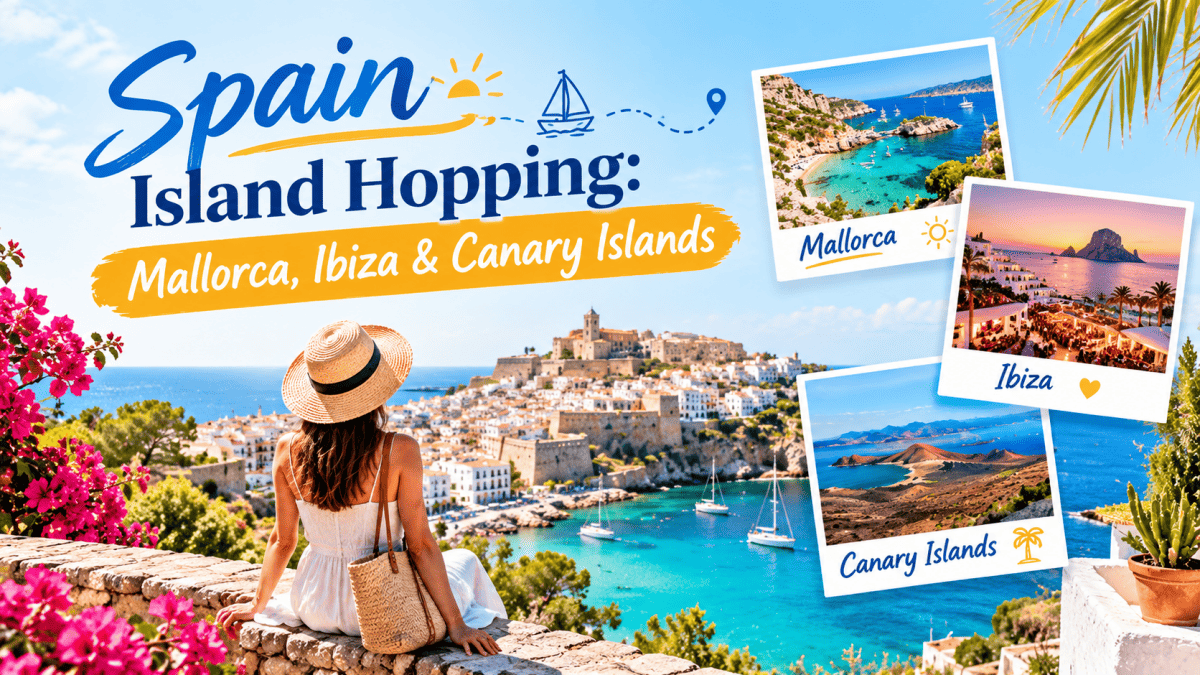
Why Spain Is Perfect for Island Hopping
Spain controls several island groups in two different bodies of water: the Balearic Islands in the Mediterranean (Mallorca, Menorca, Ibiza, and Formentera) and the Canary Islands in the Atlantic Ocean (Tenerife, Gran Canaria, Lanzarote, Fuerteventura, and others). This geographic spread means you can experience warm Mediterranean beaches and dramatic volcanic landscapes in the same trip.
The infrastructure for island hopping is well developed. Domestic flights connect the islands frequently and affordably, with flight times typically under two hours. Ferry services also operate between some islands, particularly in the Canaries. The islands share Spain's excellent tourism infrastructure, with reliable transportation, quality accommodations, and English widely spoken in tourist areas.
Each island offers something distinct. Mallorca combines mountain scenery with beach resorts. Ibiza is famous for its nightlife but also has quiet coves and a UNESCO-listed old town. The Canary Islands provide year-round warm weather and volcanic landscapes unlike anywhere else in Europe. This variety makes Spain one of the best destinations in the world for island hopping.
Tips for Spain Island Hopping
Getting Around the Islands
Each island has its own transportation system. Mallorca has the most developed public transport, with buses connecting most towns and a train linking Palma with Soller and Inca. Ibiza has buses serving main towns and beaches, but frequencies decrease in the off-season. The Canaries have good bus networks on the larger islands, though renting a car gives you more flexibility to visit remote areas.
Car rentals are available on all islands and recommended if you want to visit beyond the main tourist areas. Book in advance during summer, as availability can be limited. Driving is on the right side of the road, and roads are generally well-maintained. In mountainous areas like Mallorca's Serra de Tramuntana, roads can be narrow and winding, so drive carefully.
Budget Considerations
Spain's islands vary in cost. Ibiza is the most expensive, particularly during club season (June-September) when accommodation prices skyrocket. Mallorca offers a range of options from budget to luxury, with prices highest in the southwest beach resorts. The Canary Islands tend to be more affordable, especially outside peak winter season when northern Europeans flock to escape the cold.
Budget travelers can manage on 80-120 euros per day on most islands, staying in hostels or budget hotels, eating at local restaurants, and using public transport. Mid-range travelers should budget 150-250 euros per day for comfortable hotels, car rentals, and a mix of local and upscale dining. Internal flights between islands cost 50-150 euros one way if booked in advance.
Language and Culture
Spanish is spoken throughout all the islands, but each has its own linguistic identity. In Mallorca and Ibiza, Catalan (specifically the Balearic dialect) is co-official with Spanish, and you'll see place names and signs in both languages. In the Canaries, Spanish is the primary language, with a distinctive accent and some local vocabulary.
English is widely spoken in tourist areas, especially in hotels, restaurants, and attractions. However, learning a few Spanish phrases will be appreciated and helpful in less touristy areas. The islands have distinct cultural identities shaped by their history and geography. Mallorcan culture emphasizes agriculture and traditional crafts, Ibiza has a bohemian artistic heritage, and the Canaries blend Spanish, Latin American, and African influences. Conclusion
Spain island hopping offers one of Europe's most diverse travel experiences, combining Mediterranean beaches, volcanic landscapes, vibrant nightlife, and rich culture. Whether you're hiking the mountains of Mallorca, dancing in Ibiza's clubs, or exploring Tenerife's volcanic terrain, each island delivers unique memories.
FAQ
How many days do you need for Spain island hopping?
For a Spain island hopping trip covering Mallorca, Ibiza, and the Canary Islands, plan at least 14-17 days. Spend 3-4 days on Mallorca, 2-3 days on Ibiza, and 5-7 days exploring one or two Canary Islands. If you only have 7-10 days, focus on one island group: either the Balearics (Mallorca and Ibiza) or the Canaries (Tenerife and Gran Canaria).What is the best time for Spain island hopping?
The best time for Spain island hopping depends on which islands you're visiting. For the Balearics (Mallorca, Ibiza), May-June and September-October offer warm weather without peak crowds. For the Canary Islands, any time of year works due to the mild climate, but November-March is peak season for winter sun seekers. If you want to visit both groups in one trip, May or September work well for both.Can you ferry between Mallorca and Ibiza?
Yes, ferries operate between Mallorca and Ibiza, with journey times of 2-4 hours depending on the ferry type. High-speed ferries take about 2 hours, while conventional ferries take 3-4 hours. Multiple companies operate this route, with several departures daily during summer and reduced service in winter. Book in advance during peak season for the best prices and availability.Is Ibiza only for partying?
No, Ibiza offers much more than nightlife. The island has beautiful beaches, a UNESCO-listed old town (Dalt Vila), hippie markets, hiking trails, and excellent restaurants. Many visitors come for the beaches, culture, and natural beauty rather than the clubs. The north of the island is particularly quiet and authentic, with traditional villages and stunning coastline. Visit in May, June, September, or October to experience Ibiza without the party scene dominating.Which Canary Island is best for first-time visitors?
Tenerife is the best Canary Island for first-time visitors, offering the most diverse range of activities and attractions. You can hike Mount Teide, relax on beaches, explore historic towns, and enjoy excellent restaurants. The island has good infrastructure and is well-connected by flights from mainland Europe. Gran Canaria is another good choice, particularly if you want a mix of beaches and mountains in a more compact area.