Evelyn Last updated 08 Jul 2026
Yes. For most ordinary tourists visiting China's major destinations, the country is generally safe. The biggest risks are usually legal compliance, local regulations, internet restrictions, payments, and planning, not violent crime. The practical answer to is it safe to travel to China in 2026 is that China can be a safe and rewarding trip if you use current official advice, keep your itinerary conventional, respect local laws, and prepare for a travel environment that is more regulated than many visitors expect.
That distinction matters. Beijing, Shanghai, Xi'an, Chengdu, Guilin, and Zhangjiajie are not usually dangerous in the way some travelers imagine. Major transport hubs are orderly, high-speed trains are efficient, tourist sites are well managed, and violent crime against visitors is uncommon in mainstream areas. The serious caution points are different: broad national security rules, possible exit bans for certain people, strict drug laws, sensitive regions, passport checks, digital restrictions, and fast-changing visa or transit policies. This guide covers what international travelers should know before visiting China in 2026, with additional guidance for travelers from the United States, Canada, the United Kingdom, Australia, New Zealand, Europe, and Asia.
Safety Snapshot for 2026 Travelers
| Traveler situation |
Risk level |
Why |
Best approach |
| First-time leisure trip to Beijing, Shanghai, Xi'an, Guilin, Chengdu, or Zhangjiajie |
Moderate but manageable |
Low violent crime, but stricter rules and document checks |
Use mainstream routes, keep documents current, avoid protests and sensitive activity |
| Travelers from the U.S., Canada, UK, Australia, New Zealand, or EU on ordinary tourism |
Moderate |
Government advisories often flag local-law and exit-ban concerns |
Check your own government's advisory before departure |
| Travelers with Chinese heritage, dual-nationality questions, family disputes, business disputes, or legal ties |
Higher |
Exit bans and consular limits can matter more for this group |
Seek official and legal advice before booking |
| Business, journalism, research, NGO, academic, government-linked, or data-related travel |
Higher |
Work purpose may overlap with sensitive legal or national-security issues |
Get employer and legal risk review before departure |
| Tibet, Xinjiang, border areas, military zones, or politically sensitive regions |
Higher and variable |
Permits, monitoring, and movement restrictions can change |
Expect added permits, checks, restrictions, or sudden changes |
| Short guided vacation with airport transfers and local guides |
Lower logistical friction |
Guides reduce language, transfer, ticketing, and payment friction |
Choose verified operators and keep independent safety habits |
China Travel Risk Matrix
| Topic |
Risk level |
Notes |
| Violent crime |
Low |
Rare in major tourist areas compared with many global destinations. |
| Petty theft |
Low |
Still watch bags and phones in crowded stations, markets, and nightlife areas. |
| Local laws |
Moderate |
Rules may be stricter or enforced differently than visitors expect. |
| Exit bans |
Low to moderate |
Mostly relevant to specific legal, business, family, or nationality-risk profiles. |
| Digital and internet access |
Moderate |
Some foreign apps and sites may not work normally; assume limited privacy. |
| Health |
Low to moderate |
Routine precautions, food and water awareness, insurance, and air-quality planning apply. |
| Natural disasters and weather |
Low to moderate |
Typhoons, flooding, heat, winter cold, and mountain weather are seasonal issues. |
Is It Safe for International Tourists to Travel to China

The direct answer for most leisure travelers
For ordinary tourists visiting major Chinese destinations, China is generally safe. The better question is not simply whether something bad might happen, but whether you are prepared for the country's rules, payment systems, transport scale, health basics, and legal environment. A visitor spending a week in Beijing and Shanghai has a very different risk profile from a journalist, researcher, business traveler in a dispute, or traveler trying to visit a sensitive region.
Personal safety in central tourist zones is usually not the hardest part. Many visitors are surprised by how easy it is to move between airports, hotels, high-speed rail stations, museums, and famous sites. The harder parts are practical: foreign cards may not work everywhere, language barriers can slow down problem-solving, some websites and apps may be inaccessible, and rules around identification, photography, protests, drones, maps, and sensitive topics can be stricter than expected.
What major government advisories tend to agree on
Official travel advice from countries such as the United States, United Kingdom, Canada, Australia, and New Zealand varies in wording and warning level, but the common themes are consistent. Travelers should obey local laws, avoid demonstrations, carry proper identification, take national-security rules seriously, and understand that exit bans or detention can affect foreign nationals in certain circumstances. Exact advisory levels can change, so check your own government's China travel page close to departure. For a standard sightseeing trip, I would not treat these warnings as a reason to panic. I would treat them as a reason to be disciplined. Avoid political activity, do not photograph security personnel or sensitive sites, do not use or carry illegal drugs, do not overstay, and do not assume your embassy can quickly solve a local legal problem.
Who should think twice before booking
China is a more complicated choice if you have unresolved commercial, civil, family, immigration, property, or legal matters connected to China. It is also more complicated if you are a dual national, former Chinese national, or person whose nationality may be viewed differently by local authorities. Travelers connected to government, military, media, NGOs, sensitive academic research, cybersecurity, law enforcement, due diligence, or politically sensitive work should be more cautious than ordinary vacationers. A family holiday and a work trip with sensitive data on your laptop are not the same safety question.
Is It Safe to Travel to China Right Now? What Has to Be Checked Before You Go

Advisory checks by nationality
Because travel rules and diplomatic warnings change, the phrase is it safe to travel to China right now should be answered close to departure. Check your own government's travel advisory, not only a blog post or social media thread. U.S. travelers should read the State Department and U.S. Embassy pages. British travelers should check GOV.UK. Canadians should check Canada's Travel Advice and Advisories. Australians should use Smartraveller. New Zealanders should use SafeTravel. Travelers from other countries should use their foreign ministry and the nearest Chinese embassy or consulate.
Entry rules, visas, and transit policies
Visa and visa-free rules vary by passport, route, purpose, and stay length. Some nationalities may qualify for visa-free entry or visa-free transit under specific conditions, while others need a tourist visa before arrival. If you're unsure whether your passport requires a visa, see our complete guide to China visa requirements for U.S. travelers.Do not build an itinerary around a rule you saw months ago without rechecking the official requirement for your passport and flight routing. Your passport should be valid for the required period, have enough blank pages, and match your visa or booking details exactly. Keep digital and paper copies of your passport, visa, hotel bookings, insurance, and onward travel. Tibet requires additional permits, and some border or restricted areas may have special rules that ordinary tourists do not encounter in Beijing or Shanghai.
Health and medical preparation
Health risk is usually manageable with normal preparation. Review routine vaccines and destination-specific advice for hepatitis A, hepatitis B, typhoid, rabies exposure, mosquito or tick precautions, air quality, and food and water safety. Visitors commonly use bottled or boiled water rather than tap water. Travel medical insurance is sensible, and evacuation coverage is worth considering if you will be in remote regions or have pre-existing medical needs.
What Usually Feels Safe in China for Tourists
Big-city transportation and public spaces
China's large cities often feel orderly to tourists. Airports, subway systems, high-speed rail stations, and major attractions usually have clear crowd control, security checks, cameras, and staff. The trade-off is that visitors may also experience more ID checks, bag scans, and surveillance than they are used to at home. For a first trip, a structured Beijing and Shanghai route can remove many arrival-day decisions. Travelers who want airport pickup, English-speaking guide support, classic sites, and high-speed train logistics may find Tours4fun's 8-Day Beijing and Shanghai Highlights Tour useful because it solves the early problems that most first-time visitors underestimate: transfers, ticket timing, language, and city-to-city routing.
Recommend Tour
4.8
( 53 reviews )
Tour Code: 739935 Start / End City
Beijing, Shanghai
City & Attractions
Beijing, Shanghai, Forbidden City
+6 more
Tourist routes that are easiest for first-timers
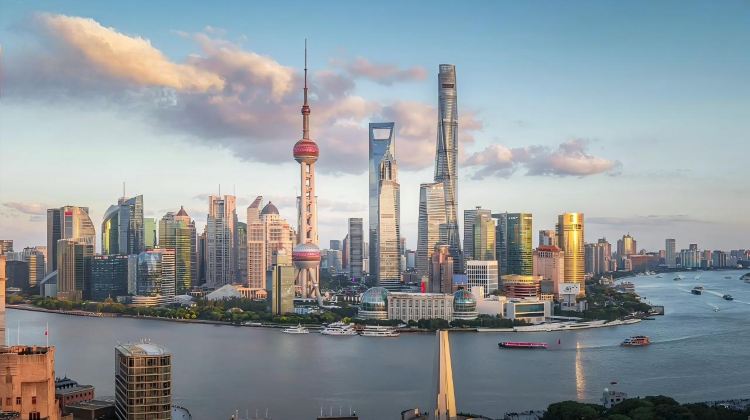
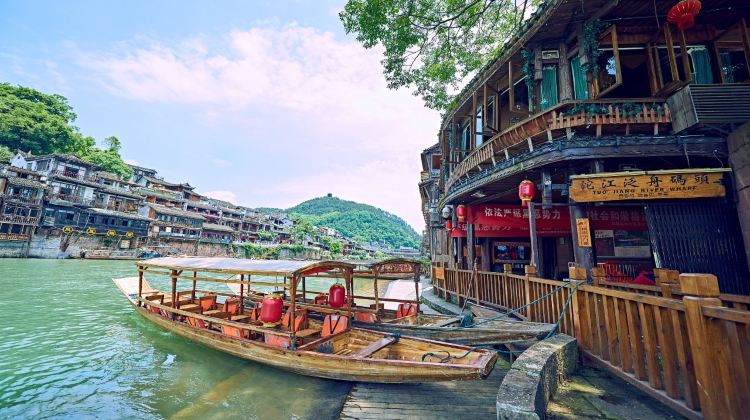
Beijing, Xi'an, and Shanghai are the most practical first-time triangle. Beijing gives you the Great Wall, Forbidden City, Temple of Heaven, and Summer Palace. Xi'an gives you the Terracotta Warriors, city wall, and Muslim Quarter. Shanghai gives you the Bund, Yu Garden, Nanjing Road, and one of Asia's easiest metro systems. Chengdu, Guilin, Yangshuo, and Zhangjiajie are excellent additions if you have more time and want food, mountains, rivers, or scenery.
Where Caution Matters Most

Exit bans, detention risk, and consular limits
Exit bans deserve attention because they appear prominently in several government advisories. An exit ban can prevent a person from leaving the country, sometimes in connection with legal, civil, business, family, or investigative matters. A traveler may not know there is a problem until they try to depart. For ordinary tourists with no China-related disputes, the risk is usually low. For people with business disagreements, family conflicts, legal investigations, employer issues, Chinese heritage, dual-nationality questions, or sensitive work, the risk can be more meaningful. Consular officials can provide some assistance, but they cannot simply override Chinese law.
Local laws, speech, photos, and public behavior
Do not join demonstrations, photograph police or military sites, fly drones without proper permission, use illegal drugs, or assume that private online messages are private. Be careful with political content, religious activity, maps, sensitive photography, and anything that could be interpreted as national-security-related. This is not about being fearful; it is about being a guest in a country where rules may be broader and enforcement may feel less familiar.
Digital safety and privacy
Before departure, reduce what you carry digitally. Remove sensitive work files you do not need, use strong passwords, update devices, and ask your employer about travel-device rules if you handle confidential material. Some foreign apps and websites may not work normally, and communications may be monitored. Do not rely on last-minute workarounds for banking, messaging, email, or maps.
Common Tourist Scams in China
China's scam risk is not extreme, but common tourist scams do exist, especially near famous attractions, nightlife areas, and transport hubs. The classic warning is the tea ceremony or art student scam: a friendly stranger invites you to a tea house, gallery, or cultural experience, and the bill becomes wildly inflated. The safest rule is simple: do not follow strangers to private venues. Choose reviewed places yourself. Fake taxis and overcharging can happen around airports, train stations, and late-night entertainment areas. Use official taxi queues, ride-hailing where available, hotel-arranged transfers, or licensed transport. Fake monks, donation requests, and aggressive street approaches are also best handled with a polite no and a steady walk away. For massage, bar, or nightclub invitations, avoid private invites from new acquaintances and use reviewed venues with clear prices.
Is China Safe for Different Types of Travelers

Is China Safe at Night
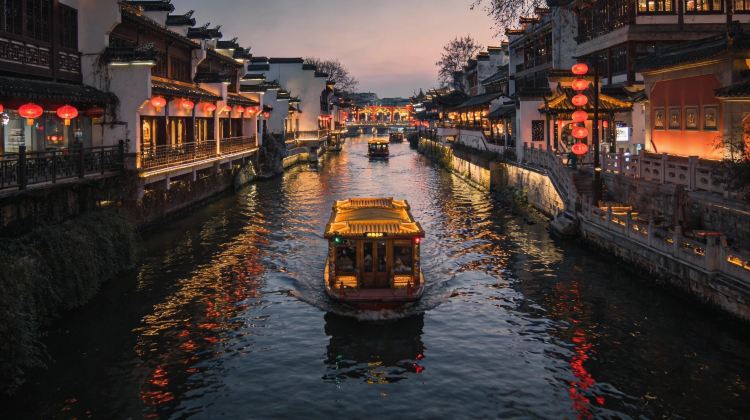
Many international visitors say they feel safer walking through central Beijing or Shanghai at night than in many large Western cities. Central areas of major Chinese cities can feel safe at night because streets are busy, transport is organized, cameras are common, and violent crime is relatively uncommon. Night markets, food streets, riverfront walks, malls, and subway areas can be lively and comfortable for visitors who stay aware of their surroundings. Solo travelers and women should still use normal city judgment. Avoid isolated streets, unofficial taxis, heavy drinking with strangers, and poorly reviewed nightlife venues. Keep enough phone battery and data for maps and translation, share hotel details with a trusted contact, and plan your ride back before you are tired. Subways are usually practical, but service hours vary, so do not assume you can catch a late train everywhere.
Is China Safe for Families
China can work very well for families if the itinerary is not overpacked. Low violent-crime risk, reliable high-speed rail, major museums, parks, shopping malls, large hotels, and famous cultural sites make the country appealing for parents who want a high-impact trip. Kids often respond well to the Great Wall, pandas in Chengdu, river scenery around Guilin, and Shanghai's skyline. The harder family issues are practical: food allergies, stroller access, restroom expectations, crowds, air quality, long walking days, bottled water, and medicine restrictions. Bring prescriptions in original packaging, check whether any medication is restricted, and keep a slower pace than you might use for adults. A family trip with two or three city clusters is usually better than a race across too many provinces.
Is It Safe for Americans, Canadians, British, Australians, and Others
For readers asking is it safe for Americans to travel to China, the answer is similar but with a stronger need to read U.S. government advice. The State Department has warned about arbitrary enforcement of local laws and exit bans. That does not mean every American tourist is likely to have trouble, but it does mean Americans should not treat China as a casual, low-preparation trip. If you are asking is it safe to travel to China as an American, separate ordinary tourism from personal risk factors. A low-risk American visiting Beijing, Xi'an, and Shanghai on a tourist visa is in a different position from someone involved in a business dispute, political work, journalism, sensitive research, or unresolved family matter.
Canadian, British, Australian, and New Zealand government advice commonly emphasizes local laws, national-security concerns, exit bans, demonstrations, and passport identification. Easier entry or a lower advisory level does not erase local-law risk. Travelers from Singapore, Malaysia, Thailand, Japan, South Korea, the EU, and other markets may have different visa options, flight routes, and payment habits, but the safety basics remain the same. Check the latest entry rule for your passport, carry proper ID, avoid sensitive activity, and prepare payment and communication tools before arrival.
Guided Tour vs. Independent Travel

When independent travel is reasonable
Independent travel is reasonable if you are experienced, staying on standard routes, comfortable with translation apps, and disciplined about documents and bookings. People who search is it safe to travel China independently are often asking about logistics as much as personal safety. The answer is yes for capable travelers, but it takes preparation.
When a guided tour is the safer practical choice
For a first China trip in 2026, a guided structure reduces logistical risk more than it changes legal risk. It helps with transfers, tickets, timing, local communication, and itinerary pacing. Travelers who want the classic Beijing-Xi'an-Shanghai arc without building every train, hotel transfer, and site visit themselves could consider the 8-Day China Express Small Group Tour, which fits the most common first-time route.
Recommend Tour
4.8
( 5 reviews )
Tour Code: 20344 Start / End City
Beijing, Shanghai
City & Attractions
Beijing, Xi'an, Shanghai
+4 more
Tour Audience
Mixed International Travelers
Planning a Safer 2026 China Itinerary
The safest practical first-time route is usually Beijing, Xi'an, and Shanghai. It keeps you in major tourism corridors, offers strong transport, and covers China's most recognizable historical and modern highlights. If you have 10 to 14 days, add Chengdu for food and pandas, Guilin and Yangshuo for river scenery, or Zhangjiajie for dramatic mountains. Travelers who want a longer nature-and-city itinerary with less self-coordination may prefer a private structure. The 14-Day China's Natural Marvels Expedition Private Tour is a better fit for visitors who want Beijing, Xi'an, Zhangjiajie, Guilin, Yangshuo, and Shanghai without stitching together complex internal transport and regional guides.
Recommend Tour
4.8
( 20 reviews )
Tour Code: 690222 Start / End City
Beijing, Shanghai
City & Attractions
Beijing, Xi'an, Zhangjiajie
+19 more
Tour Audience
Primarily English-Speaking Travelers
Save $88.29
From $4,379.24
$4,290.95
Spring and autumn are usually the most comfortable seasons for a first China trip. Summer can bring heat, humidity, heavy rain, and typhoon risk in some southern or coastal areas. Winter can be cold in northern China, though it may work for travelers who prefer fewer crowds. Watch major Chinese holidays, especially Labor Day and National Day Golden Week, when transport and attractions can become extremely crowded. For a deeper month-by-month breakdown, see our guide to the best time to travel to China.
FAQ
Is China safe for foreign tourists in 2026?
Yes, China is generally safe for ordinary foreign tourists visiting major destinations, especially in terms of violent crime. The larger risks are legal compliance, sensitive topics, digital restrictions, scams, payment preparation, and current entry rules.Can tourists travel to China right now?
Many tourists can travel to China, but eligibility depends on passport, visa status, route, purpose, and current rules. Check your own government's travel advice and the relevant Chinese embassy or consulate before booking.Is China safe for solo female travelers?
China can be safe for solo female travelers on mainstream routes, especially in large cities with good transport and busy public spaces. Use normal city precautions at night, avoid private invitations from strangers, choose licensed transport, and keep your hotel details accessible.Do I need a visa to visit China in 2026?
It depends on your nationality, route, purpose, and length of stay. Some travelers may qualify for visa-free entry or transit, while others need a tourist visa in advance. Always verify the rule for your passport before buying flights.