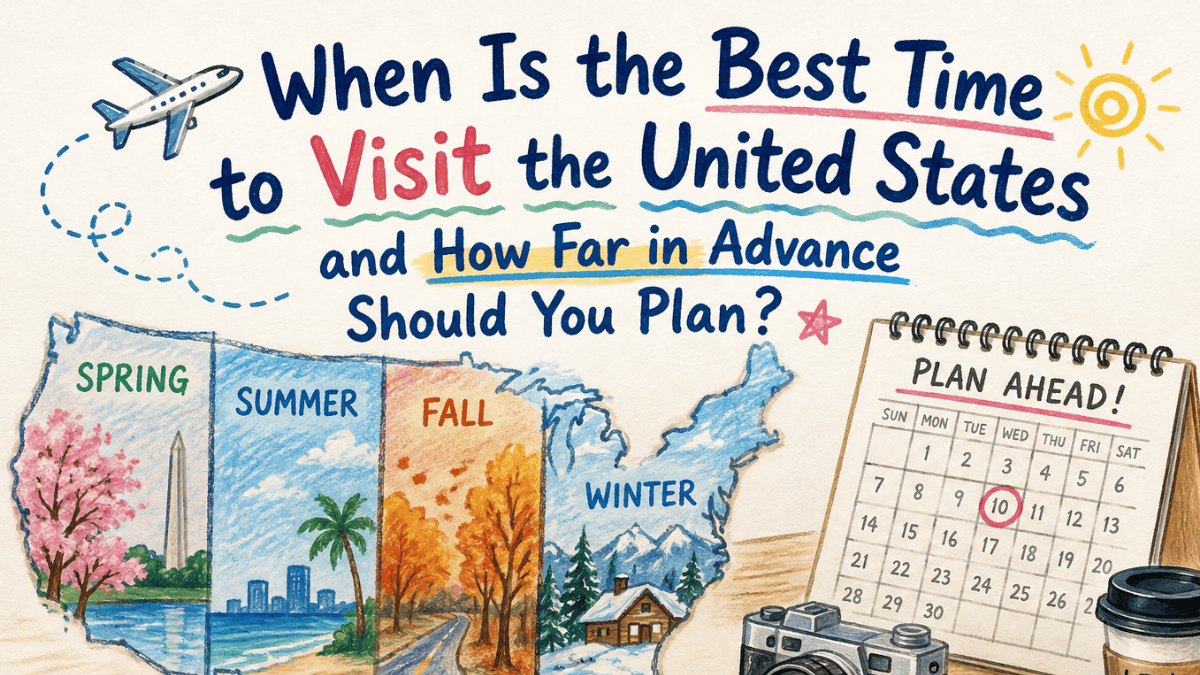
The best time to visit the United States is usually late spring, from April to June, or early fall, from September to October. These shoulder periods often balance comfortable weather, manageable crowds, and good access across many cities and parks. However, the country spans several climate zones, so destination matters more than a single nationwide “best” month. Summer is strongest for northern national parks and family vacations; winter suits warm southern escapes, snow trips, and festive cities. Begin planning a typical trip three to six months ahead. Allow six to twelve months for peak-summer national parks, major holidays, or a multi-stop road trip, while flexible city breaks may need only one to three months. First choose the experiences that matter most, then match their seasons and reserve the least flexible parts before filling in the rest.
Choose the Season Around Your Route
A useful answer starts with geography. The continental United States stretches from subtropical Florida to alpine and desert landscapes, while Alaska and Hawaii add still more variation. Browse destinations across the United States travel collection to see how different routes fit the calendar. Do not assume that pleasant weather in New York means ideal conditions in Yellowstone, Yosemite, or the Southwest.
Spring works especially well for Washington, DC, many Southern cities, California’s lower elevations, and desert country before intense summer heat. Fall brings comfortable city weather and colorful landscapes in the Northeast. Travelers comparing organized options can use Tours4fun trip ideas as a route-planning starting point, then check the weather and operating conditions for every stop rather than relying on one regional forecast. Summer remains the practical choice when school schedules control the trip or when high-elevation and northern park roads are central. Yet July and August can be extremely hot in low-desert areas, making early starts and shorter outdoor sessions important. Winter reverses the logic: southern California, Arizona, Florida, and Hawaii may appeal to travelers seeking warmth, while mountain destinations attract skiers. Build buffer time wherever storms could affect a flight or long drive.
| Season | Often Best For | Main Tradeoff | Planning Window |
| Spring | Cities, desert parks, southern road trips | Variable mountain access and rain | Three to six months |
| Summer | Northern parks, coasts, family travel | Peak demand, heat, and crowds | Six to twelve months |
| Fall | City breaks, foliage, many road trips | Shorter daylight and changing weather | Three to six months |
| Winter | Warm-weather escapes, skiing, holidays | Snow disruption or holiday premiums | Four to nine months |
Spring works especially well for Washington, DC, many Southern cities, California’s lower elevations, and desert country before intense summer heat. Fall brings comfortable city weather and colorful landscapes in the Northeast. Travelers comparing organized options can use Tours4fun trip ideas as a route-planning starting point, then check the weather and operating conditions for every stop rather than relying on one regional forecast. Summer remains the practical choice when school schedules control the trip or when high-elevation and northern park roads are central. Yet July and August can be extremely hot in low-desert areas, making early starts and shorter outdoor sessions important. Winter reverses the logic: southern California, Arizona, Florida, and Hawaii may appeal to travelers seeking warmth, while mountain destinations attract skiers. Build buffer time wherever storms could affect a flight or long drive.
Match National Parks to Access, Heat, and Crowds
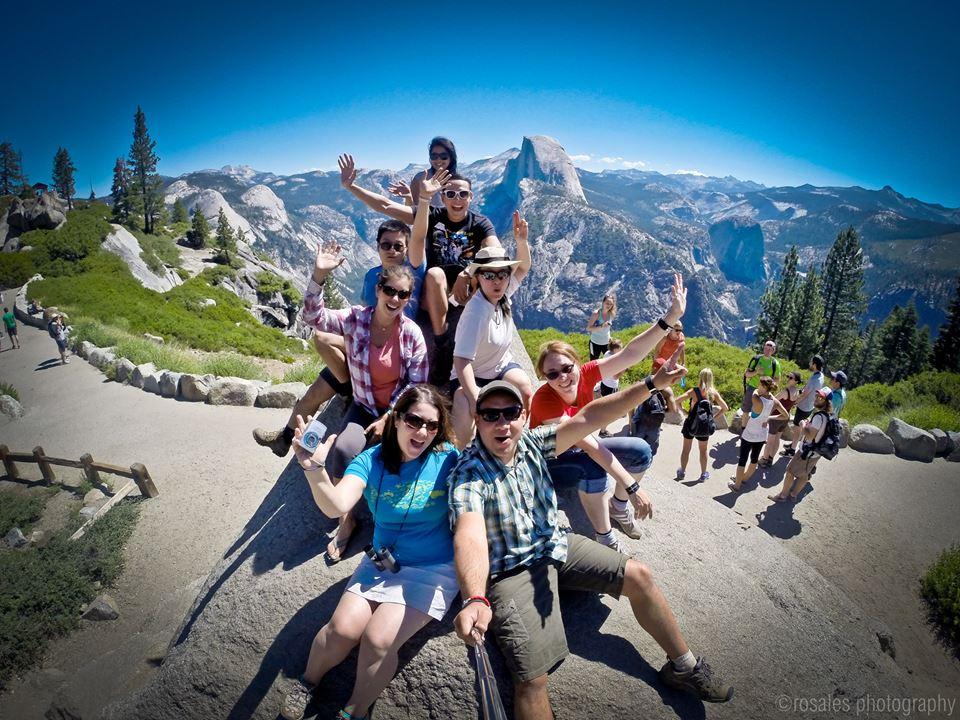
National parks reward early planning because lodging, campsites, entrance arrangements, and seasonal roads can constrain an otherwise flexible itinerary. At Yosemite, spring favors waterfalls and valley scenery, while summer generally expands access to higher country. Autumn can feel calmer, but cooling temperatures and earlier snow may change plans. A traveler who wants waterfalls, high-country hiking, and light crowds should recognize that these goals may not peak at the same time. The 3-Day Yosemite In-Depth Camping Tour from San Francisco fits travelers who want a short outdoor-focused escape without constructing a separate city-to-park route. Its San Francisco origin and three-day camping format simplify the trip shape. The tradeoff is equally clear: a fixed camping itinerary offers less comfort and day-to-day freedom than a hotel-based self-drive visit.
Recommend Tour


4.9
( 10 reviews )
Tour Code: 719049Start / End City
San Francisco
Duration
3.0 Days
City & Attractions
San Francisco, Yosemite Valley
Languages
English Live, French Audio, German Audio
+2 more
Group Size
Max. 13 travelers
Tour Audience
Mixed International Travelers
Operator
Bindlestiff Tours
Save 20%
From $1,152.75
$922.20
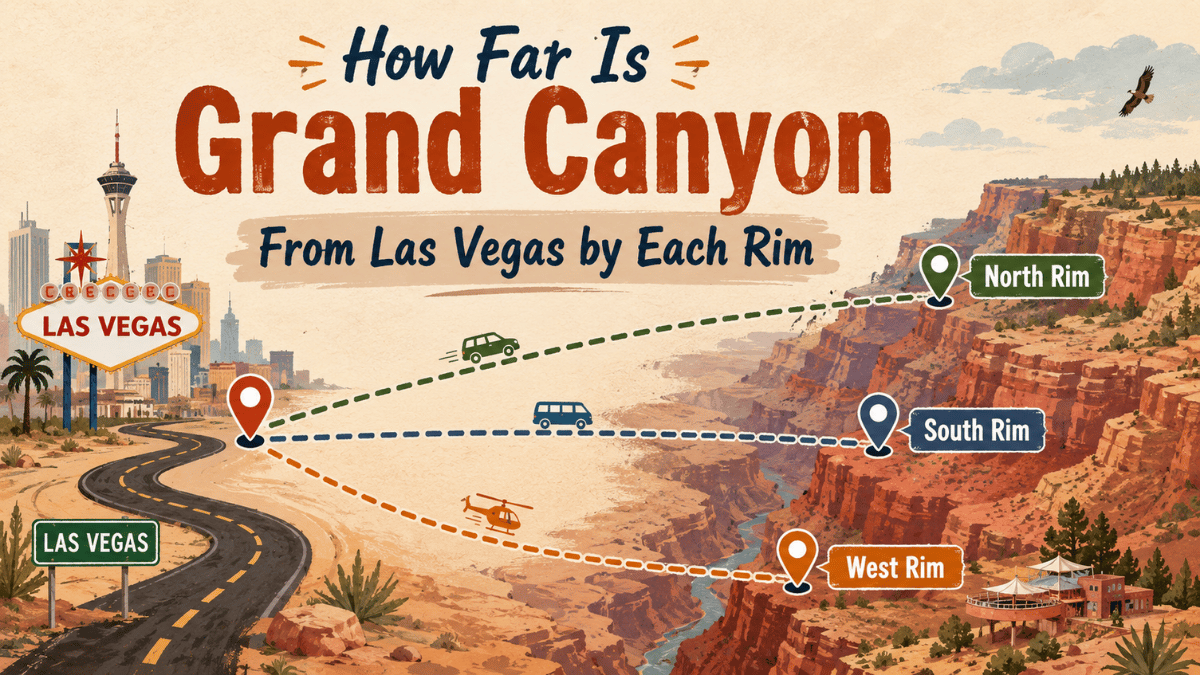
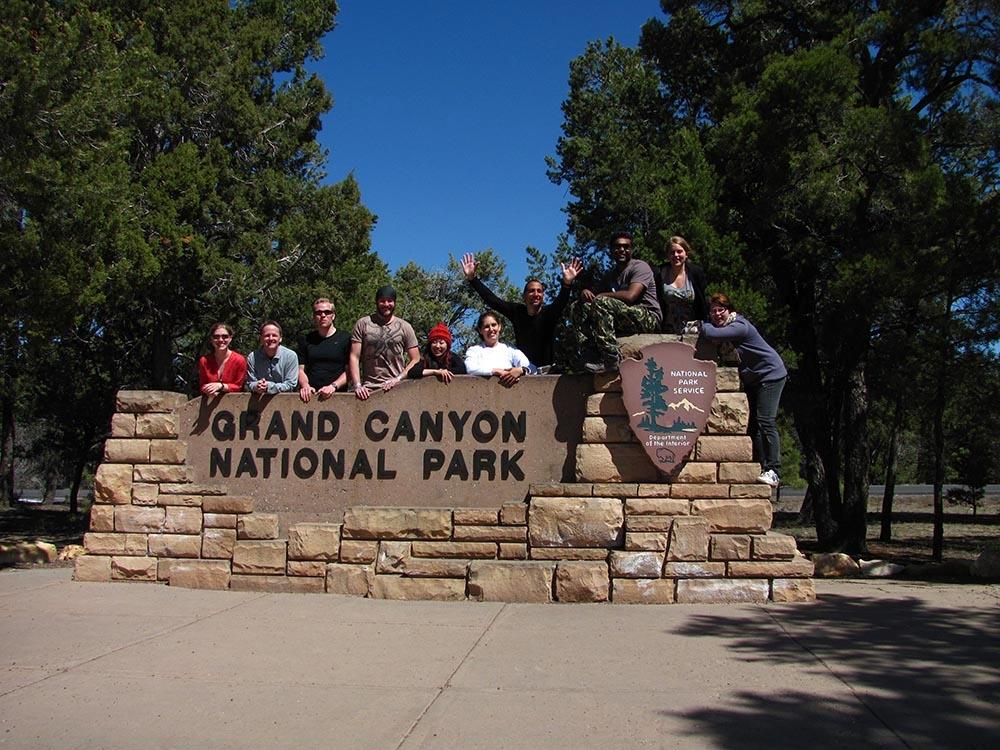
For the Grand Canyon and nearby desert landscapes, spring and fall usually offer a more comfortable sightseeing rhythm than midsummer. Rim elevation, exposed trails, and big temperature differences make layers and water planning essential. Compare the focus of a Grand Canyon vacation package with your preferred activity level: a viewpoint-led visit has different seasonal demands from a long descent below the rim.
The3-Day National Paks Camping Tour from Vegas suits travelers with a Las Vegas base who want several outdoor days arranged as one compact camping experience. The route concept reduces the work of combining transport and overnight planning. Its limitation is pace: three days leave less room for spontaneous detours, extended hikes, or recovery time after long travel segments.
The3-Day National Paks Camping Tour from Vegas suits travelers with a Las Vegas base who want several outdoor days arranged as one compact camping experience. The route concept reduces the work of combining transport and overnight planning. Its limitation is pace: three days leave less room for spontaneous detours, extended hikes, or recovery time after long travel segments.
Recommend Tour
4.9
( 3080 reviews )
Tour Code: 718992Start / End City
Las Vegas
Duration
3.0 Days
City & Attractions
Las Vegas, Grand Canyon, Zion National Park
+5 more
Languages
English Live, French Audio, German Audio
+5 more
Group Size
Max. 13 travelers
Tour Audience
Mixed International Travelers
Operator
Bindlestiff Tours
Save 20%
From $997.50
$798.00
Yellowstone is most straightforward for first-time visitors in summer, when the broadest range of park areas is typically reachable by road. Late spring and early fall can reduce some crowd pressure but bring colder, less predictable conditions. Review Yellowstone vacation package options according to driving tolerance and must-see areas; the park is vast, and a short map distance does not always equal a quick transfer.
Plan City Trips and Multi-Region Itineraries Differently
Major cities are less dependent on seasonal road access, so travelers can prioritize events, indoor attractions, and neighborhood atmosphere. New York is appealing year-round: spring and fall support long walking days, summer brings outdoor programming and heat, and December offers a festive experience alongside intense demand. Look at New York City vacation packages after choosing whether museums, theater, food, or holiday sights lead the trip. That decision will identify the best location and the reservations worth making first.
Niagara Falls has a different rhythm. Warmer months support the fullest outdoor experience, but they also draw more visitors. Colder months can deliver dramatic icy scenery, though weather may limit how much time feels comfortable outdoors and some seasonal experiences may operate differently. When considering a Niagara Falls vacation package, leave room for changing spray, wind, and visibility rather than scheduling every hour tightly.
A cross-country itinerary should be timed for its most weather-sensitive anchor, not for the easiest city stop. The 7-Day Yellowstone, Antelope Canyon, and Grand Canyon Tour fits travelers who value one multi-park route linking northern geothermal country with Southwest canyon landscapes. The seven-day structure helps coordinate widely separated highlights. The tradeoff is substantial distance and contrasting climates, so it suits travelers comfortable with an active schedule more than those seeking a slow, single-region vacation.
Niagara Falls has a different rhythm. Warmer months support the fullest outdoor experience, but they also draw more visitors. Colder months can deliver dramatic icy scenery, though weather may limit how much time feels comfortable outdoors and some seasonal experiences may operate differently. When considering a Niagara Falls vacation package, leave room for changing spray, wind, and visibility rather than scheduling every hour tightly.
A cross-country itinerary should be timed for its most weather-sensitive anchor, not for the easiest city stop. The 7-Day Yellowstone, Antelope Canyon, and Grand Canyon Tour fits travelers who value one multi-park route linking northern geothermal country with Southwest canyon landscapes. The seven-day structure helps coordinate widely separated highlights. The tradeoff is substantial distance and contrasting climates, so it suits travelers comfortable with an active schedule more than those seeking a slow, single-region vacation.
Recommend Tour

4.9
( 73 reviews )
Tour Code: 720834Start / End City
San Francisco, Sacramento, Las Vegas
Duration
7.0 Days
City & Attractions
Las Vegas, Salt Lake City, Jackson
+32 more
Languages
Chinese Live, English Live
Group Size
Max. 13 travelers
Tour Audience
Primarily Mandarin-Speaking Travelers
Save 30%
From $1,264.29
$885.00
Use a Booking Timeline Based on Trip Complexity
Count backward from departure and reserve the hardest component first. For a simple off-peak city visit, one to three months may be adequate when dates and hotels are flexible. For a typical international vacation combining a city and one region, three to six months gives time to compare flights, establish entry-document requirements, and secure well-located accommodation. Start six to twelve months ahead for summer park travel, holiday weeks, major events, or routes requiring several scarce overnight stops.
These are decision ranges, not guarantees. A lower fare is not useful if it forces a risky connection or removes a must-see stop. Protect the experiences that define the trip, then retain flexibility elsewhere. Refundable lodging, an alternate scenic day, and one unscheduled half-day can make a weather-sensitive journey far more resilient.
- Six to twelve months ahead: choose regions, confirm passport and entry requirements, set a budget, and reserve high-priority park lodging or campsites when their official windows allow.
- Three to six months ahead: settle flights, the main route, accommodation, and any fixed multi-day experience.
- One to three months ahead: reserve popular attractions, intercity transport, rental cars, and important restaurants; check local driving and park-entry rules.
- One to two weeks ahead: review forecasts, road and park alerts, baggage limits, insurance details, and realistic transfer times.
Build the Final Plan With Simple Decision Rules
Start by listing three non-negotiable experiences. If they depend on snow-free roads, warm-water activities, fall color, or a particular event, let that requirement determine the month. Next, test the route for climate conflicts. Pairing Yellowstone with the desert Southwest in one journey can work, but clothing, daily start times, and weather expectations must serve both regions. Then assess your tolerance for heat, crowds, driving, and early mornings. Travelers who dislike crowds should favor shoulder dates and weekdays; those bound to school holidays should reserve earlier and place outdoor highlights at cooler times of day. Finally, add at least one buffer between a remote park and the flight home. The best time is therefore the period when access, personal comfort, and trip purpose align—not simply the month with the highest average temperature.