Rotorua Travel Guide
Rotorua is a geothermal wonderland where bubbling mud pools, erupting geysers, and steaming volcanic landscapes meet a Maori cultural heartland on the shores of Lake Rotorua. Rotorua tours can take you from the colorful terraces of Wai-O-Tapu and the living Maori heritage of Te Puia to the mineral pools of Polynesian Spa and the elevated paths of the Redwood Treewalk.
Best Time to Visit Rotorua
The best time to visit Rotorua is from December through February, when warm weather and long daylight hours make it easiest to combine geothermal attractions, lake activities, and forest walks. Summer is also the busiest period, so reserve popular Tours4Fun Rotorua tours and accommodation ahead, especially around weekends and New Zealand school holidays. Daytime temperatures are generally comfortable for outdoor sightseeing, but bring a light rain layer because weather can change quickly around the North Island.
Spring, from September through November, brings fresh greenery and fewer visitors. It is a good season for the Redwood Treewalk, Waimangu Volcanic Valley, and lakeside walks, although showers can affect outdoor plans. Autumn, from March through May, offers cooler walking conditions and attractive color in the redwood forest. These shoulder seasons often suit travelers who want a more relaxed Rotorua trip while still fitting several attractions into each day.
Winter, from June through August, is cooler but works well for hot pools, Maori cultural performances, and geothermal sightseeing in the steam. Early sunsets make a morning start worthwhile, particularly if you are visiting Rotorua from Auckland. Check each attraction's seasonal hours and choose flexible tour options if rain or fog could change your preferred itinerary.
Rotorua Day Trip from Auckland
A Rotorua day trip from Auckland covers about 228 kilometers each way and usually takes roughly 3 hours 15 minutes to 3 hours 30 minutes by road, depending on traffic and stops. The distance makes a guided full-day tour a long but practical option for visitors who want to see Rotorua without changing hotels. An early departure is essential, and a Tours4Fun itinerary can simplify pickup, driving, attraction timing, and the return to Auckland.
For one day, prioritize one major geothermal site, one Maori cultural experience, and one shorter activity. A well-paced itinerary might leave Auckland around 6:30 a.m., travel south through the Waikato, and reach Rotorua late in the morning. Start at Wai-O-Tapu for vivid geothermal pools, volcanic craters, and the Lady Knox Geyser area, then continue to Te Puia for Whakarewarewa Valley, Pohutu Geyser, Maori arts, and a cultural performance. Depending on the tour schedule, finish with a quick Lake Rotorua viewpoint, a soak at Polynesian Spa, or a Redwood Treewalk before the return journey.
Top Attractions in Rotorua
Rotorua attractions are centered on geothermal activity, Maori heritage, restorative mineral water, and the mature forests around the city. These are the key places to build into a Rotorua travel plan.
Wai-O-Tapu Thermal Wonderland is known for its vivid Champagne Pool, Artist's Palette, steaming vents, and multicolored mineral deposits. Boardwalks lead through a compact but varied geothermal landscape, so wear shoes with good grip and stay on marked paths. The site is especially rewarding in clear weather, when the reds, oranges, greens, and blues in the pools are easiest to see. Check the timing for the Lady Knox Geyser presentation if it is part of your admission or tour.
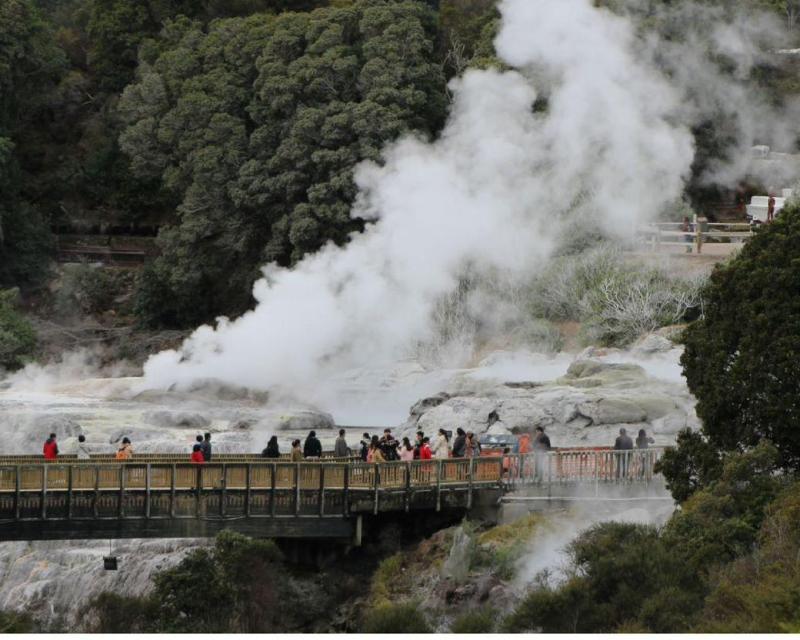
Te Puia combines geothermal scenery with living Maori culture. The Whakarewarewa Thermal Valley contains the famous Pohutu Geyser, while the New Zealand Maori Arts and Crafts Institute demonstrates carving and weaving. A guided visit or evening cultural experience adds context to the springs, geysers, hangi cuisine, and performance traditions. Te Puia is a strong choice for first-time visitors who want both Rotorua's volcanic landscape and its cultural identity in one stop.
Waimangu Volcanic Valley is a quieter, more expansive geothermal experience south of the city. Walking trails pass steaming lakes, native bush, volcanic craters, and unusual mineral colors created by the 1886 Mount Tarawera eruption. The terrain includes slopes and stairs, so allow several hours and assess the walking level before booking. Shuttle connections within the valley can help conserve energy and make it easier to combine the walk with a boat cruise on Lake Rotomahana.
Polynesian Spa sits beside Lake Rotorua and is a natural fit for the end of a sightseeing day. Its mineral pools range from family-friendly areas to adults-only pools, with views across the lake in selected bathing zones. Temperatures and facilities vary, so check the current admission categories and bring a swimsuit, towel, and change of clothes. A spa visit is also a useful rainy-day addition to Rotorua tours.
The Redwoods Treewalk takes visitors along suspension bridges and platforms among towering California redwoods in Whakarewarewa Forest. The daytime walk is accessible and atmospheric, while the illuminated evening version creates a different experience with lanterns and lights among the trees. Pair it with a mountain-bike route or a short forest walk if time allows, but reserve the evening session ahead during busy travel periods.
A Maori village experience offers a more intimate way to learn about local history, hospitality, food, and performance. Programs may include a welcome ceremony, storytelling, cultural demonstrations, and a hangi meal. Choose a provider with a clear schedule and respectful visitor guidelines, and remember that Rotorua's Maori heritage is a living culture rather than a museum display. Rotorua Transportation
Rotorua Airport is about 10 kilometers from the city center and serves domestic connections, while Auckland Airport is the main international gateway for visitors arriving from overseas. Airport shuttles, taxis, rental cars, and pre-arranged transfers connect Rotorua Airport with hotels. For an Auckland departure, confirm whether a Tours4Fun tour collects from a hotel, a central meeting point, or a designated transport hub.
Rotorua's central attractions are spread across the lakefront, city center, Whakarewarewa, and the southern geothermal corridor. Walking works for the lakefront and central restaurants, but a car, local bus, taxi, or organized excursion is more convenient for Wai-O-Tapu, Waimangu, Te Puia, and the Redwoods. Rideshare availability can vary outside the center, so do not assume a late pickup will always be immediate.
A rental car gives flexibility for separate geothermal parks and viewpoints, but New Zealand drives on the left and rural roads may be narrow or winding. Plan fuel stops before heading south from Rotorua, check weather and road conditions, and never enter geothermal areas outside signed trails. Guided Tours4Fun transportation is often the more comfortable choice for a Rotorua day trip from Auckland because you can rest during the long return journey.
Tips for Travel Rotorua
Wear closed-toe walking shoes, bring layers, and pack a waterproof jacket. Geothermal parks have uneven paths and strong steam, while the forest can feel cooler than the open lakefront. Follow every barrier and posted instruction: hot pools, thin crust, and volcanic gases are real hazards, and marked routes protect both visitors and the fragile environment.
Book Te Puia cultural programs, Maori village dinners, Polynesian Spa sessions, and Redwood Treewalk evenings in advance when traveling during summer or holiday periods. Ask about accessibility, walking distance, meal requirements, and pickup arrangements before paying. A single Rotorua tour can sell out even when smaller independent activities still have space.
Allow more time than the driving map suggests. Wai-O-Tapu and Waimangu reward slow viewing, and a culture-focused visit should not be rushed between geyser presentations. If you have two nights, use the first afternoon for Lake Rotorua or the Redwoods and reserve the next day for geothermal parks. This creates a more comfortable Rotorua travel experience than stacking every major site into one schedule.
New Zealand uses the New Zealand dollar; cards are widely accepted, and tap water is generally safe to drink. Carry a reusable bottle, follow local biosecurity rules, and respect requests about photography during cultural performances.



 Tour Code: 718314
 Start CityAuckland
 End CityAuckland
 Duration5 Days
 LanguagesEnglish Live
 Tour Code: 713307
 Tour Code: 675624
 Tour Code: 715683
 Tour Code: 715686
 Tour Code: 743508
 Tour Code: 675801
 Tour Code: 675615
 Tour Code: 713397
 Tour Code: 713400


