The popular prismatic slot canyon is located on Navajo Native American land near Page, Arizona and is divided into upper and lower sections. Antelope Canyon was shaped by rainwater erosion of Navajo Sandstone and is only accessible through a guided tour. Often referred to as Corkscrew Canyon, this beautiful natural attraction features a rainbow of colors making it a favorite locations for photographers.
Explore the Grand Canyon, Antelope Canyon's sculpted sandstone and Horseshoe Bend. Stay near Page for easier access to the canyon and Lake Powell, with time to appreciate the American Southwest's dramatic landscapes.
Exploring Antelope Canyon: Guided Tours are Mandatory
Day Trips to Antelope Canyon from Various Locations
Multi-Day Antelope Canyon Tours: Immerse Yourself in the Canyon's Majesty
Jeep Tours, Boat Tours, and Hiking Trails
Upper Antelope Canyon vs. Lower Antelope Canyon
Antelope Canyon tours can take you to either of its two sections:
• Upper Antelope Canyon also known as The Crack – This is the more popular of the two Antelope Canyons and these are the photos you have most likely seen on social media. This part of the canyon is more accessible and there is no climbing involved. You can expect to see mesmerizing beams of light streaming from the roof onto the walls to create a supernatural appearance. Don’t forget your camera!
• Lower Antelope Canyon often called The Corkscrew – Lower Antelope Canyon tours are a favorite of photographers who want to capture the winding walls and sandstone sculptures, but these tours require some climbing over steep steps to enter and leave the lower canyon.
No matter which section you choose, Antelope Canyon, Arizona, will leave you awestruck by its mesmerizing display of underground rock formations, light, shadows, and vibrant colors.
Exploring Antelope Canyon: Guided Tours are Mandatory
Located on Navajo Nation land east of Page, Arizona, Antelope Canyon necessitates booking a guided tour for entry. Luckily, there is a wide variety of tour packages offered to visitors who want to view and experience what has been described as a photographer’s dream. The canyon is open to visitors year-round (confirm timings before planning your trip). Advance reservations are recommended as availability is limited and tours sell out quickly. You should plan to spend approximately 90-120 minutes exploring this amazing natural wonder.
Day Trips to Antelope Canyon from Various Locations
Day trips to Antelope Canyon start in locations such as Las Vegas, Page, Sedona, and Flagstaff, AZ, among others. On these tours you spend the day sightseeing and exploring in groups. Transportation between tour locations is in style and comfort. Another famous place nearby is Horseshoe Bend. You can easily explore this marvelous viewpoint on an Antelope Canyon Horseshoe Bend combined tour.
Multi-Day Antelope Canyon Tours: Immerse Yourself in the Canyon's Majesty
For a deeper dive, choose our, choose our multi-day Antelope Canyon packages to enjoy pre-planned activities, learn about the canyon’s history, and gain a unique perspective from knowledgeable guides. Overnight stopovers are in beautifully appointed hotels. Tours such as the 3-day Antelope Canyon tour from Las Vegas are available at great prices and often include stops at other places of interest such as the Grand Canyon South Rim and Lake Powell.
There are also several multi-day Los Angeles to Antelope Canyon tours that you can join. These include the 8-day bus tour that takes you to the Grand Canyon, Lake Powell, and Zion National Park among other beautiful destinations.
Jeep Tours, Boat Tours, and Hiking Trails
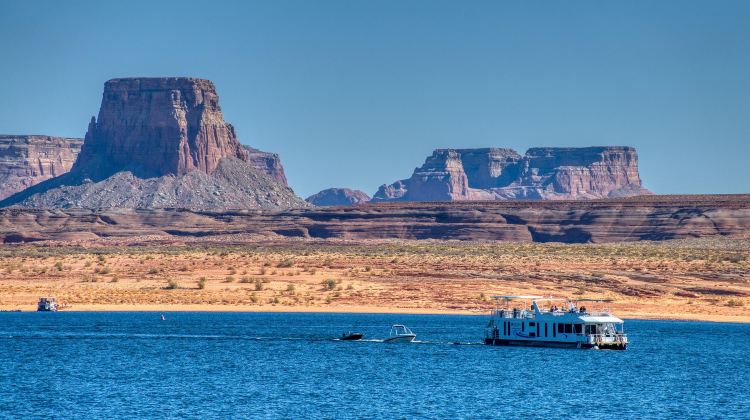
Adventurous Antelope Canyon tours generally include optional Jeep tours driven by a Navajo native guide who will give you interesting info about the area. There are also boat tours on Lake Powell that can take you to the region of the Antelope Canyon that joins the lake. For people who love to hike and spend time in the outdoors, there are a number of hiking trails with varying difficulty levels.
Antelope Canyon Navajo tours are unique in that they provide visitors with interesting information about the canyon and surrounding lands from the perspective of the people who have occupied the land for centuries. The local Navajo name for the canyon is Tse' bighanilini which translates to - the place where water runs through rocks.
As autumn arrives the temperatures begin to ease and the environment softens. In early September highs remain near 87 °F (~31 °C) with lows around 62 °F (~17 °C), then by October highs drop toward 72 °F (~22 °C) and lows near 49 °F (~9-10 °C). Rainfall ticks up slightly as the monsoon wanes, but overall the weather is still favourable for exploring the canyon. The lower sun produces longer shadows and richer texture on the canyon walls, offering a different mood from summer’s brightness. Fewer crowds mean more relaxed tours and better photo opportunities without the peak-season bustle. Surrounding foliage may begin subtle shifts in colour, and sunrise or late-afternoon light can add warmth to scenic drives around the canyon. The combination of moderate heat, reduced visitor load and atmospheric lighting makes autumn a refined time to visit.
Winter at Antelope Canyon is marked by cool days, cold nights and quieter conditions. In December the average high may dip to around 45 °F (~7 °C) and lows drop toward 29 °F (~-2 °C) in the coldest areas. Snow is uncommon but possible, and the dry high-desert setting means the air feels crisp and clear. With shorter daylight hours the canyon’s chambers take on a calm, serene quality and tours run with fewer crowds around. While the iconic light beams shrink in frequency with the lower sun angle, the muted winter light and peaceful ambiance appeal to those seeking a more reflective experience. Dress in layers, consider early departures to capture soft morning light, and explore the broader landscape with fewer distractions
During spring at Antelope Canyon the climate transitions from cool to pleasantly warm. In March daytime highs average around 63 °F (~17 °C) with lows near 40 °F (~4-6 °C) and minimal rainfall. By late May, highs approach 82 °F (~28 °C) and nights stay above 56 °F (~13 °C). The skies are generally clear and dry, reducing the risk of flash floods that can affect slot-canyon tours. This is an excellent season to explore the canyon’s sculpted walls in comfortable conditions. The lower sun angle makes the light beams begin to appear in the upper canyon around midday, adding photographic drama. Wildflowers may emerge on surrounding ridges, and the milder air invites extended outdoor time without the intense heat of midsummer. With smaller crowds compared to summer, this season offers a great blend of accessibility, atmosphere and scenery.
Summer brings the strongest heat and busiest visitor flow to Antelope Canyon. Daytime highs in June soar to 94 °F (~34 °C) and July averages around 98 °F (~37 °C) with nights around 72 °F (~22 °C). Rainfall remains very low in June, making conditions dry, though the regional monsoon season develops later in July and August and may bring brief storms. The high sun angle bathes the canyon’s narrow chambers in dramatic shafts of light - especially around noon - creating iconic photo opportunities. Booking tours early in the day helps with both light and comfort. With long daylight hours, the landscape shines in bold contrast of sandstone and sky. Heat can be intense, so proper hydration, sun protection and scheduling during cooler hours matters.
When I compared similar routes, a seven-day mix of national parks and photo stops was one of the reasons I chose this version, and it did not feel like an unnecessary extra once we were traveling. Because the tour covers a wide area, multiple early starts is a real factor. We had already accepted that the trip would be busy in places, so it never felt misleading. I do not usually take many pictures, yet I filled my phone at Yellowstone National Park. Looking back on the Yellowstone route, at Grand Teton National Park, I ended up putting the camera away and just watching for a while. The best part was not one single attraction but the combination of a seven-day mix of national parks and photo stops with Yellowstone National Park, which made the itinerary feel more complete.
The light beams in Antelope Canyon are real, but timing is everything. Our Navajo guide showed us exactly where to stand and even took photos for us. Bring a wide lens - the canyon walls curve in ways that normal lenses can't capture. No tripods allowed on most tours, so brace yourself against the rock for stability. Horseshoe Bend afterward was a completely different kind of spectacular, and the late afternoon light there was perfect.
What I liked most about this tour was how smoothly everything was arranged. Traveling between Los Angeles/Las Vegas and Arizona can be tiring, but the itinerary made it feel manageable. The Grand Canyon views from different angles were impressive, and having time at both the South and East Rims gave a more complete experience of the park.
Single travelers! Okay so I was nervous booking my tour cause I didn’t know who to book through, what was legit, and what was the safest. This was an amazing tour. I met a few people but I was also by myself a bit. The guide was kind, funny, and informing. Take a jumper for the bus, lovely bus but could be cold. Really safe, and I recommend this tour!
Show All
FAQs about Antelope Canyon Tours
Do you need a guided tour to visit Antelope Canyon?
Yes, all visitors must join a guided tour to enter Antelope Canyon. The canyon is located on Navajo Nation land near Page, Arizona, and independent access is not allowed. Authorized Navajo guides lead tours through Upper Antelope Canyon, Lower Antelope Canyon, and Antelope Canyon X, ensuring safety and sharing cultural and geological insights.
What is the best time to visit Antelope Canyon for light beams?
The famous light beams in Upper Antelope Canyon are best seen from late March to early October, usually between 10:30 am and 1:30 pm on sunny days. This is peak season, so tours sell out quickly. Lower Antelope Canyon does not have strong light beams but offers dramatic colors and textures throughout the day.
Which is better, Upper or Lower Antelope Canyon?
Upper Antelope Canyon is easier to walk through and known for its iconic light beams, making it popular with first-time visitors. Lower Antelope Canyon involves stairs and ladders but is longer and less crowded, appealing to travelers who enjoy a bit more adventure. Both offer stunning slot canyon photography and unique rock formations.
How far is Antelope Canyon from major landmarks like Las Vegas or the Grand Canyon?
Antelope Canyon is located near Page, Arizona, about 4.5 hours by car from Las Vegas and roughly 2 hours from the Grand Canyon South Rim. Many travelers combine Antelope Canyon with Horseshoe Bend, Lake Powell, and nearby national parks, making it a highlight of Southwest USA road trips.