Best Time to Travel to China
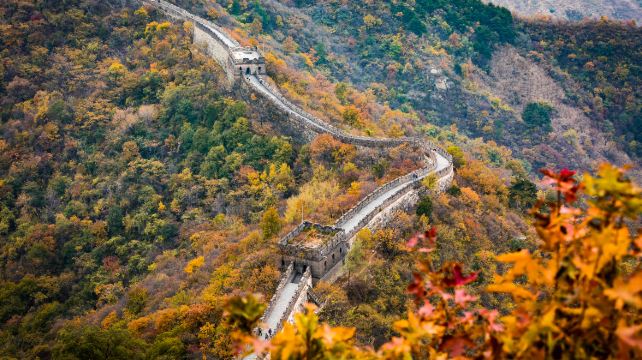
The ideal time to visit China is April to May and September to October. During these periods, the weather is generally mild and dry, making it perfect for sightseeing and outdoor activities such as the Great Wall of China tour.
The summer months from June to August bring scorching temperatures, particularly in southern and eastern cities such as Chongqing, Guangzhou, and Hong Kong. Meanwhile, the winter months from December to February are bitterly cold in northern cities like Harbin and Hulunbuir.
Due to large crowds and higher prices, it is best to avoid traveling during major Chinese holidays such as the Chinese New Year and the National Day holiday (October 1st to 7th).
China Visa Policy
Do I need a visa to travel to China? This is a frequently asked question. For U.S. and UK visitors, you will need to apply for a tourist visa (L-Visa), which grants a 10-year multiple-entry visa. However, China currently offers a 240-hour visa-free transit policy, meaning you can stay for up to 10 days to explore China, but must provide proof of travel to a third country.
For 43 countries including European nations, Japan, South Korea, and Malaysia, a 30-day visa-free entry policy is in effect. You may check the China Visa website to see if your country is visa-free.
How Many Days Are Enough in China
For a first-time visit focusing on the major highlights, 10 to 14 days is sufficient. This allows you to cover the 'Golden Triangle' of Beijing, Xi'an, and Shanghai, and possibly include one natural wonder like Guilin or Chengdu. For a more comprehensive exploration, including multiple regions or extended time along the Silk Road, 3 to 4 weeks would be recommended.
Major Cities and Their Attractions
China offers incredible historical sites and unique natural landscapes. Key Chinese travel locations include:
Beijing: As China's capital and political and cultural center, it boasts a wealth of historical sites. The Forbidden City stands as the world's best-preserved imperial palace complex, where you can easily spend a full day exploring. The Summer Palace offers a stunning example of imperial gardens. Of course, The Great Wall and Tiananmen Square remain top attractions.
Shanghai: As an international metropolis, it seamlessly blends Eastern and Western cultures. Along the Bund, you'll see stunning skyscrapers alongside century old European-style architecture. The Oriental Pearl Tower stands as a landmark where you can ascend to enjoy panoramic city views. Here you'll also find Nanjing Road Pedestrian Street, one of China's most bustling shopping destinations.
Xi'an: A world-renowned ancient capital and the starting point of the Silk Road. Home to the Terracotta Warriors, hailed as the Eighth Wonder of the World, as well as numerous historical sites, including the Big Wild Goose Pagoda and the Xi'an City Wall.
Chengdu: Located in southern China, it is home to delicious cuisine and adorable giant pandas. The Chengdu Research Base of Giant Panda Breeding offers visitors the opportunity to observe giant pandas up close. Meanwhile, the Dujiangyan Irrigation System stands as a marvel of ancient hydraulic engineering.
Lhasa: This is the capital of Tibet and a major religious and cultural center. The Potala Palace, a UNESCO World Heritage Site, is an essential destination in Tibet. Also located here is the Jokhang Temple, one of the most important monasteries in Tibetan Buddhism.
China's Unique Natural Landscapes
Beyond its urban landscapes, China is also home to places of incredible natural beauty.
● Guilin & Yangshuo: Located in Guangxi Province, a cruise along the Li River from Guilin to Yangshuo offers views of karst landscapes, which are limestone peaks and caves.
● Zhangjiajie: Located in Hunan Province, it features towering sandstone pillars and deep canyons, often shrouded in mist. This is where the famous “floating mountains” are found. It also served as one of the filming locations for Avatar.
● Jiuzhaigou: Located in Sichuan Province, it features colorful pools, waterfalls, and primeval forests. In autumn, visitors can admire the vibrant red foliage.
● The Tibetan Plateau: For those seeking high-altitude views, Lhasa in Tibet offers majestic mountains and a unique Buddhist culture.
Getting Around in China
High-Speed Rail: The high-speed rail network is world-class, connecting most major cities at speeds up to 350 kilometers per hour. It is the best way to travel between neighboring cities.
Flights: For long distances, such as connecting eastern cities with western ones, domestic flights operate frequently.
Local Transportation: Major cities feature extensive modern subway and bus systems. Taxis and online ride-hailing services are readily available.
10-Day China Travel Itinerary
If you're a 240-hour visa-free transit visitor, this 10-day China itinerary will take you on a journey through history, culture, and modernity.
● Days 1-3: Arrive in Beijing and visit the Forbidden City, Tiananmen Square, and the Temple of Heaven. Spend a full day exploring the Great Wall at Mutianyu or Badaling sections. On the third day, you may choose to continue sightseeing within the city, such as visiting the Summer Palace, or head to Universal Studios Beijing for entertainment.
● Days 4-6: Travel to Xi'an. The high-speed rail journey from Beijing takes 4 hours and 20 minutes. Start by exploring the City Wall, where you can even ride a bicycle. Then, visit the Big Wild Goose Pagoda. On the second day, visit the Terracotta Warriors, followed by a visit to Muslim Street to sample local cuisine. On the third day, explore the Shaanxi History Museum.
● Days 6-9: Take the high-speed rail to Shanghai, a journey of less than six hours. Alternatively, you may choose a domestic flight, which takes approximately two hours. Explore the Bund, the financial district, and the historic Yu Garden. Later, consider spending a magical day at Shanghai Disneyland. Experience the city's bustling energy on Nanjing Road Pedestrian Street.
● Day 10: Departure, allowing time for last-minute shopping and transportation to the airport.
How Much Does a Tour of China Cost
For budget travelers, expect to spend approximately $50–80 per day, covering accommodation, food, and public transportation.
For mid-range travelers, the average daily budget ranges from $100 to $250. This can cover comfortable lodging, fine dining, and taxi fares.
For those opting for China tour packages, an 8–10 day itinerary will cost $1,500–2,000.